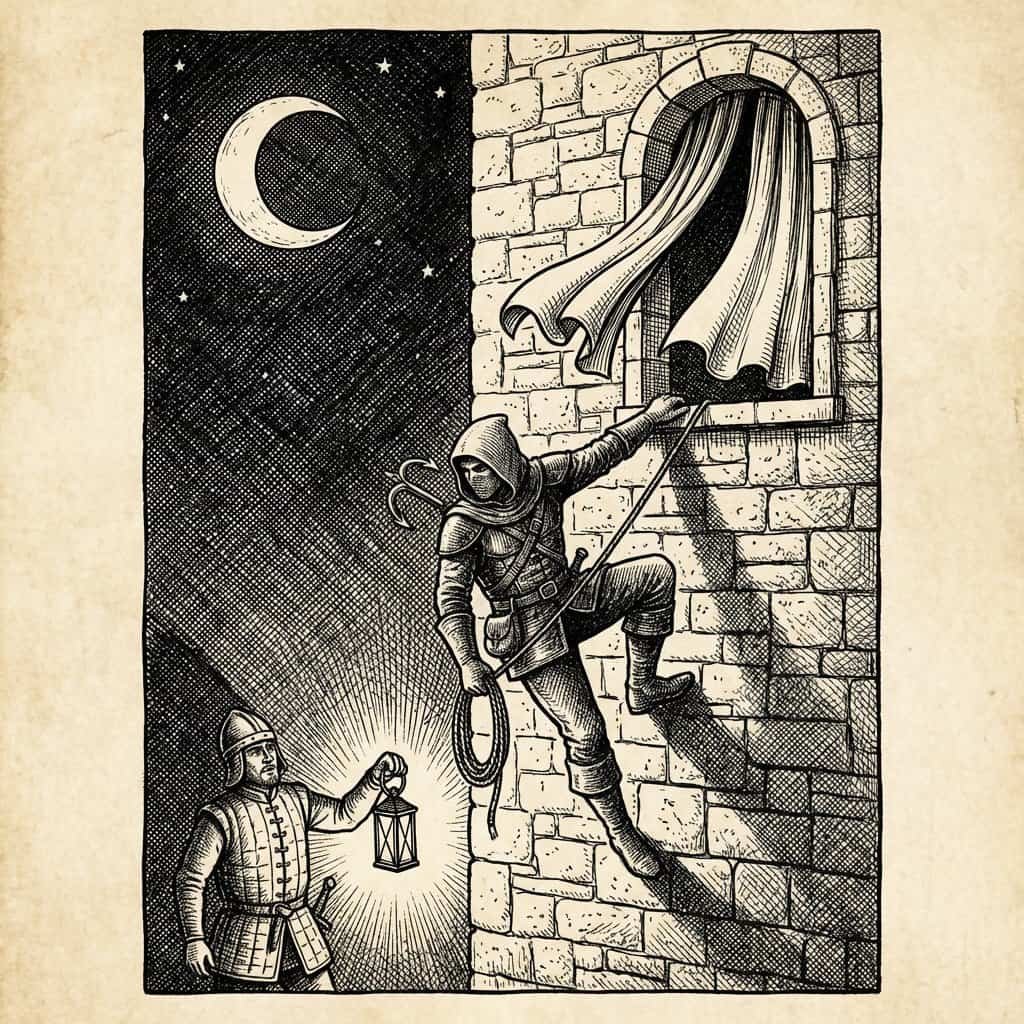

How to Run a D&D heist adventure in 5e
Heist adventures are the sessions players talk about for months. The planning, the infiltration, the moment everything goes wrong and the party has to improvise — heists deliver a kind of tension that standard dungeon crawls can’t touch. But they’re also the adventures that DMs most frequently botch, because heists require a fundamentally different design approach than combat-focused scenarios.
The good news is that heist design isn’t mysterious. It follows clear principles that produce consistently exciting sessions once you understand them. Whether you’re building a heist from scratch or looking for a ready-to-run infiltration adventure, this guide covers everything you need to pull off the perfect job at your table.
This article is part of our Complete Guide to Running D&D for Small Groups. Heist adventures are one of the genres that work best with 2-3 players, where tight coordination and quick decisions replace the chaos of larger parties.
Why Heists Work Brilliantly for Small Groups
Large parties and heist adventures are natural enemies. Six players planning an infiltration means six competing ideas, six characters to coordinate, and six opportunities for someone to blow the operation by doing something the rest of the team didn’t anticipate. The planning phase alone can consume an entire session with a full table.
Two or three players operate like a surgical team. They communicate faster, decide quicker, and move as a unit without the coordination overhead. When the rogue signals to abort, the fighter hears it immediately — there’s no game of telephone through four other players. When the plan falls apart, the small team adapts in real time rather than debating next steps while the alarm bells ring.
Stealth mechanics also function better with fewer characters. Every additional party member is another Stealth check that can fail, another set of heavy armor clanking through the corridors, another person the guard might spot. A two-person infiltration team has a realistic chance of moving undetected through a well-guarded location. A six-person squad is functionally a raiding party, and the adventure becomes a combat scenario regardless of the players’ intentions.
The Anatomy of a D&D Heist
Every effective heist adventure contains four distinct phases. Understanding this structure lets you build heists that feel cinematic without requiring excessive preparation.
Phase One: The Job
Someone needs something taken, retrieved, planted, or destroyed. The job briefing establishes what the objective is, where it is, why the party should care, and the deadline. Keep the briefing short — two minutes of game time maximum. Players want to start planning, not listen to a quest giver monologue.
The best heist objectives are physical and specific. “Steal the ruby from the vault” is better than “find evidence of corruption.” Players can visualize the ruby, imagine holding it, and plan their route to reach it. Abstract objectives produce abstract plans, and abstract plans fall apart at the table.
The employer should have a secret. Maybe they’re lying about why they want the object. Maybe they’re planning to betray the party after delivery. Maybe they’re not who they claim to be. This hidden layer transforms the heist from a mechanical exercise into a story with genuine surprises. The Merchant’s Vault executes this perfectly — players break into a condemned merchant’s house before dawn demolition, competing with rival thieves, only to discover their employer has been lying about everything.
Phase Two: The Case
Before the heist itself, players need information. Guard patrol routes, building layouts, security measures, entry points, escape routes. The casing phase is where players gather intelligence and formulate their plan.
As a DM, provide information through multiple channels. A contact who knows the guard rotation. A blueprint obtained through bribery or theft. Personal observation from staking out the location. Each information source should be accessible but not free — acquiring intelligence costs time, money, or risk. This creates meaningful decisions before the heist even begins.
Don’t over-prepare the casing phase. You need the building’s layout, the major obstacles (guards, locks, traps, magical wards), and two or three potential entry points. Players will generate their own plan from this information, and their plan will be better than anything you’d script because they’re invested in making it work.
Phase Three: The Execution
This is the heist itself — the infiltration, the approach to the objective, and the grab. The execution phase should feel tense from the first moment. Something should go slightly wrong almost immediately — a guard in an unexpected position, a lock that’s harder than anticipated, a noise from a room that should be empty. These minor complications keep tension high and prevent the heist from feeling like a scripted walkthrough.
The critical DM skill during execution is reactive improvisation. Players will deviate from their plan. They’ll find a route you didn’t anticipate, attempt something absurd, or panic at the wrong moment. Your job isn’t to force them back onto the “correct” path — it’s to make the world respond logically to whatever they do. If they knock out a guard, someone eventually notices the guard is missing. If they trigger a minor alarm, security tightens but doesn’t immediately converge on their position. Consequences should escalate gradually, not slam the door shut on the first mistake.
Phase Four: The Getaway
Most DMs end the heist at the grab. This is a mistake. The getaway — escaping with the objective while pursuit intensifies — is often the most exciting part of the adventure. The stealth is blown, the clock is ticking, and every decision is made at full speed with no time for deliberation.
Design at least one complication for the getaway. The exit route is blocked. The employer’s contact isn’t where they promised. The object they stole is doing something unexpected. The getaway transforms a successful theft into a desperate flight, and that transition from controlled infiltration to chaotic escape produces the best heist stories.
Security Systems That Create Gameplay
The obstacles between the party and their objective define the heist’s gameplay. Effective security systems create decisions — not just dice rolls — and offer multiple approaches for bypassing them.
Guards
Guards are the most versatile security element because they can be avoided, distracted, incapacitated, bribed, or deceived. Patrol routes should have gaps — moments where a corridor is unwatched, a door is unguarded, or a guard’s attention is elsewhere. These windows create timing puzzles that feel satisfying to solve.
Give guards personalities and routines. The bored guard who sneaks drinks from a flask. The nervous recruit who startles at shadows. The veteran who’s seen every trick and can’t be fooled. These details create specific, memorable encounters rather than generic Stealth checks.
Locks and Wards
Every significant lock should have at least two bypass methods. The Thieves’ Tools approach is obvious, but what about finding the key on a sleeping guard, convincing an insider to open the door, or going through the wall instead of the door? Magical wards need similar flexibility — Dispel Magic works, but so does finding the ward’s anchor point and physically destroying it, or tricking the ward into recognizing you as authorized.
Alarms and Consequences
Alarms should escalate rather than end the heist. A tripped alarm doesn’t mean instant failure — it means the difficulty increases. More guards mobilize. Doors lock down. The window for escape narrows. This escalation model means player mistakes have consequences without being immediately fatal, and it creates the mounting pressure that makes heist climaxes exciting.
The Planning Problem (and How to Solve It)
Heist planning is simultaneously the genre’s biggest strength and its biggest trap. Players love planning. They’ll spend hours debating approaches, contingencies, and backup plans if you let them. The problem is that hour three of planning isn’t fun for anyone — it’s anxiety disguised as productivity.
The Planning Timer
Set a hard limit on planning time — in-game and out. “You have until sundown to prepare” translates to “you have twenty minutes of real time to plan before we start.” This constraint forces players to commit to a good-enough plan rather than seeking a perfect one, which mirrors the reality of actual heists and produces better gameplay than exhaustive preparation.
The Flashback Mechanic
Borrowed from the Blades in the Dark RPG, the flashback mechanic is a game-changer for D&D heists. When players encounter an unexpected obstacle during the heist, they can “flashback” to a preparation scene that addresses it. “Oh, I actually bribed this guard yesterday” or “I stashed a rope on the roof this morning.” The player makes an ability check to see if their preparation succeeded, and the story continues.
This mechanic solves the planning problem entirely. Players don’t need to anticipate every obstacle because they can retroactively prepare for problems as they arise. It keeps the heist moving, rewards creative thinking, and produces the “everything comes together” feeling of the best heist movies without requiring hours of advance planning.
Heist Adventures Ready to Run
Building a heist from scratch requires more preparation than most adventure types. If you want the heist experience without the design overhead, purpose-built heist adventures give you everything — locations, security systems, NPCs, complications, and multiple resolution paths.
The Winter Ball Heist is a high-stakes infiltration where ice elf thieves attack an elegant winter ball to steal a legendary artifact. Players must navigate mansion security, manage social interactions as cover, and deal with the thieves’ own agenda — all within a two-hour session designed for 2-3 players.
The Merchant’s Vault layers moral complexity onto the heist structure. Break into a condemned house before dawn demolition, compete with rival thieves for the prize, and discover that nothing about this job is what it seems. The adventure includes multiple entry routes, NPC rivals with their own plans, and a ticking clock that creates genuine pressure throughout.
The Slab takes the heist formula to its logical extreme — an island prison with hostages, chemical weapons, and a sympathetic antagonist. Inspired by classic action thriller filmmaking, it delivers the kind of impossible-odds infiltration that produces legendary table stories.
For something that flips the formula entirely, The Other Side of the Door puts players on the defending side — goblin defenders protecting their warren from invading adventurers. It’s a heist in reverse, combining tower defense strategy with tabletop roleplay in a format that’s unlike anything else in D&D.
Heist Variants: Beyond the Standard Break-In
The classic heist — sneak into a building, steal an object, escape — is just one flavor of infiltration adventure. Variants on the formula keep the genre fresh and let you match the heist to your group’s preferences.
The con job replaces physical infiltration with social engineering. Players adopt false identities, manipulate marks through conversation and deception, and achieve their objective without ever picking a lock. Con jobs emphasize Charisma-based skills and reward players who enjoy social roleplay over tactical stealth. The target doesn’t even know they’ve been robbed until the party is long gone.
The prison break inverts the standard heist — instead of breaking in, players are breaking out. They start captured, stripped of equipment, and must improvise tools, allies, and an escape route from inside. Prison breaks create immediate urgency and resource scarcity that produce memorable sessions with minimal setup.
The switcheroo requires replacing an object without anyone noticing it’s been swapped. The original stays in place. The security system remains undisturbed. The party walks out and nobody knows anything happened until later — if they’re lucky, much later. Switcheroos demand precision and patience, rewarding careful planning over improvised chaos.
The reverse heist asks players to plant something rather than steal it. Placing evidence, delivering a disguised item, or installing a device inside a secure location uses all the same infiltration mechanics but with a different tension profile — they’re carrying something in rather than carrying something out, and getting caught with it is potentially worse than getting caught empty-handed.
Heist Tone: Keeping It Fun Under Pressure
The best heist adventures balance tension with moments of dark humor and camaraderie. Pure tension for two hours is exhausting. Pure comedy undermines the stakes. The sweet spot is a session where players are genuinely nervous about getting caught but also laughing at the absurdity of their improvised solutions.
Build in moments where things go comically wrong in low-stakes ways. The rogue picks the lock but the door squeaks loud enough to wake the dead. The disguise works perfectly until the fighter sneezes. The perfectly timed distraction goes off thirty seconds early. These micro-failures create humor without derailing the heist, and they give players stories to tell afterward — “remember when Greg’s fighter sneezed during the infiltration?”
Rival thieves add another dimension of fun. When the party isn’t the only crew running the job, every room becomes a potential encounter with competitors who have their own plan, their own problems, and their own agenda. Rival crews create dynamic situations — do you cooperate, compete, or sabotage them? The answer might change from room to room, and that unpredictability keeps the session alive in ways that pure player-versus-security design can’t match.
Post-heist scenes are also worth investing in. The moment after the getaway — when the party counts the haul, argues about who almost blew it, and realizes the implications of what they’ve done — provides closure that pure action endings lack. Let the characters breathe after the job. The debrief is often where the best character moments emerge.
Common Heist Mistakes
Certain patterns consistently undermine D&D heist adventures. Recognizing them in advance saves sessions.
Over-designing security makes heists feel impossible and frustrating rather than challenging and exciting. If every door has three locks, every corridor has two guards, and every room has a magical alarm, players don’t feel clever for getting through — they feel exhausted. Design security with deliberate gaps and weaknesses. The fun of a heist is finding the gap, not bashing through impenetrable defenses.
Punishing mistakes too harshly destroys heist momentum. If the first failed Stealth check triggers a full lockdown, the heist is over before it began. Mistakes should escalate difficulty, not end the adventure. A spotted character means a guard investigates — not that every guard in the building converges on their location. Give players chances to recover from errors, and the tension of near-misses becomes the session’s highlight rather than its endpoint.
Ignoring the getaway is the most common structural mistake. DMs invest all their design energy in the infiltration and treat the escape as an afterthought. But the getaway is where the best stories happen — the desperate sprint through alleys, the last-second disguise change, the moment the party splits up and has to reunite at the rendezvous point. Design your getaway with as much care as your infiltration.
Finally, running a heist as a combat adventure with stealth dressing misses the point entirely. If every encounter resolves through fighting, you’re running a dungeon crawl in a mansion. Heists should reward stealth, deception, and creative problem-solving over martial prowess. Combat should be a last resort — or a complication — rather than the default approach.
The Perfect Heist Session
A great D&D heist feels like a movie — the planning montage, the tense infiltration, the moment everything goes sideways, and the desperate escape. The players walk away feeling like criminal masterminds or lucky survivors, and either outcome produces stories worth telling.
The genre rewards exactly what small groups do best: fast communication, creative problem-solving, and the ability to adapt on the fly when plans inevitably fall apart. If you haven’t run a heist for your small group, you’re missing one of the best experiences D&D has to offer.
Time to plan the job.
Heist adventures designed for small groups. Multiple entry points, rival thieves, moral complexity, and zero rebalancing required. Browse the Ready Adventure Series at anvilnink.com.