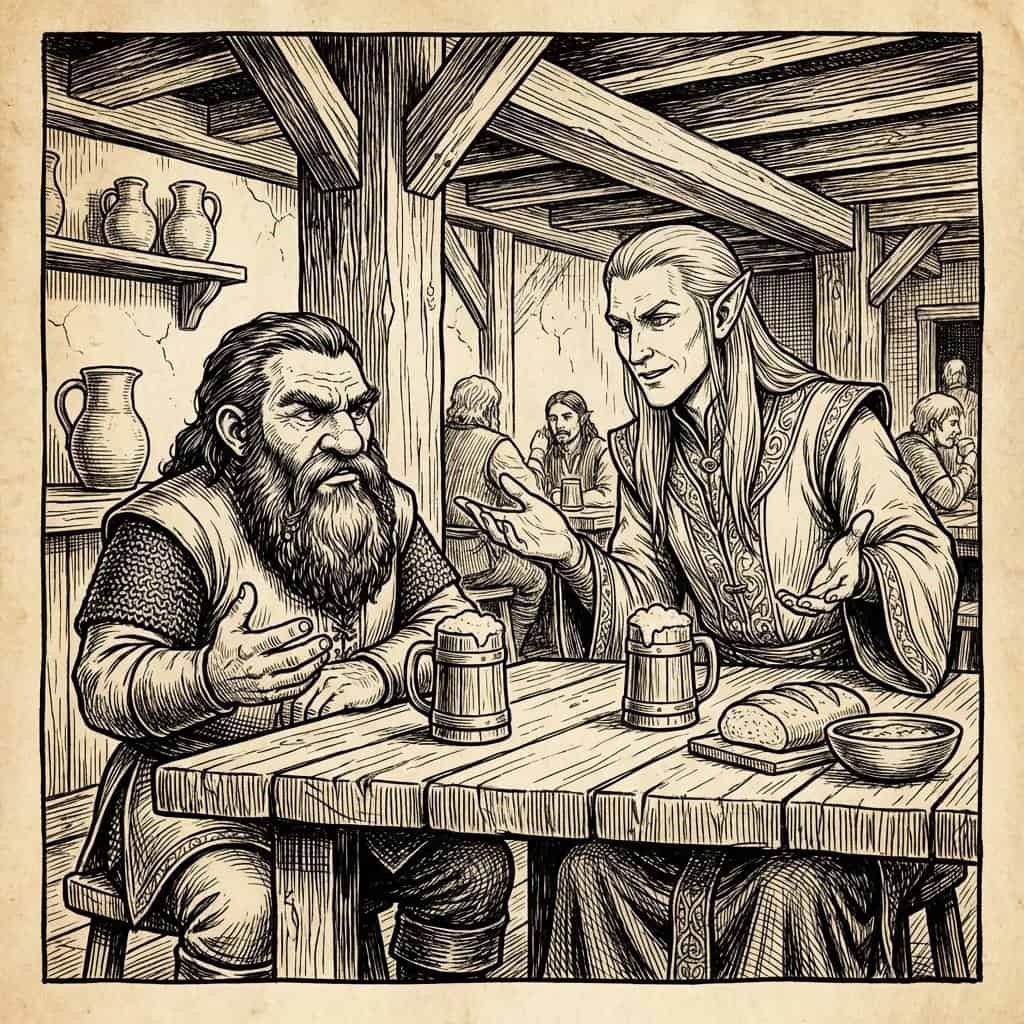

D&D roleplay tips: Beyond the Accent
Most D&D roleplay advice starts and ends with voices. Do the Scottish dwarf accent. Speak in flowery sentences for your elf. Add dramatic pauses for your mysterious warlock. And while voices can be fun, they’re the shallowest layer of roleplay — the equivalent of putting a hat on a mannequin and calling it a character.
Real roleplay depth comes from understanding who your character is, what they want, how they think, and why they make the choices they make. It comes from making decisions at the table that feel authentic to a fictional person rather than optimal for a game. And it comes from interacting with other characters — player and NPC alike — in ways that create genuine emotional moments.
This guide covers the practical techniques that transform surface-level character performance into authentic roleplay. It’s part of our Complete Guide to Running D&D for Small Groups, where roleplay naturally deepens because every player has more spotlight time and more narrative space.
Why Small Groups Produce Better Roleplay
Roleplay quality scales inversely with group size, and the reasons are straightforward. In a party of six, each player gets roughly fifteen percent of the session’s spotlight time. Conversations between characters are constantly interrupted by other players, side discussions, or the DM needing to move things along. Quiet or introverted players — who often have the richest inner character lives — get drowned out by louder personalities.
In a party of two or three, every character is essential to every scene. There’s nowhere to hide, but there’s also no competition for attention. Conversations between characters can develop naturally without time pressure. A tense disagreement between the paladin and the rogue can play out fully rather than being cut short because four other players are waiting. The DM can tailor NPC interactions to specific characters rather than broadcasting to a group.
This environment produces roleplay that larger tables rarely achieve — the kind where players forget they’re playing a game and simply react as their character would. That immersion is the goal, and small groups reach it faster and more consistently than any other format.
Building a Character Worth Playing
Good roleplay starts before the first session. A character built with depth gives you material to draw from in every scene. A character built purely from mechanical choices leaves you improvising personality from nothing.
The One-Sentence Core
Every memorable character can be described in one sentence that captures their essential conflict or drive. “A paladin who broke their oath and is trying to earn redemption they’re not sure they deserve.” “A rogue who steals to feed orphans but is starting to enjoy the stealing more than the giving.” “A wizard who’s terrified of their own power after accidentally destroying their hometown.”
This sentence isn’t a backstory — it’s a engine that generates roleplay in every scene. When the paladin faces a moral choice, you know what they’re wrestling with. When the rogue finds treasure, you know the temptation they’re feeling. The one-sentence core answers the question “what does my character do here?” in situations you never planned for.
Flaws That Create Story
Perfect characters are boring to play and boring to watch. Your character’s flaws are more important than their strengths for roleplay purposes because flaws create conflict, and conflict creates story.
Choose flaws that generate interaction rather than isolation. “Doesn’t trust anyone” is a common character flaw that actively prevents roleplay — the character has a reason to avoid every conversation. “Trusts too easily and gets burned” generates roleplay constantly — the character engages with NPCs, forms attachments, and creates drama when that trust is betrayed. Pick flaws that push your character toward other characters rather than away from them.
Motivation Beyond “Adventure”
Why is your character here? Not “because the DM needs players” — why does this fictional person risk their life exploring dungeons and fighting monsters? The answer should be specific and personal. Paying off a debt. Searching for a missing sibling. Proving something to a parent who said they’d never amount to anything. Fleeing something they did that they can’t face.
Specific motivations create specific roleplay moments. The character searching for their sibling reacts differently to missing person notices than someone just adventuring for gold. The character fleeing their past has a reason to be evasive about their history, creating natural mystery that other characters can explore over time.
Roleplay in Action: Beyond Dialogue
Roleplay isn’t just talking in character. It’s making decisions as your character, reacting to situations through their perspective, and expressing personality through action rather than just speech.
Decision-Making as Roleplay
Every choice your character makes at the table is a roleplay opportunity. The fighter who always charges in first is telling a story about bravery or recklessness. The cleric who heals the enemy combatant is telling a story about mercy. The rogue who pockets an extra share of treasure when no one’s looking is telling a story about priorities.
The key is making choices that are authentic to your character even when they’re not optimal for the game. The paladin who refuses to lie — even when lying would be tactically advantageous — is roleplaying more deeply than the paladin who breaks character whenever the situation calls for it. This doesn’t mean being obstructive or sabotaging the party. It means creating moments where character and strategy tension produces interesting drama.
Physical Mannerisms
You don’t need a voice to distinguish your character from yourself. A character who fidgets with a coin when nervous. One who stands when everyone else sits. One who always positions themselves near the exit. These physical habits communicate personality without requiring accent work or performance skills. Describe what your character is doing physically during conversations and scenes, and they’ll feel more real to everyone at the table.
Emotional Reactions
When something happens in the game, take a beat before responding and ask yourself: how does my character feel about this? Not how you feel as a player — how does the character react emotionally? The dwarf who just found their clan’s stolen artifact feels something profound. The tiefling who’s been called a devil for the hundredth time feels something specific — maybe anger, maybe resignation, maybe dark humor.
Expressing these emotional reactions — even briefly — transforms scenes from mechanical exchanges into character moments. “Korrin picks up the clan axe and is quiet for a long moment” tells the table something about who Korrin is in a way that no amount of accent work can match.
Cultural Roleplay: Beyond Stereotypes
Playing a fantasy race in D&D comes with built-in cultural expectations — dwarves love ale, elves are aloof, tieflings are edgy. These stereotypes provide a starting point, but stopping there produces characters as flat as the tropes they’re built on.
Authentic cultural roleplay means understanding why a culture has certain values, how individuals within that culture express or rebel against those values, and what happens when cultural identity meets the diverse reality of an adventuring party. A dwarf who loves ale is a stereotype. A dwarf who brews ale as a sacred tradition connecting them to ancestors they’ve never met, and who feels genuine grief when forced to drink human swill — that’s a character.
Our Roleplay Guide Series was built to bridge this gap. Each guide provides the cultural foundations that transform surface-level performance into authentic characters.
The Dwarf Roleplay Guide provides 50+ phrases rooted in clan honor and craftsmanship, six detailed archetypes from Grizzled Veteran to Exiled Wanderer, and cultural context that explains why dwarves think and behave the way they do. The Elf Roleplay Guide explores the genuine implications of centuries-long lifespans — how elves perceive time, form relationships, and process loss differently than short-lived races. The Tiefling Roleplay Guide digs into the psychology of living with prejudice, providing tools for playing characters who’ve been judged by their appearance their entire lives without falling into the “edgy loner” trap.
Each guide includes phrases organized by situation — greetings, combat, tavern talk, expressions of approval and disapproval — so you can pull authentic dialogue in the moment without breaking character to think.
Roleplay Between Characters
The richest roleplay happens between player characters, not between PCs and NPCs. Character relationships — alliances, tensions, friendships, rivalries — create ongoing narrative threads that make campaigns feel alive.
Finding Connection Points
During character creation or early sessions, actively look for connections between characters. Shared history, complementary goals, opposing values, or simple personality chemistry. The gruff warrior who’s quietly protective of the young wizard. The rogue and the paladin who disagree about methods but share the same ultimate goal. These connections don’t need to be complex — they need to be present and acknowledged.
Productive Conflict
Character disagreements are roleplay gold — as long as they stay in character. The fighter and the cleric arguing about whether to spare the captured bandit is compelling drama that reveals both characters. The same argument between two players who are genuinely irritated with each other is a table problem.
The distinction is consent and collaboration. Before playing a character who will clash with another PC, talk to that player out of character. “My character is going to disagree with yours about this — is that cool?” This simple check ensures that in-character conflict remains fun for everyone involved and produces story rather than resentment.
Moments of Vulnerability
The most memorable roleplay moments are almost always quiet ones. The warrior who admits they’re afraid. The rogue who reveals why they really steal. The wizard who breaks down after a spell goes wrong. Vulnerability requires trust — trust that the other players will treat the moment seriously and that the DM won’t immediately weaponize the revelation.
Small groups build this trust faster because the intimacy of the table is higher. With two or three players, you know everyone well enough to take creative risks. That safety produces the kind of emotional authenticity that makes D&D transcend its mechanical framework and become genuine collaborative storytelling.
Roleplay for DMs: Making NPCs Memorable
DMs roleplay more characters than any player, and most of those characters have thirty seconds to make an impression. Effective NPC roleplay uses shorthand to create instant personality.
The One-Trait Method
Give every NPC exactly one defining trait that’s immediately apparent. The nervous merchant who can’t make eye contact. The guard who speaks in clipped, military sentences. The innkeeper who tells terrible jokes and laughs at all of them. One trait is enough for players to remember and interact with. Three traits make the NPC feel like a main character competing with the PCs for narrative space.
NPCs Who Want Something
Every NPC the party interacts with should want something — even if it’s just to finish their shift and go home. An NPC with a visible desire creates natural interaction points. The guard who wants a bribe gives the rogue an opportunity. The merchant who wants gossip gives the bard a trading commodity. Desires create transactions, and transactions create roleplay.
Recurring Characters
One NPC who appears across multiple sessions is worth more than twenty one-scene characters. When players see a familiar face and know that character’s history, personality, and relationship with the party, every interaction carries accumulated weight. The bartender who’s heard the party’s stories. The rival who keeps showing up at the worst moments. The child they saved in session one who’s grown up by session twenty.
Small groups form stronger NPC attachments because every interaction gets full attention. Use this — invest in three or four recurring NPCs and develop them alongside the player characters.
Roleplay Tools You Can Use Tonight
You don’t need to overhaul your entire approach to see immediate improvement. These tools can be applied in your very next session with zero preparation.
The “What Would They Do?” Pause
Before responding to any in-game situation, pause for two seconds and ask: “What would my character do?” — not “what should I do as a player” or “what’s the optimal play.” This tiny habit separates roleplay-driven decisions from game-driven decisions and produces moments that surprise everyone at the table, including you.
The Callback
Reference something that happened earlier in the session or in a previous session. “This reminds me of the bridge in Thornwall” or “Last time I trusted a merchant, I ended up in a pit.” Callbacks create continuity, show that your character has a memory and a perspective shaped by experience, and reward players who pay attention to shared history.
The Reaction Shot
When something significant happens to another character, describe your character’s reaction even if nobody asks. “Korrin winces when the arrow hits Lyra” or “Sera quietly pockets an extra healing potion after watching Dorn almost die.” These unprompted reactions show that your character exists in the scene even when they’re not the focus, and they build the sense that these characters are real people sharing a world.
Common Roleplay Mistakes
Certain patterns consistently undermine roleplay quality. Recognizing them helps you avoid falling into habits that flatten your character work.
Main character syndrome — playing as if your character is the protagonist and everyone else is a supporting cast — is the fastest way to damage table dynamics. D&D is collaborative storytelling. Your character is one thread in a larger tapestry. Share spotlight time, celebrate other characters’ moments, and find ways to elevate the story rather than centering it on yourself.
Backstory dumping — delivering your character’s entire history in a single unprompted monologue — overwhelms other players and reads as performance rather than authentic character expression. Reveal backstory through natural conversation, reactions to in-game events, and small details that accumulate over sessions. The mystery of a character is more engaging than their biography.
Refusing to engage is the opposite problem — playing a brooding loner who has no reason to interact with the party, cooperate on missions, or participate in social scenes. Every character needs a reason to be present and engaged with the group, even if that reason is reluctant or complicated. “I work alone” isn’t a character trait. It’s an opt-out from the collaborative experience everyone signed up for.
Treating every NPC as a game mechanic rather than a person — skipping social interaction to demand “what’s the quest reward” — misses the richest content D&D offers. NPCs who feel real create investment, emotional stakes, and the narrative texture that makes campaigns memorable. Treat them as people and they’ll reward you with better stories.
Starting Tonight with better D&D roleplay tips
Better roleplay doesn’t require talent, acting classes, or a perfect accent. It requires intention — the decision to make choices as your character rather than as a player, to express personality through action and reaction, and to engage with other characters as people rather than game pieces.
Pick one technique from this guide and try it in your next session. Define your character’s one-sentence core. Choose a physical mannerism. React emotionally to one in-game event. Small changes produce immediate results, and those results compound into characters you’re genuinely proud to play.
The accent is optional. The character never is.
50+ phrases, cultural depth, and archetypes that transform your D&D characters. Explore the Roleplay Guide Series for Dwarves, Elves, and Tieflings at anvilnink.com.