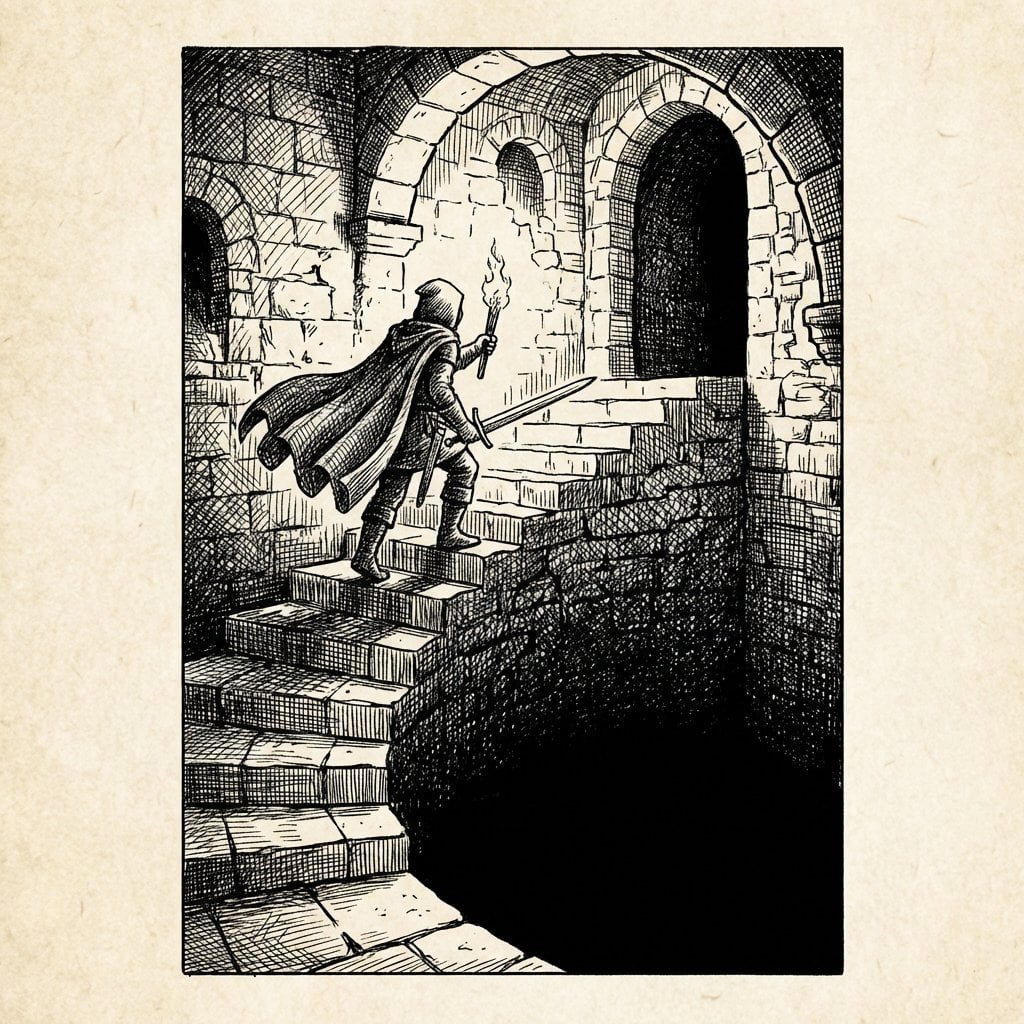

Solo D&D: How to Play D&D Alone
No group? No problem. Solo D&D has exploded from a niche curiosity into one of the fastest-growing corners of the hobby, and for good reason. The scheduling nightmare that kills most D&D campaigns doesn’t exist when the only schedule you need to coordinate is your own. Solo play lets you scratch the dungeon-crawling itch at midnight on a Tuesday, during a lunch break, or on a long flight — whenever the mood strikes and a set of dice is within reach.
But solo D&D isn’t just a substitute for group play. It’s a distinct experience with its own rewards — meditative, creative, and surprisingly intense. This guide covers the methods, games, and techniques that make playing D&D alone genuinely satisfying rather than a lonely compromise.
New to solo tabletop gaming in general? Our solo RPG guide covers the format from scratch, across every system. This page is specifically about D&D 5e.
Can You Play D&D Alone?
Yes. Solo D&D works, and there are three proven routes to it:
Use a purpose-built solo game. The simplest path. Games designed for one player handle the Dungeon Master’s job through structure and tables. Nothing to configure, nothing to learn beyond the book itself.
Adapt D&D 5e with an oracle. Keep the 5e rules you already know and replace the DM with a randomizer that answers your questions about the world. Our guide to the D&D oracle and GM emulator covers exactly how to set this up.
Run a solo adventure module. A pre-written adventure built for one player, where the branching structure does the DM’s work. See our guide to D&D solo adventures and one-player campaigns.
Most players start with the first option and branch out from there.
Why Solo D&D Is Growing
The numbers tell the story. Solo RPG communities on Reddit have grown from a few thousand members to hundreds of thousands in the past three years. DriveThruRPG reports that solo gaming supplements consistently rank among their best-selling products. And the pandemic — which separated gaming groups for months — created a generation of players who discovered they could keep playing alone and genuinely enjoyed it.
The appeal goes beyond scheduling convenience. Solo play offers complete creative control. You explore exactly the stories you want to explore, at exactly the pace you prefer, without compromising with four other players who want different things. Introverted players who find group dynamics exhausting discover that solo play delivers the imaginative engagement they love about TTRPGs without the social energy cost.
There’s also a meditative quality to solo play that group sessions can’t replicate. The quiet focus of rolling dice, interpreting results, and writing or imagining what happens next produces a flow state similar to journaling or creative writing. Many solo players describe their sessions as genuinely relaxing — a sharp contrast to the social performance that group D&D sometimes demands.
Methods of Solo Play
Solo D&D isn’t a single format. Several distinct approaches exist, each offering a different experience. Understanding the options helps you find the method that matches what you’re actually looking for.
Oracle-Based Solo Play
Oracle systems replace the DM with randomized prompts. You ask a question about the fiction — “Is the door locked?” — and consult an oracle (usually a table or die roll) for the answer. The classic oracle is the simple yes/no table with modifiers for likelihood, but modern systems have developed far more nuanced tools including scene generators, NPC reaction tables, and plot twist mechanics.
The most popular oracle system is Mythic Game Master Emulator, which provides a complete framework for generating scenes, managing narrative threads, and introducing unexpected complications. The oracle approach works with any RPG system — including D&D 5e — because it replaces the DM function rather than the game rules. You’re still rolling attacks, casting spells, and managing hit points. The oracle just tells you what the world does in response.
Oracle play is the most creative form of solo D&D because you’re actively building the narrative as you go. The downside is that it requires significant imaginative engagement — you’re simultaneously playing, DMing, and world-building. Some players find this energizing. Others find it exhausting after a full day of decision-making. Our full D&D oracle and GM emulator guide walks through setting one up from scratch.
Solo Dungeon Crawlers
Dungeon crawlers strip solo play to its mechanical essence: enter the dungeon, fight monsters, manage resources, find treasure, survive. These games generate dungeons procedurally through tables and dice rolls, creating a different experience every session without requiring the narrative improvisation that oracle systems demand.
This is where Deep Delving lives. It’s a streamlined solo dungeon crawler built for exactly this purpose — d20 combat, 8,000+ boss combinations through procedural generation, and permadeath stakes that make every decision matter. Sessions run 30 minutes to two hours depending on how deep you delve, and the game is designed for pickup play. No prep, no narrative overhead, no DM required.
For something darker, Mindscourge takes the same one-player, one-d20 approach into psychological horror — a one-way descent through four levels of a psychic colony that has already consumed your warband. We compare the full field in our roundup of the best solo dungeon crawler RPGs.
Choose-Your-Own-Adventure Modules
Solo adventure modules present a structured narrative with branching decision points. You read a scene, make a choice, and turn to the corresponding section for the consequences. Fighting Fantasy gamebooks pioneered this format in the 1980s, and modern gamebooks have elevated it dramatically with fuller RPG mechanics, meaningful character progression, and narrative complexity that rivals group campaigns.
The advantage of structured solo modules is accessibility. No creative overhead is required — you just read, decide, and roll. The narrative stays coherent because a designer crafted every path. The trade-off is reduced creative freedom — you’re choosing between pre-written options rather than imagining your own.
Journaling Games
Solo journaling games use prompts to generate creative writing about a character or situation. You draw cards, roll dice, or follow structured prompts, then write your character’s response. The “game” is the creative writing process, and the output is a journal, diary, or narrative record of your character’s experience.
Journaling games like Thousand Year Old Vampire and The Wretched produce remarkable narratives — often more emotionally resonant than typical RPG sessions — because the writing format encourages introspection and literary quality. These games appeal to players who value storytelling over mechanics and who find writing naturally satisfying.
Solo D&D Games That Actually Work
If you want to play D&D alone tonight without configuring an oracle system or learning a new ruleset, these are the fastest routes in.
The Silent Cathedral — Free, and Built to Teach You
The Silent Cathedral is a complete teaching one-shot for a single player. It explains every mechanic the first time it comes up — skill checks, saving throws, initiative, concentration, legendary actions — in plain language you can read straight from the page. If you have never played fifth edition at all, start here. It’s free as a PDF.
Get The Silent Cathedral free →
Deep Delving — Solo Dungeon Crawling in 5e
Deep Delving delivers the core dungeon-crawling loop — explore, fight, loot, survive — in a streamlined format designed for pickup play. Full d20 mechanics, 8,000+ procedurally generated boss combinations, and permadeath stakes mean no two runs play the same. Sessions scale from 30 minutes to two hours.
Mindscourge — Solo Horror, One d20, No Prep
Mindscourge is a complete solo tabletop RPG for one player and one twenty-sided die. Your warband is dead — the colony took their minds before it took their lives, and now they wait in the dark wearing their own faces. You descend alone through four levels to kill the thing dreaming at the bottom, before it finishes waking up. No Game Master, no group, no preparation.
Half-Pint — Play Solo in Your Browser Right Now
Half-Pint is a solo halfling burglar game that runs entirely in a web browser. No download, no account, no dice. You have 75 nights to work your way through the city’s merchant houses, noble estates, the Royal Treasury and the Wizard’s Tower before your notoriety catches up with you. It is the single fastest way to find out whether solo play is for you — and it’s free to try.
Play Half-Pint free in your browser →
Prefer a physical copy? Half-Pint is also available in paperback on Amazon.
Getting Started With Solo D&D
If you’ve never played solo, the gap between “this sounds interesting” and “I’m actually doing it” can feel wider than it is. Here’s how to bridge it.
Start With Structure
Your first solo session should use a structured game rather than an open oracle system. Oracle play requires skills — narrative improvisation, scene framing, pacing — that develop over time. Jumping straight into a blank-page oracle session often produces frustration rather than fun because you’re learning too many new skills simultaneously.
A purpose-built solo game like Deep Delving provides the structure you need for your first sessions. The rules tell you exactly what to do at each decision point. The dungeon generates itself through dice rolls. Your job is to make tactical choices and survive — the game handles everything else. Once you’re comfortable with solo play’s rhythm, you can branch into more open-ended formats.
Set a Timer
Solo sessions can expand indefinitely because there’s no natural endpoint. Group sessions end when people need to leave. Solo sessions end when you decide they’re over, and the temptation to play “just one more room” can stretch a planned thirty-minute session into three hours.
Set a timer for your first few sessions — 45 minutes to an hour is the sweet spot. This constraint forces you to make decisions at a reasonable pace rather than deliberating endlessly (a common trap in oracle play) and ensures your solo hobby stays enjoyable rather than becoming a time sink.
Don’t Judge Your First Session
Solo play feels strange the first time. You’re rolling dice alone, talking to yourself about fictional events, and possibly writing narrative about an imaginary character. This is genuinely weird, and it’s okay to feel self-conscious about it. The self-consciousness fades by session two or three, replaced by the same flow state that makes group D&D compelling. Give yourself permission to feel awkward and keep playing.
Solo Play as DM Training
One of solo play’s underappreciated benefits is its value as DM practice. Running solo sessions — especially with oracle systems — exercises exactly the skills that make great DMs: improvisation, scene framing, NPC generation, encounter pacing, and narrative threading.
When you play solo with an oracle, you’re constantly asking “what happens next?” and generating answers. This is the fundamental DM skill — responding to unexpected situations with coherent, engaging narrative. The oracle provides a framework, but you’re building the fiction. Every solo session strengthens the improvisational muscle that makes your group sessions better.
Solo dungeon crawling builds encounter design intuition. After running dozens of solo combat encounters, you develop an instinctive sense of what’s too easy, what’s too hard, and what produces the satisfying tension of a well-balanced fight. This intuition transfers directly to your group game, making you a more confident and effective DM without requiring additional prep time.
Combining Solo and Group Play
Solo and group play aren’t mutually exclusive. Many players use solo sessions to enhance their group campaigns in ways that benefit everyone at the table.
Between-Session Character Development
Solo journaling sessions between group games let you explore your character’s inner life — their reactions to recent events, their evolving relationships with other PCs, their private thoughts about the campaign’s direction. These sessions produce character depth that surfaces naturally during group play, enriching the campaign without consuming group session time.
Downtime Adventures
When the group campaign includes downtime — days or weeks between adventures where characters pursue personal goals — solo sessions can fill that narrative space. The rogue spends a week running cons in the marketplace. The wizard researches a spell component. The fighter trains with a local master. These solo downtime sessions create character history that makes the next group session richer.
Parallel Campaigns
Some players run solo campaigns in the same world as their group game, exploring corners of the setting that the group hasn’t visited. A solo adventurer investigating the northern wastes while the group campaigns in the southern kingdoms creates worldbuilding that can eventually intersect — NPCs the solo character met become contacts the group encounters, events the solo character witnessed become rumors the group hears.
Our small group guide covers how to move between different group sizes and play styles. Solo play is simply the smallest possible “group” — and it integrates naturally with everything else.
Building a Solo Gaming Habit
The players who get the most from solo D&D treat it as a regular practice rather than an occasional novelty. Like any creative hobby, solo play rewards consistency — and the barrier to a session is so low that consistency is entirely within your control.
Schedule solo sessions the way you’d schedule group sessions. Block thirty minutes on a Tuesday evening or an hour on Sunday morning. Consistency removes the decision fatigue of “should I play tonight?” and builds momentum between sessions. Characters develop. Stories accumulate. The campaign takes on a life that isolated one-off sessions never achieve.
Keep a play journal — even if your game isn’t a journaling RPG. Write a few sentences after each session: what happened, what decisions you made, what you want to explore next time. This record serves double duty. It preserves narrative continuity between sessions, and it creates a satisfying archive you can look back on.
Rotate between games to prevent burnout. A dungeon crawl one week, a narrative oracle session the next, a journaling game when you’re feeling reflective. Different solo formats exercise different creative muscles, and the variety keeps the hobby fresh across months and years of regular play.
Common Solo Play Obstacles
A few challenges consistently trip up new solo players. Knowing them in advance makes them easier to navigate.
Analysis paralysis is the biggest killer of solo sessions. Without other players to keep momentum going, you can spend twenty minutes deciding which door to open. Combat the freeze by setting a decision timer — if you haven’t decided in sixty seconds, pick the first reasonable option and commit. In solo play, momentum matters more than optimization.
Narrative coherence can suffer in oracle-based play when random results contradict each other or produce nonsensical fiction. The solution is interpretation — treat oracle results as suggestions rather than commands. If the oracle says “unexpected ally appears” but that makes no sense in the current scene, reinterpret it. Flexible interpretation keeps the fiction coherent while preserving the oracle’s ability to surprise you.
Loneliness is a real concern for some players. Solo play is rewarding but it doesn’t replace the social connection of group D&D. Treat solo sessions as a complement to group play rather than a replacement. Share your solo campaign stories with friends, post session reports in online communities, or use solo play to fill the gaps between group sessions rather than substituting for them entirely.
Finally, the feeling that solo play “doesn’t count” holds some players back. It does count. The stories you create alone are real. The tactical decisions you make matter. The characters you build have value.
Your First Solo D&D Session
Ready to try it? Here’s your roadmap. Set aside one hour. Grab a set of dice, a pencil, and a solo game — Deep Delving if you want dungeon crawling, Mindscourge if you want horror, or The Silent Cathedral if you’re brand new to 5e and want the rules explained as you go. Set a timer. Open the book. Start playing.
Don’t worry about doing it right. There is no wrong way to play solo — there’s only your way. The dungeon is waiting, and it doesn’t care whether you bring a party or just yourself.
Roll for initiative.
Frequently Asked Questions About Solo D&D
Can you play D&D by yourself?
Yes. Solo D&D works through three routes: a purpose-built solo game like Deep Delving or Mindscourge, an oracle system layered onto standard 5e, or a solo adventure module with branching structure. Purpose-built games are the easiest place to start because they require no setup at all.
How do you play D&D without a DM?
You replace the Dungeon Master’s job with either structure or randomness. Solo games handle it through tables and procedures written into the book. Oracles handle it by answering your yes/no questions with dice. Our D&D oracle and GM emulator guide covers the oracle approach in detail.
What is the best solo D&D game?
For tactical dungeon crawling in full 5e rules, Deep Delving. For horror and a one-way descent, Mindscourge. For learning 5e from zero, the free Silent Cathedral. For the absolute fastest start, play Half-Pint in your browser right now.
Is solo D&D actually fun?
Different, not lesser. Solo play gives you complete creative control, flexible scheduling, and a meditative focus that group sessions rarely allow. Most players who try it report the awkwardness fades after two or three sessions, replaced by the same flow state that makes group D&D compelling.
Do I need to buy anything to play D&D solo?
No. Half-Pint is free in your browser with no dice required, and The Silent Cathedral is a free PDF. Ironsworn is also a free download. Try those before spending anything.
The dungeon doesn’t require a party. Deep Delving — solo dungeon crawling with 8,000+ boss combinations and permadeath stakes. Available at anvilnink.com.