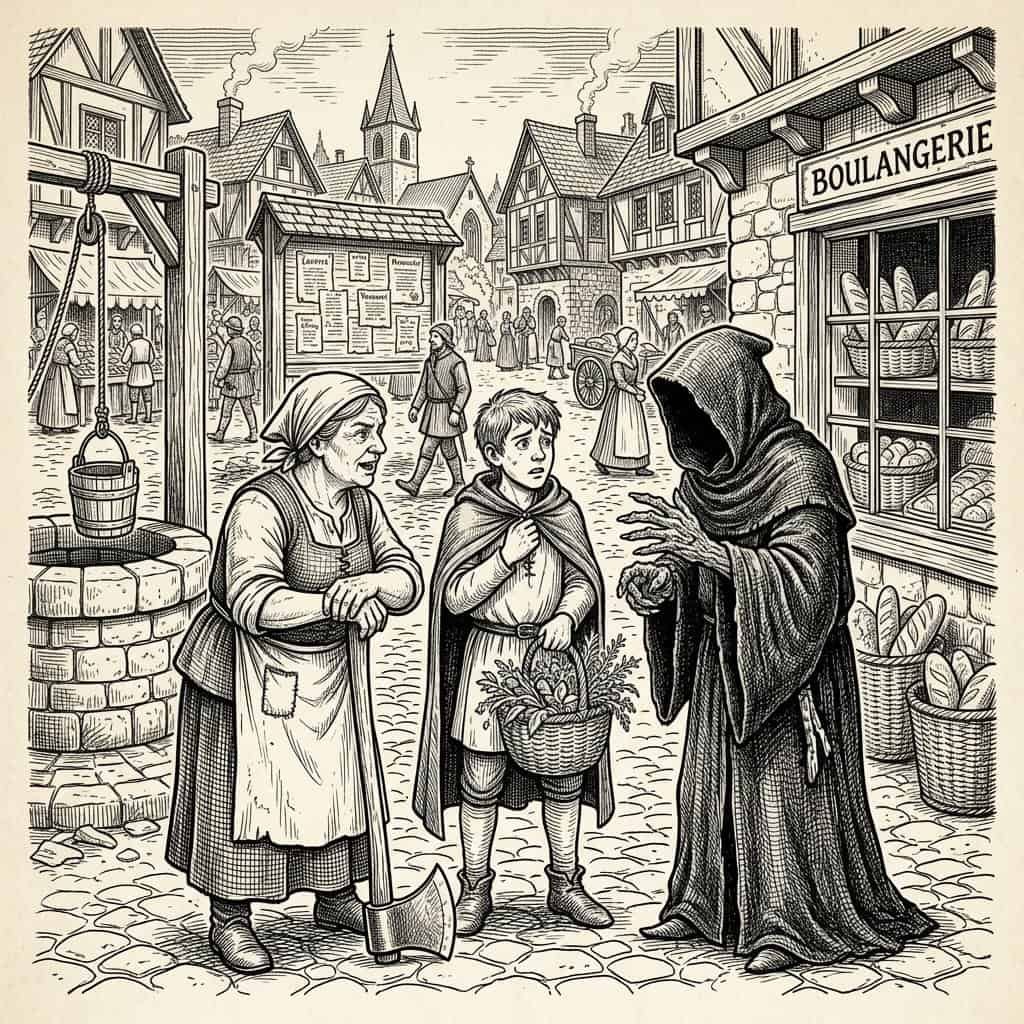

Fairy tale NPCs for D&D solve the problem every DM has faced at least once: players who treat non-player characters like vending machines. Walk up, get the quest, walk away, never think about them again. It’s not the players’ fault. It’s a design problem. When an NPC exists only to deliver information, players treat them as information dispensers. But when an NPC walks straight out of a fairy tale — carrying contradictions, secrets, impossible bargains, and the kind of emotional weight that centuries of storytelling have refined to a razor edge — players pay attention. They argue about what to do. They remember names. They care.
This guide presents seven fairy tale NPC archetypes you can drop into any dark fairy tale D&D adventure. Each archetype comes with a core concept, roleplaying notes, a built-in secret, and guidance on how the NPC creates meaningful choices for players. These aren’t stat blocks — they’re characters. The kind that make sessions unforgettable.
What Makes Fairy Tale NPCs Different From Standard D&D NPCs
Standard D&D NPCs serve functions. The tavern keeper gives rumors. The quest-giver assigns missions. The merchant sells gear. They’re interchangeable because they exist to facilitate gameplay rather than to create it. Fairy tale NPCs are different because they come from a storytelling tradition where every character embodies a moral lesson, a warning, or a choice. The old woman at the crossroads isn’t just giving directions — she’s testing whether the traveler deserves to reach their destination. The talking animal isn’t just comic relief — it’s the only honest voice in a world full of liars.
When you build NPCs using fairy tale archetypes, every interaction becomes a potential turning point. Players don’t just talk to the NPC. They make choices about trust, honesty, generosity, and caution — choices that the fairy tale framework rewards or punishes in ways that feel inevitable rather than arbitrary. That’s the power of fairy tale NPCs for D&D: they turn conversation into consequence.
NPC 1: The Test-Giver — The Stranger Who Asks for Help
In nearly every fairy tale, the hero encounters someone on the road who asks for a small kindness — share your bread, give directions, carry a bundle. The hero who helps is rewarded. The hero who refuses is punished. This is the Test-Giver: an NPC who appears helpless, insignificant, or annoying, but whose reaction to the players’ treatment determines something important later in the adventure.
How to Run the Test-Giver
The Test-Giver should appear as someone players would normally dismiss — an elderly beggar, a lost child, a wounded animal, a confused traveler asking for water. Make the request inconvenient but not costly. Share a ration. Spare ten minutes to give directions. Help carry a heavy basket to the next village. The request should be easy enough that generous players do it without thinking, but annoying enough that impatient players wave it away.
The key: the Test-Giver’s response shapes the adventure. Players who showed kindness gain an ally, a crucial piece of information, or safe passage through dangerous territory later. The elderly beggar turns out to be a fey noble in disguise. The lost child is the forest spirit who controls the paths. The wounded animal is the witch’s familiar, and it reports back on who treated it well. Players who were dismissive or cruel find doors closed, paths blocked, or NPCs mysteriously unhelpful — not as DM punishment, but as natural fairy tale consequence.
This archetype teaches players to treat every NPC as potentially significant, which is exactly the mindset you want for fairy tale adventures. Once players have been burned once by dismissing a Test-Giver, they approach every subsequent NPC interaction with attention and care. That attentiveness transforms the entire session’s social encounters from mechanical information exchanges into genuine character moments.
NPC 2: The Truthful Liar — The One Who Tells You Exactly What You Need to Ignore
Fairy tales are full of characters who tell the truth in ways that are more dangerous than lies. The mirror that tells the queen she’s not the fairest. The bird that sings about the murder no one wants to acknowledge. The child who says the emperor has no clothes. The Truthful Liar is an NPC who has important, accurate information — and absolutely no one wants to hear it.
How to Run the Truthful Liar
This NPC knows the adventure’s central truth: who the real villain is, what the real stakes are, what everyone else is hiding. They’ve been saying it openly for years. Nobody believes them. The village dismisses them as a drunk, a fool, a troublemaker, or a madwoman. Authority figures actively discredit them. Other NPCs warn the players not to listen to this person.
The challenge for players is recognizing truth in a package everyone tells them to distrust. If the players listen carefully, the Truthful Liar gives them the adventure’s twist wrapped in plain language. But because every other NPC has primed the players to dismiss this person, most groups won’t take the information seriously until they’ve confirmed it through other means. That delayed recognition — the moment when a player says “wait, the old woman in Act One told us this exact thing” — is one of the most satisfying reveals in any fairy tale twist adventure.
NPC 3: The Bargain-Maker — The One With a Deal Too Good to Refuse
This is the quintessential fairy tale NPC for D&D: the creature or person who offers the players exactly what they need, at a price that seems manageable, with terms that are more dangerous than they appear. Rumpelstiltskin. The fey merchant at the crossroads. The witch who offers a potion. The devil at the card table. Every fairy tale tradition has a version of this character because the Bargain-Maker embodies the genre’s central question: what are you willing to pay for what you want?
How to Run the Bargain-Maker
The Bargain-Maker should offer something the players genuinely need — not a luxury, but a solution to an immediate problem. They’re lost and the Bargain-Maker knows the way. They need information and the Bargain-Maker has it. They need a weapon or a spell and the Bargain-Maker can provide it. The offer should be real, honest, and delivered without deception. The Bargain-Maker isn’t lying about what they’re selling.
The danger is in what they’re buying. The price should be something that seems trivial now but becomes significant later. “Your happiest memory.” “A favor to be named later.” “The sound of your laughter.” “Your shadow for one day.” Players who are paying attention will hesitate. Players who are desperate will accept. Either response creates story. In a Feywild setting, bargains are mechanically binding — which means the price will come due whether the players remember agreeing to it or not.
The best Bargain-Makers are sympathetic. They’re not trying to cheat the players — they’re conducting business according to rules the players don’t fully understand. The fey merchant genuinely believes a memory is fair trade for directions. The witch genuinely needs the ingredient she’s requesting. The disconnect between mortal and fey values is the source of tension, not malice.
NPC 4: The Reluctant Authority — The Leader Who Knows the Secret
Every fairy tale village has someone in charge who knows more than they’re telling. The mayor who invited the Pied Piper. The king who made the bargain with the fey. The village elder who remembers why the witch in the forest is really there. The Reluctant Authority is the person whose past decisions created the adventure’s central problem — and who is desperately trying to prevent anyone from finding out.
How to Run the Reluctant Authority
This NPC should be genuinely helpful on the surface. They welcome the players, provide resources, share information about the immediate crisis, and steer the investigation toward the “obvious” villain. They’re cooperative, reasonable, and sympathetic. They are also lying by omission — carefully directing the players away from evidence that would implicate them in the original wrong.
The Reluctant Authority isn’t a cartoon villain concealing their evil plan. They’re a person who made a terrible decision under pressure — broke a bargain, betrayed a trust, sacrificed someone else to save their community — and has spent years trying to bury the consequences. They believe they did the right thing. They believe the truth would cause more harm than the lie. And they might be correct about that, which is what makes this NPC create a genuine moral dilemma when the players discover the truth.
Run this NPC’s deception through behavior rather than dialogue. They don’t lie directly — they change the subject, express concern about “more pressing matters,” and redirect the players’ attention with new urgent information whenever the investigation gets too close to the real story. Perceptive players will notice the deflection pattern. Less attentive players will follow the redirects until other evidence forces the confrontation.
NPC 5: The Bound Servant — The One Who Can’t Help But Wants To
Fairy tales are full of servants, guards, and attendants who know the truth but are magically or socially prevented from speaking it. The enchanted servant who can only communicate through riddles. The guard who was sworn to silence on pain of death. The animal companion who understands everything but can’t speak. The Bound Servant creates tension through constraint — they’re an ally trapped behind a wall of obligation, and players must figure out how to free them or communicate through the barrier.
How to Run the Bound Servant
The Bound Servant should clearly want to help the players but be unable to do so directly. The binding should be specific and consistent — if they were magically silenced about one topic, they can speak freely about everything else. If they swore an oath to a specific person, they can break it if that person releases them or if the oath’s terms are satisfied. The constraint itself becomes a puzzle for players to solve.
Give the Bound Servant creative workarounds that hint at the truth without stating it. They can’t say “the king broke the bargain” but they can nervously clean a specific painting that depicts the original agreement. They can’t warn the players about the trap, but they can suggest an alternative route that happens to avoid it. They can’t name the villain, but they can describe what the villain smells like. Players who pay attention to these indirect communications feel brilliantly clever when they decode the message — and that feeling of earned discovery is more satisfying than any direct exposition.
NPC 6: The Former Hero — The One Who Already Tried
Fairy tale NPCs for D&D don’t always have to be mysterious strangers or powerful figures. One of the most effective archetypes is the Former Hero — someone who attempted the same quest the players are undertaking and failed. Not through incompetence, but through a moral compromise they couldn’t make, a price they couldn’t pay, or a truth they couldn’t face.
How to Run the Former Hero
The Former Hero should be encountered early in the adventure, living quietly in the margins of the story — the retired knight working as a stable hand, the former wizard tending a garden, the ex-adventurer running a tavern near the quest location. They recognize what the players are about to do. They have specific, practical warnings. And they carry visible scars — physical or emotional — from their own attempt.
The Former Hero serves two narrative functions. First, they foreshadow the adventure’s central challenge. If the Former Hero failed because they couldn’t bring themselves to harm the sympathetic villain, players know they’ll face the same test. Second, the Former Hero establishes stakes — this quest has already broken one capable person, and the players might be next. That weight follows the players through the adventure, making every decision heavier because someone else already proved how badly it can go wrong.
The most powerful version of this NPC is the Former Hero who succeeded — but at a cost that destroyed them. They completed the quest, defeated the villain, saved the day. And the price was so terrible that they’ve spent every day since wishing they’d failed instead. That version gives players a preview of what “winning” actually looks like in this fairy tale, which makes the eventual choice far more complex.
NPC 7: The Innocent Witness — The Child Who Sees Everything
Children in fairy tales occupy a unique moral position: they observe everything, understand instinctively what adults rationalize away, and tell the truth because they haven’t yet learned that truth is dangerous. The Innocent Witness is a child or childlike character who has seen or heard something crucial and shares it freely — if anyone thinks to ask.
How to Run the Innocent Witness
The Innocent Witness should be present in scenes but easy to overlook. A child playing in the corner during an important meeting. A young apprentice sweeping the floor while the adults argue. A small fey creature sitting on a branch above the path, watching everything with wide eyes. Adults in the adventure ignore this character because adults ignore children. Players often do the same.
But the Innocent Witness saw the Reluctant Authority meeting secretly with the witch. They heard the Bargain-Maker state the real terms of the deal. They watched the Former Hero walk away from the quest and heard what they muttered under their breath. The information is there for any player who thinks to ask: “hey, you were in the room — what did you see?”
The Innocent Witness also creates an emotional anchor for the adventure’s stakes. When players make their final choice, the Witness is watching. Whatever the players decide, this child will grow up in the world those decisions create. That silent audience raises the moral weight of every action — not through dialogue or mechanics, but through the simple awareness that someone innocent is paying attention.
Building a Cast: Combining Archetypes
The strongest fairy tale adventures use three to four of these archetypes working together. A Reluctant Authority who presents the quest. A Truthful Liar who contradicts the official story. A Bargain-Maker who offers a shortcut. A Bound Servant who confirms the truth through indirect communication. Each NPC gives the players a different piece of the puzzle, and the relationships between NPCs create additional layers of intrigue.
For small groups of two to three players, keep the cast tight — no more than five named NPCs in a single session. With fewer players, each NPC interaction gets more screen time, and players can track the contradictions between different accounts more easily. Small casts also mean each NPC carries more narrative weight. When there are only four characters to remember, every one of them matters.
The NPC creation fundamentals still apply — give each character a distinct voice, a visible motivation, and one memorable physical detail. But fairy tale NPCs add a layer that standard NPC design often lacks: a role in the story’s moral architecture. Every fairy tale NPC exists not just to deliver information, but to test, tempt, warn, or challenge the players’ values. That moral function is what makes them unforgettable.
For adventures that demonstrate these archetypes in action, The Twisted Tale Series from Anvil N Ink Publishing populates every one-shot with fairy tale NPCs built on exactly these principles. The Name of Rumpelstiltskin features a Bargain-Maker whose offer splits the party. The Twelve Dancing Princesses layers Reluctant Authorities over Bound Servants in a mystery that unravels through conversation. Each adventure runs in a single session for small groups — exactly the scale where fairy tale NPCs shine brightest.
Fairy tale NPCs for D&D transform flat quest-givers into characters your players argue about, negotiate with, and remember by name — because in the best fairy tales, the people are more dangerous than the monsters.