
Twisted Fairy Tale RPG: Making Classic D&D Stories Morally Complex
A twisted fairy tale RPG session draws its power from a single, specific trick: it gives players a story they already know, then makes every familiar beat mean something different. The princess isn’t waiting to be rescued. The deal with the imp wasn’t one-sided. The forest isn’t simply dangerous — it’s complicated. This gap between expectation and reality is where dark fairy tale D&D lives, and learning to widen it deliberately is the skill that separates a good twisted fairy tale adventure from a great one.
What ‘Twisted’ Actually Means in a Fairy Tale RPG
Twisted doesn’t mean gratuitously dark. It doesn’t mean putting evil characters in protagonist roles for shock value, or inverting the original story purely for the sake of subversion. A twisted fairy tale RPG session is one where the moral logic of the original story is examined rather than accepted — where the villain’s perspective is given weight, where the hero’s actions have unintended consequences, and where the players finish the session with genuine uncertainty about whether they chose correctly.
The Brothers Grimm originals are already halfway there. Strip away the Victorian sanitisation that softened the edges of the original tales and what remains is morally complex material — people making desperate choices, supernatural entities with their own rules and grievances, and resolutions that come at a cost. A twisted fairy tale RPG takes that complexity and puts the players inside it, where they have to navigate it rather than observe it.
For the broader context of dark fairy tale D&D as a genre — including tone, themes, and what distinguishes it from standard dark fantasy — our dark fairy tale D&D guide provides the foundation.
The Three Twists That Work Best in Fairy Tale RPG Adventures
The Villain Has a Valid Claim
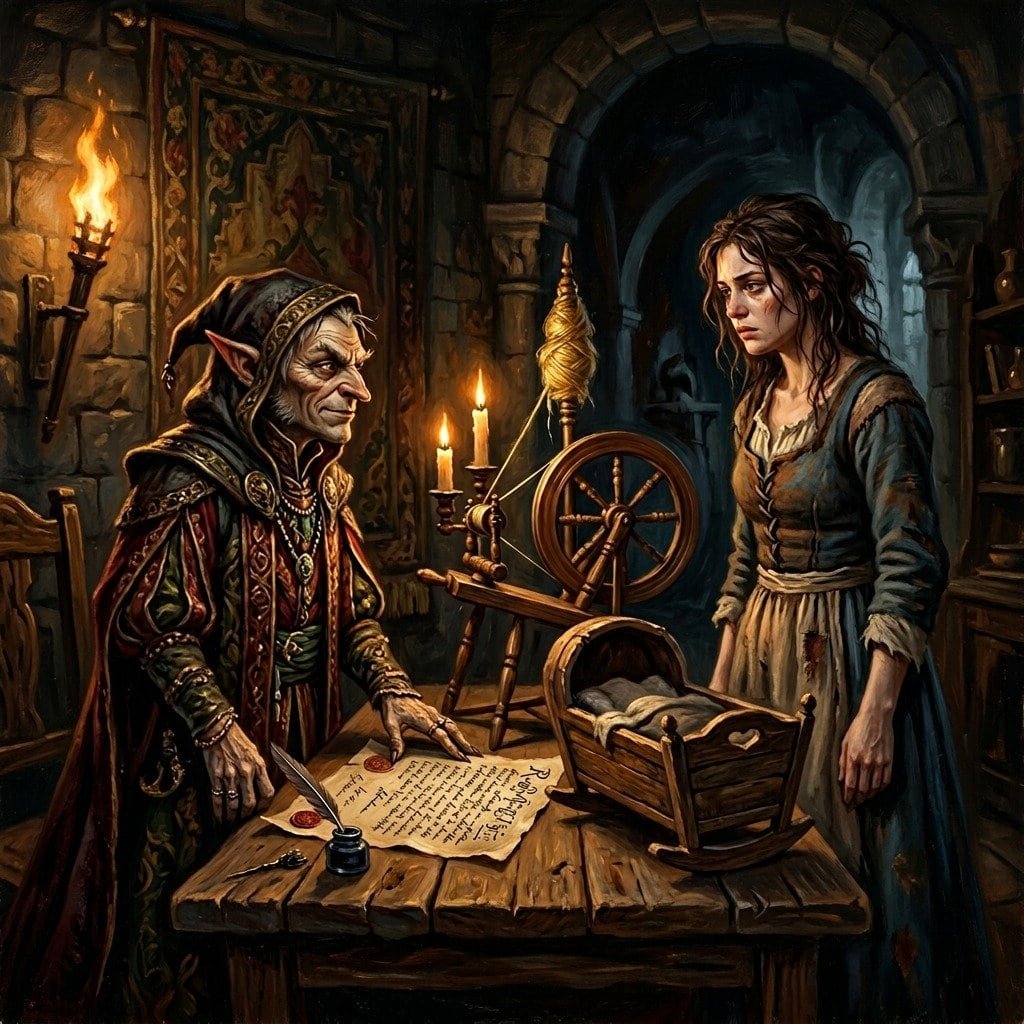
The most powerful twist in a twisted fairy tale RPG is discovering that the antagonist isn’t wrong. Not that they’re secretly good, not that they’re redeemable through the power of friendship — but that within the logic of the world, their grievance is legitimate. The Pied Piper was owed a debt. Rumpelstiltskin kept his word. The witch in the forest was there before the village, and the village has been encroaching on her territory for decades.
When players arrive expecting a clear enemy and discover a valid grievance instead, the session shifts from combat to negotiation, from problem-solving to moral reasoning. That shift is what makes a twisted fairy tale RPG different from a dungeon crawl with fairy tale aesthetics. The players have to decide how they feel about the situation — not just what to do about it.
The Rescue Mission Isn’t Wanted
Classic fairy tales are full of people being rescued from situations they didn’t ask to be rescued from. The sleeping princess isn’t consulted. The dancing princesses are presumed to need saving. The girl in the tower is assumed to be imprisoned rather than choosing her isolation. A twisted fairy tale RPG asks: what if the rescue is actually an imposition?
This twist works best when the players genuinely don’t know the answer going in. Build the scenario so that both interpretations are supported by equal evidence — the evidence for ‘they need rescuing’ and the evidence for ‘they don’t want to be rescued’ should both be available before the critical choice is made. The discovery that their assumption was wrong — or that they were right but the person still didn’t want to leave — creates a more lasting impression than any combat encounter. Anvil N Ink’s The Twelve Dancing Princesses is built precisely around this question.
The Helper Has an Agenda
Fairy tales are full of helpers who give the protagonist what they need: the fairy godmother, the helpful old woman, the talking animal who knows the way. In a twisted fairy tale RPG, the helper’s assistance is real — but so is their agenda. They’re helping because they want something from the outcome. Their advice is accurate — but it’s the advice that serves their goal, not necessarily the one that serves the player characters’ goal.
This twist is best introduced when players have already started to rely on an NPC helper. The revelation that the helpful innkeeper has been steering them toward a resolution that benefits her specifically — while everything she told them was technically true — creates a sense of the world as genuinely complex rather than simply populated by allies and enemies.
Building Moral Complexity: A Practical Framework
Every twisted fairy tale RPG scenario benefits from a simple design question asked about every major character: what do they want, and what are they willing to do to get it? When every significant NPC has a genuine want and a genuine constraint on how far they’ll go to achieve it, the moral landscape of the adventure becomes naturally complex without the DM having to engineer dilemmas artificially.
The antagonist wants their debt honoured and will collect it one way or another — but they won’t harm anyone who isn’t party to the original broken promise. The town council wants the problem to go away and will lie, deflect, and manipulate to prevent accountability — but they’re also genuinely afraid for their children. The contact who hired the players wants a specific outcome and hasn’t told them the full truth about why — but they’re not malicious, just protecting something they can’t afford to lose.
When every major character has this structure — genuine want, genuine constraint — the players’ choices create genuine consequences rather than mechanical ones. They’re not picking which numbered option leads to the good ending. They’re navigating a situation with real weight, where what they decide reflects who their characters actually are.
The Twisted Tale Series: Dark Fairy Tale RPG Adventures Ready to Run
Anvil N Ink’s Twisted Tale Series is built on this exact design philosophy. Every adventure features a sympathetic antagonist with a legitimate grievance, a rescue or resolution that isn’t as simple as it appears, and at least one choice with no clean answer. All three current titles — Pay the Piper, The Name of Rumpelstiltskin, and The Twelve Dancing Princesses — are designed for two to three players, run in two to three hours, and require zero DM prep beyond reading the adventure once.
For DMs who want to build their own twisted fairy tale RPG scenarios from scratch, our Brothers Grimm D&D adventure guide covers which original tales adapt best and how to apply the moral complexity framework to your own homebrew design.
Frequently Asked Questions
How dark is too dark for a twisted fairy tale RPG?
The line is between productive discomfort and genuine distress. A session where players feel genuinely uncertain about a moral choice is doing its job. A session where players feel manipulated, punished for creative thinking, or subjected to content they weren’t warned about has crossed the line. Use safety tools, establish the tone before play, and check in with players after particularly intense scenes. The goal is moral weight, not suffering.
Can I run a twisted fairy tale RPG with players who prefer heroic fantasy?
Yes — with a lighter touch on the moral ambiguity. Start with an adventure that has a more clearly identifiable antagonist and a resolution that, while complex, leans toward a satisfying outcome. Use the framework to add texture and nuance to what could be a straightforward heroic story rather than leading with a fully inverted premise. Players who experience one well-crafted morally complex moment often find themselves wanting more.
Browse the full twisted fairy tale RPG adventure catalogue at anvilnink.com/adventures — all Twisted Tale Series titles designed for two to three players, zero prep required.
A twisted fairy tale RPG doesn’t just retell the story — it asks who was right all along, and makes you live with the answer.