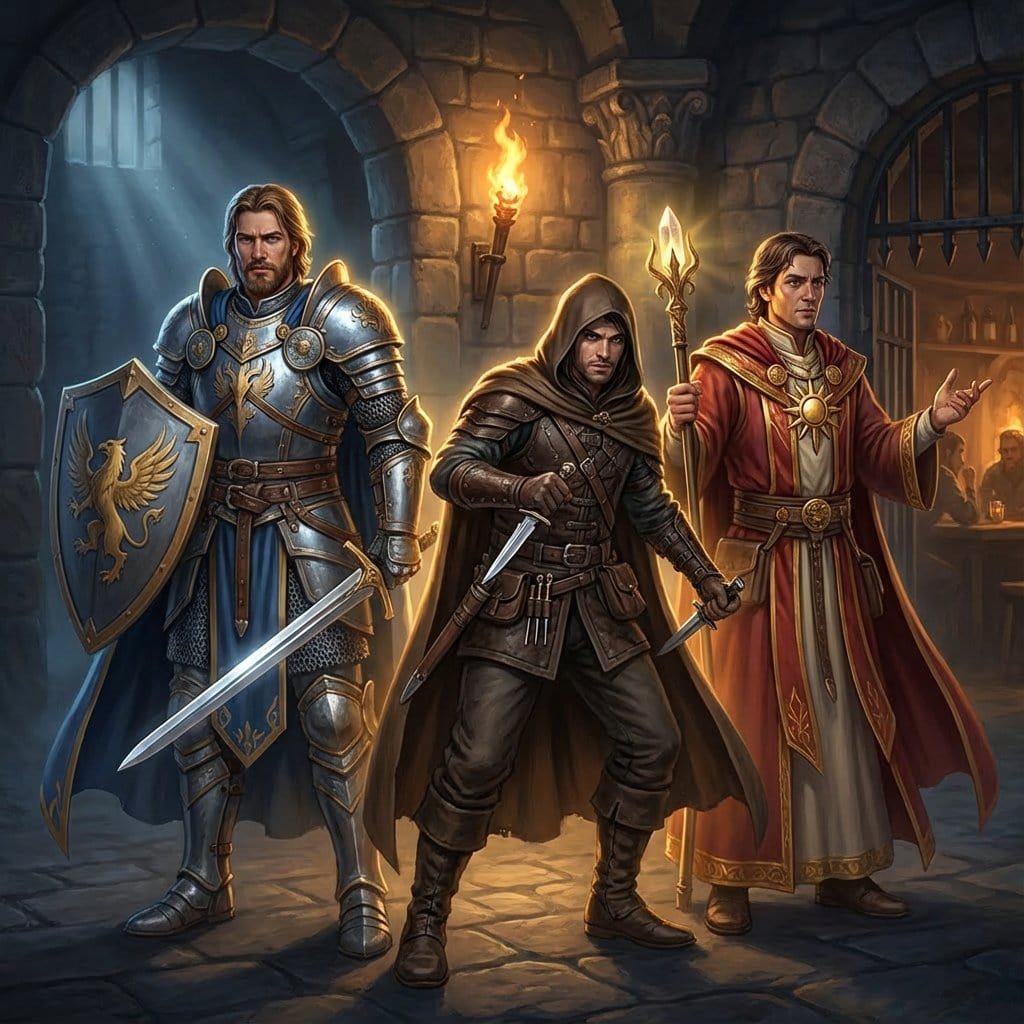

Best D&D Classes for Small Party: Complete Guide
Building the best D&D classes for small party setups requires different thinking than traditional four-to-six player groups. A three-player party can’t cover every role, can’t afford narrow specialization, and faces serious action economy challenges. But choosing the right class combination transforms these limitations into focused, effective teams that punch above their weight.
The secret to successful 3 player party composition isn’t mimicking larger groups with fewer people—it’s embracing versatility, self-sufficiency, and tactical synergy. You’re not building a weak version of a full party. You’re creating a specialist strike team where every member contributes multiple capabilities and everyone stays relevant in diverse situations.
This guide breaks down the best class combinations for three-player D&D parties, explains why certain builds excel in small groups, and provides specific recommendations based on your table’s preferred playstyle.
Why Three-Player Parties Need Different Class Choices
Before examining specific combinations, understand what makes small D&D group classes fundamentally different from standard party building.
The Action Economy Problem
In D&D combat, action economy—how many actions your side takes versus the enemy—determines outcomes more than individual character power. A six-person party gets six actions per round. A three-person party gets three.
This means three-player parties face proportionally more enemy actions, take more hits, and have fewer opportunities to control battlefield conditions. Traditional “glass cannon” builds that rely on teammates absorbing damage don’t work. Everyone needs survivability.
Role Coverage Becomes Critical
Full parties can afford specialists: pure damage dealers, dedicated healers, skill-monkey rogues. Three-player parties need classes that cover multiple roles simultaneously.
Your party requires damage output, healing or damage mitigation, utility skills, and problem-solving capabilities. No single class provides everything, so each character must contribute to at least two categories.
Self-Sufficiency Matters More
In larger parties, characters can lean on teammates to cover weaknesses. The wizard with 6 HP at level 1 survives because the fighter absorbs hits. The fighter handles social encounters poorly but the bard compensates.
In three-player parties, everyone faces danger directly and must handle situations without perfect support. Classes that combine offense and defense, or provide their own healing and utility, outperform narrow specialists.
Failed Saves Are More Punishing
When an enemy spellcaster casts Hypnotic Pattern in a six-person party and two characters fail saves, four remain fighting. In a three-person party, two failed saves means one character faces enemies alone.
This makes classes with good saving throws, abilities that grant advantage, or ways to mitigate spell effects more valuable in small groups.
The Core Roles Every 3-Player Party Needs
While you can’t cover everything, these roles are non-negotiable for functional three-player parties.
Sustainable Damage Output
At least one character needs reliable damage every round without exhausting limited resources. Fighters with Extra Attack, rogues with Sneak Attack, and monks with Martial Arts fill this role.
Pure spellcasters who depend entirely on spell slots struggle in small parties because you face more encounters per long rest with fewer characters to spread the burden. You need damage sources that don’t deplete.
Healing or Damage Mitigation
Small parties can’t survive attrition without healing or ways to prevent damage. This doesn’t require a dedicated healer—just someone with healing word, lay on hands, or healing spells prepared.
Alternatively, damage prevention through high AC, temporary hit points, or defensive spells works. Barbarians who resist damage, paladins with heavy armor, or abjuration wizards all provide survivability without dedicated healing.
Skill Versatility
With only three characters, you can’t have expertise in every crucial skill. Prioritize Perception, Stealth, and one social skill (Persuasion or Deception). Then ensure decent coverage of Investigation, Arcana, and Athletics.
Classes with four or more skill proficiencies (rogues, bards, rangers) provide skill coverage that specialists can’t match in small parties.
Utility Magic or Problem-Solving
At least one party member needs access to utility magic or class features that solve non-combat problems. Ritual casting, tool proficiencies, or flexible class features prevent getting stuck.
Pure martial parties struggle when facing locked doors, magical darkness, or investigation challenges. Even one utility caster dramatically expands problem-solving options.
Top Tier Class Combinations for 3-Player Parties
These combinations consistently deliver balanced, effective three-player parties across all levels and adventure types.
The Balanced Trinity: Paladin + Cleric + Rogue
Why it works: This combination covers every essential role while providing redundancy in crucial areas.
The Paladin serves as frontline tank with excellent AC, self-healing through Lay on Hands, and burst damage via Divine Smite. Auras provide defensive bonuses and Charisma skills handle social situations.
The Cleric provides healing, support spells, and respectable combat capability. Domains like War, Life, or Forge ensure they’re not purely reactive healers but active combatants who keep allies alive.
The Rogue delivers consistent damage, handles all skill challenges with Expertise, and scouts ahead without risking the whole party. Cunning Action provides mobility that helps small parties control engagement range.
Strengths: Incredible survivability, excellent skill coverage, works in social and combat encounters, handles undead and fiends effectively.
Weaknesses: Limited area damage, vulnerable to enemy spellcasters, resource-dependent for big encounters.
Best for: New players, balanced campaigns mixing combat and roleplay, groups that value reliability over specialization.
The Magical Trinity: Wizard + Cleric + Fighter
Why it works: Combines the best martial class with the best arcane and divine casters, creating incredible versatility.
The Wizard handles utility magic, area damage, and battlefield control. Their spell list solves problems martial characters can’t touch. Ritual casting provides endless utility.
The Cleric brings healing, buffs, divine magic, and solid melee capability. Medium to heavy armor lets them frontline when needed. Domains like Forge or War make them formidable combatants.
The Fighter provides reliable damage every round, high AC to protect squishier casters, and doesn’t depend on limited resources. Action Surge, Extra Attacks, and Fighter subclasses offer incredible flexibility.
Strengths: Unmatched magical versatility, solutions for nearly every problem, strong in extended adventuring days, powerful at high levels.
Weaknesses: Weaker skill coverage, vulnerable if casters lose concentration, expensive to play (armor, component pouches, spell scribing).
Best for: Experienced players, magic-heavy campaigns, groups that enjoy tactical spellcasting.
The Survivalist Trinity: Ranger + Druid + Barbarian
Why it works: Maximum survivability with excellent versatility and strong synergy around nature-based abilities.
The Ranger combines martial prowess with utility magic, tracking expertise, and healing spells. Hunter’s Mark and Extra Attack provide consistent damage while Pass Without Trace makes stealth viable for the whole party.
The Druid offers healing, summoning for action economy help, Wild Shape for scouting and combat flexibility, and the second-best spell list after wizards. Can fulfill any role temporarily.
The Barbarian provides incredible tankiness through Rage damage resistance, threatens enemies to protect squishier allies, and delivers reliable damage. Reckless Attack ensures hits land when needed.
Strengths: Extremely hard to kill, excellent for wilderness campaigns, strong against physical threats, powerful summoning potential.
Weaknesses: Limited social skills, vulnerable to charm and fear effects, struggles against intelligent enemy tactics.
Best for: Wilderness campaigns, newer players wanting straightforward classes, groups that enjoy exploration.
The Skill Specialists: Bard + Rogue + Ranger
Why it works: Unmatched skill coverage with surprising combat effectiveness and tremendous versatility.
The Bard provides healing, battlefield control, social dominance through Charisma, Jack of All Trades for every check, and solid support spells. College of Valor or Swords ensures combat competence.
The Rogue handles Expertise skills, consistent damage, and scouting. Uncanny Dodge and Evasion provide defensive options that help small party survivability.
The Ranger adds martial damage, healing, tracking, and Pass Without Trace for party stealth. Crossbow Expert or Sharpshooter builds ensure they hit hard while staying at range.
Strengths: Succeeds at every skill check, excels in social encounters, handles stealth missions, flexible problem-solving.
Weaknesses: Weaker in direct combat, vulnerable to area effects, limited crowd control, resource-dependent.
Best for: Roleplay-heavy campaigns, heist adventures, investigations, groups that value cleverness over combat.
The Versatile Trio: Artificer + Paladin + Bard
Why it works: Three half-casters provide magic without fragility, covering all bases with style.
The Artificer brings magic item crafting, tool expertise, healing infusions, and respectable combat. They patch party weaknesses through item creation and provide ranged damage or frontline support depending on subclass.
The Paladin offers frontline power, burst damage, healing, and Aura defenses. Charisma skills ensure social competence.
The Bard handles skills, social situations, healing, and utility magic. Magical Secrets lets them cherry-pick crucial spells the party lacks.
Strengths: Incredible versatility, strong at all levels, excellent support for each other, creative problem-solving.
Weaknesses: Lower damage ceiling than martial-focused parties, multiple characters want decent Charisma, resource management complexity.
Best for: Creative players, campaigns mixing everything, groups that value options over optimization.
Classes That Excel in Small Parties
Some classes perform disproportionately well when finding the best classes for small groups specifically.
Paladin: The Small Party MVP
Paladins combine so many crucial elements that they’re nearly always correct for three-player parties. Heavy armor and good HP make them durable. Lay on Hands provides emergency healing. Divine Smite delivers burst damage when needed. Auras protect allies. Charisma handles social encounters.
Paladins can frontline, off-heal, face, and deal damage—often in the same session. This flexibility makes them invaluable when you can’t afford narrow specialists.
Best Paladin Builds for Small Parties:
- Oath of Devotion: Sacred Weapon ensures hits land, extra Channel Divinity options
- Oath of Ancients: Aura resistance against spells protects allies
- Oath of Conquest: Fear effects control enemies, reducing incoming damage
Cleric: Unmatched Versatility
Clerics provide healing, utility magic, decent combat capability, and domain abilities that patch party weaknesses. They’re prepared casters who adapt to daily challenges.
Unlike dedicated healers in large parties who sit back healing, small party clerics actively fight while keeping allies alive. Medium to heavy armor domains ensure they survive frontline exposure.
Best Cleric Domains for Small Parties:
- Life Domain: Superior healing keeps tiny parties alive through brutal encounters
- Forge Domain: Heavy armor, weapon buffs, and defensive abilities
- War Domain: Bonus action attacks and weapon proficiencies make them warriors
- Twilight Domain: Darkvision sharing, advantage on initiative, powerful Channel Divinity
Rogue: The Skill Master
Rogues deliver consistent damage without resource expenditure, handle skill challenges through Expertise, and scout without risking the whole party. Defensive abilities like Uncanny Dodge and Evasion help them survive small party dangers.
The ability to hide as a bonus action and attack from stealth gives small parties tactical options larger groups don’t need. When you can’t overwhelm through numbers, tactical positioning matters more.
Best Rogue Subclasses for Small Parties:
- Arcane Trickster: Adds utility magic and Mage Hand scouting
- Assassin: Burst damage from surprise attacks ends encounters fast
- Swashbuckler: Frontline viability through Rakish Audacity, works with melee-focused parties
Ranger: The Underrated Workhorse
Rangers get unfairly maligned but excel in small parties. They combine martial damage with utility spells, healing through Cure Wounds, and skills that help exploration. Pass Without Trace makes entire party stealth viable.
Hunter’s Mark or Favored Foe provides damage scaling without resource exhaustion. Natural Explorer and expertise in survival skills helps wilderness navigation.
Best Ranger Builds for Small Parties:
- Hunter Ranger: Colossus Slayer or Horde Breaker add damage without complexity
- Gloom Stalker: Initiative bonus, extra attack first round, invisibility in darkness
- Beast Master (Tasha’s): Companion provides action economy help
Artificer: The Problem Solver
Artificers create magic items that patch party weaknesses, provide healing through infusions, and offer utility through tool expertise. They’re half-casters who survive frontline exposure while providing support.
The ability to create temporary magic items means the party always has tools for specific challenges. Need darkvision? Enhanced Defense? Returning weapons? Artificers adapt daily.
Best Artificer Subclasses for Small Parties:
- Battle Smith: Steel Defender provides extra body on battlefield, Intelligence for attacks
- Armorer: Frontline capability with built-in armor, infiltration tools
- Artillerist: Ranged damage and temp HP cannon helps survivability
Classes to Approach Cautiously in Small Parties
These classes can work in three-player groups but require careful party building around them.
Wizard: Powerful but Fragile
Wizards offer incredible spell versatility but low HP and AC make them vulnerable in small parties where everyone faces threats directly. They work best paired with two very tanky allies.
If you run a wizard in a three-player party, prioritize defensive spells (Shield, Mage Armor, Misty Step) and subclasses that improve survivability like Abjuration or War Magic.
Barbarian: Lacks Versatility
Barbarians excel at one thing—tanking damage and hitting hard. They struggle with skills, have no magic, and limited problem-solving options. This specialization works in large parties but creates gaps in small ones.
If running a barbarian, ensure teammates provide healing, skills, and utility magic. The barbarian becomes the indestructible frontline while allies handle everything else.
Sorcerer: Limited Spell Selection
Sorcerers know fewer spells than wizards or clerics, limiting flexibility when you can’t afford gaps. Metamagic provides power but doesn’t expand utility.
Divine Soul Sorcerer works best in small parties because access to cleric spells provides healing and utility that standard sorcerers lack.
Warlock: Resource Limitations
Warlocks recover spell slots on short rests but small parties face more encounters per rest. Two spell slots per encounter isn’t enough when you lack other party members to share burden.
Warlocks work if the campaign features frequent short rests and the party includes another caster. Pact of the Blade builds provide martial backup when spell slots are depleted.
Adapting to Player Preferences
The best classes for a 3-player party depend on what your table enjoys. Here are optimized builds for different playstyles.
For Combat-Focused Groups
Fighter + Paladin + Ranger
All three classes excel in combat, provide good HP and AC, and include enough healing through Lay on Hands and ranger spells to survive. Fighter action surge provides burst when needed. Paladin smites eliminate priority targets. Ranger consistent damage handles regular enemies.
Weakness: Limited out-of-combat utility, vulnerable to clever enemy tactics.
For Roleplay-Heavy Groups
Bard + Warlock + Rogue
High Charisma classes dominate social situations. Bard provides healing and utility. Warlock brings Eldritch Blast for consistent damage and invocations for flexibility. Rogue handles skills and scouting.
Weakness: Fragile in direct combat, needs tactical play to survive.
For Exploration Campaigns
Ranger + Druid + Rogue
Expertise in survival and nature skills. Wild Shape and Pass Without Trace enable creative exploration. Goodberry and healing spells sustain through long expeditions. All three handle wilderness effectively.
Weakness: Limited social skills, struggles in urban settings.
For Dungeon Crawlers
Cleric + Fighter + Wizard
Classic adventuring party optimized for dungeon dangers. Cleric handles healing and Turn Undead. Fighter provides frontline. Wizard solves magical puzzles and provides area damage. All bases covered.
Weakness: Requires smart play, resource management crucial.
For Heist and Infiltration
Rogue + Bard + Ranger
Pass Without Trace makes group stealth viable. Expertise handles skill challenges. Disguise Self, illusions, and social skills enable infiltration. Healing spells prevent needing clerics.
Weakness: Direct combat is risky, needs to avoid detection.
Multiclassing Considerations for Small Parties
Multiclassing can shore up weaknesses in small party compositions but comes with risks.
When Multiclassing Helps
Taking one level of Cleric on a martial character grants healing without sacrificing combat effectiveness. A Rogue 1/Cleric X build provides skills plus full cleric progression.
Fighter 1 or 2 levels on spellcasters provides armor proficiency, fighting style, and Action Surge without severely delaying spell progression. Wizard 2/Fighter X builds work well.
Warlock 2 or 3 for Eldritch Blast and invocations gives any build reliable ranged damage without heavy investment.
When to Avoid Multiclassing
Small parties reach fewer encounters per adventuring day, making full casters’ higher-level spells proportionally more valuable. Delaying access to Fireball, Spirit Guardians, or Polymorph hurts more in small parties.
Multiclassing delays Extra Attack, which is often the difference between winning and losing for martial characters when you can’t overwhelm through numbers.
Focus on single-class builds unless you have specific synergies in mind. The power spikes from advancing single classes matter more when you have fewer characters.
Level-by-Level Viability
Some class combinations shine early while others peak later.
Levels 1-4: Survivability Matters Most
At low levels, every hit point matters. Classes with good AC and HP pools (paladin, fighter, cleric) outperform fragile casters.
Healing becomes critical because characters die from 10-15 damage. At least one party member needs healing word or lay on hands.
Best Low-Level Combination: Paladin + Cleric + Fighter—maximum survivability, healing, and reliable damage.
Levels 5-10: Power Spike Level
Extra Attack and 3rd level spells arrive. Martial characters double damage output. Casters get game-changing spells like Fireball, Spirit Guardians, and Fly.
This is where versatile combinations excel. Parties need damage, control, healing, and utility simultaneously.
Best Mid-Level Combination: Wizard + Cleric + Fighter—magical versatility with martial reliability.
Levels 11+: High-Level Power
Full casters access reality-bending magic. Martial characters get multiple attacks and powerful features. Small parties benefit from peak abilities more than larger groups.
At this tier, caster-heavy parties become incredibly powerful because magical solutions trivialize many challenges.
Best High-Level Combination: Wizard + Cleric + Paladin—three spellcasters with diverse capabilities.
Final Recommendations: Building Your 3-Player Party
When choosing the best classes for a 3-player party, follow these guidelines:
Include at least one healing source. Paladin, Cleric, Druid, Ranger, or Bard. Healing word prevents death spirals when characters drop.
Include at least one martial character. Someone who deals reliable damage without expending limited resources. Fighter, Paladin, Ranger, or Rogue.
Cover skills broadly rather than deeply. Expertise in 2-3 crucial skills beats mediocrity in everything. Prioritize Perception, Stealth, and one social skill.
Ensure at least one character has utility magic. Bard, Cleric, Wizard, Druid, or Artificer. Non-combat problems require magical solutions.
Consider synergy over individual optimization. A Fighter boosting attacks while the Cleric casts Bless outperforms two uncoordinated optimized builds.
Match classes to campaign type. Wilderness exploration needs different builds than urban intrigue or dungeon crawling.
Remember that player enjoyment matters more than optimal composition. A passionate player with their favorite “suboptimal” class contributes more than someone playing an optimal class they dislike.
Your three-player party is about to prove that smaller groups create more focused, intense, and memorable D&D experiences. Choose your classes, synergize your abilities, and show larger parties what tactical excellence looks like.