
How to Run a D&D Fairy Tale Campaign (Tone, Themes, Tips)
A D&D fairy tale campaign is one of the most cohesive and emotionally resonant campaign structures you can build — because fairy tales already come with a complete internal logic. Deals have weight. Promises bind. The supernatural world follows rules, and those rules are consistent even when they’re cruel. Building a campaign around that logic gives your players a world that feels coherent and alive in ways that generic fantasy settings often don’t. This guide covers how to construct, sustain, and deliver a dark fairy tale campaign that players will remember.
What a D&D Fairy Tale Campaign Looks Like
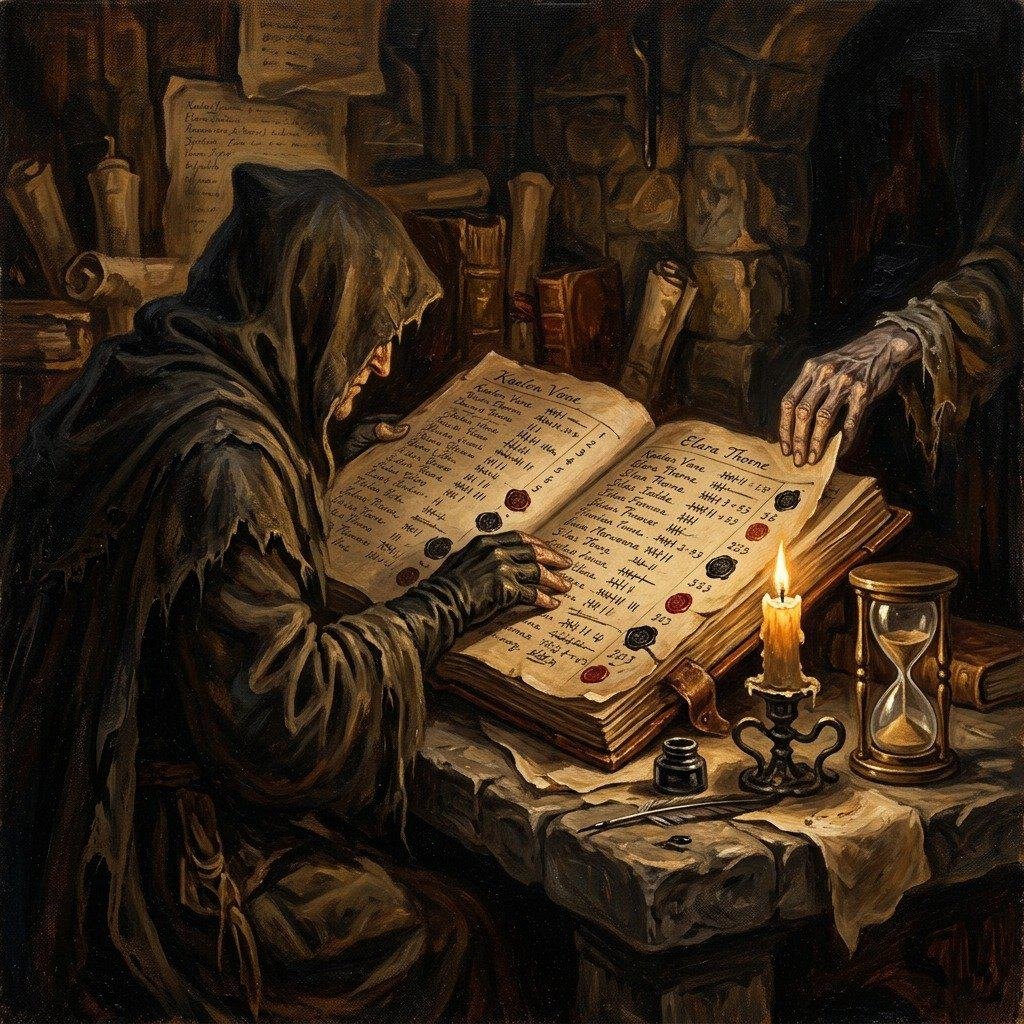
A D&D fairy tale campaign isn’t just a campaign with fairy tale aesthetics — enchanted forests, cottages with smoking chimneys, mysterious old women at crossroads. It’s a campaign whose moral logic operates on fairy tale principles. Actions have consequences that persist. The supernatural world has rules that cannot be bargained away or circumvented by clever mechanics. Every choice the players make is entered into a ledger that the world actually keeps.
In practical terms, this means the campaign tracks three things that standard campaigns often let slide: promises made (and whether they were kept), debts incurred (and whether they were paid), and the specific nature of every supernatural bargain the players have entered into. These threads are the campaign’s spine. They’re the reason the players will feel, in session twelve, the weight of a decision they made in session two — because the world didn’t forget.
For the one-shot approach to dark fairy tale D&D — a lower-commitment entry point for DMs who want to test the genre before building a full campaign — our dark fairy tale D&D guide covers the essentials, and the Twisted Tale one-shot collection provides ready-to-run starting adventures.
Building the World: Fairy Tale Logic as a Setting Foundation
Establish the Rules of the World Before Play Begins
A D&D fairy tale campaign requires a session zero conversation about the rules of the world itself — not the game mechanics, but the metaphysics. In this world: Do supernatural promises bind automatically, or only under certain conditions? Are all fey creatures bound by their word, or only specific kinds? What is the price of breaking an oath made on hallowed ground versus an oath made casually? Who or what enforces the rules when they’re broken?
Players don’t need to know all the answers going in — mystery is part of the genre. But the DM needs to have decided, consistently, before the first session. The moment a fairy tale rule is enforced inconsistently — one sworn promise has consequences, another doesn’t — the internal logic of the world collapses and the campaign loses its power. Write your metaphysical rules down. Stick to them.
Design the Supernatural Factions With Clear Interests
A D&D fairy tale campaign benefits from two or three supernatural factions whose interests are distinct, whose rules are different, and whose relationships with the mortal world run on different terms. The Wild Court of the forest operates on old bargain law — anything spoken in its territory becomes a promise whether intended or not. The Debt Collectors’ Guild enforces contracts with perfect precision and zero flexibility. The Ancient Ones who sleep beneath the old stones simply want to be remembered, and they collect that remembrance in ways that are quiet and accumulative.
These factions don’t need to be at war. They can coexist, occupy different domains, and interact with the players on completely different terms. What matters is that each has a consistent internal logic that the players can learn and navigate — and that navigating it requires genuine understanding rather than just picking the faction with the best mechanical benefits.
Campaign Arc Structure for Dark Fairy Tale D&D
The Three-Act Fairy Tale Structure
Classic fairy tales follow a three-attempt structure: the protagonist tries, fails, tries again differently, fails again, and on the third attempt — with the understanding gained from the previous failures — succeeds. Or doesn’t, which is also a valid fairy tale ending. This structure translates naturally to campaign arcs.
Act One establishes the world’s rules through a series of one-shot-style scenarios where the players encounter the fairy tale logic and begin to understand how it operates. They make promises — some deliberately, some accidentally. They incur debts. They meet the major factions and form initial impressions that will be complicated later.
Act Two is the middle campaign: longer, more complex scenarios where the threads from Act One begin to pull. The promise made in session three has come due. The debt from the forest bargain is being called in. A faction the players trusted reveals an agenda they didn’t anticipate. The players’ earlier decisions have made their current situation more complicated, and the solutions available to them are constrained by who they’ve promised what to.
Act Three delivers the reckoning — the cumulative consequence of every significant choice the players have made. A D&D fairy tale campaign doesn’t have a ‘boss encounter’ in the traditional sense. It has a moment of accounting: every debt paid or called in, every promise kept or broken, every deal honoured or evaded, all coming due simultaneously. The ending is determined by the players’ record, not by their combat performance in a single climactic fight.
Tone and Theme: Keeping the Campaign Consistent
Darkness as Consequence, Not Atmosphere
The biggest mistake DMs make in dark fairy tale campaigns is confusing tone with aesthetic. A campaign full of dark forests, ominous weather, and foreboding NPCs isn’t a dark fairy tale campaign — it’s a gothic horror campaign with fairy tale window dressing. Real darkness in a D&D fairy tale campaign comes from consequence: the moment when a player character realises that a choice they made three sessions ago has created a situation they can’t escape from, and that the world is not going to let them pretend it didn’t happen.
Keep the aesthetic varied — fairy tale worlds have bright festivals and warm hearths alongside dark forests and midnight crossroads. Let the players experience the full emotional range of the genre. The darkness hits harder when it arrives in the middle of something that seemed safe.
Managing Moral Complexity Without Nihilism
A common failure mode in morally complex campaigns is sliding into nihilism: every choice is wrong, every character has mixed motivations, nothing matters. A D&D fairy tale campaign should resist this strongly. Moral complexity means genuine difficulty in choosing, not the absence of meaningful values. The players should feel the weight of difficult choices precisely because they care about the outcome — because there is something worth protecting, even if protecting it costs something.
The antagonists in a fairy tale campaign have legitimate grievances, but that doesn’t mean the players have no legitimate position. The Piper is owed a debt and has the right to collect — but that doesn’t mean the players shouldn’t try to find a solution that doesn’t involve children being taken. Both things can be true. The moral weight of the scenario comes from the fact that both sides have a valid claim, not from the suggestion that neither side matters.
Using One-Shots as Campaign Building Blocks
The cleanest structure for a D&D fairy tale campaign is a series of connected one-shots rather than a traditional continuous narrative. Each session is a self-contained fairy tale — a specific deal, a specific crisis, a specific consequence — but the choices made in each session have lasting effects that shape the next.
This structure has practical advantages: it tolerates missed sessions better than continuous narratives (each session is complete in itself), it creates natural ‘chapter’ moments that give the campaign a sense of pacing and shape, and it allows the DM to use published one-shots as the foundation for individual sessions rather than building everything from scratch.
Anvil & Ink’s Twisted Tale Series is designed to function both as standalone one-shots and as campaign building blocks. Pay the Piper, The Name of Rumpelstiltskin, and The Twelve Dancing Princesses each introduce factions, debts, and consequences that can persist into subsequent sessions. Run them in sequence and you have the skeleton of a three-act fairy tale campaign with minimal additional construction.
Frequently Asked Questions
How many sessions should a D&D fairy tale campaign run?
Eight to twelve sessions is the sweet spot for a focused fairy tale campaign with small groups. This is long enough to establish the world’s rules, develop the major threads, and deliver a meaningful reckoning — and short enough to maintain narrative coherence and player investment. Longer campaigns work but require more active thread management from the DM to prevent the moral logic of the world from becoming diluted over time.
Can I run a D&D fairy tale campaign with standard published adventures as filler?
Yes, with tonal adjustment. Standard published adventures can be re-framed within fairy tale logic: the dungeon is an old bargain gone wrong, the monster is bound rather than simply aggressive, the MacGuffin has a promise attached to it. Adding a fairy tale framing to individual scenes — ‘the goblin chieftain swore an oath on this ground and cannot break it’ — layers the campaign logic onto otherwise generic content without requiring a full rewrite.
Start your D&D fairy tale campaign with the full Twisted Tale Series at anvilnink.com/adventures — three complete one-shots designed to connect into a campaign arc, all built for two to three players.
A D&D fairy tale campaign doesn’t end with a final boss. It ends with a reckoning — and the players know, by then, exactly what they’ve earned.