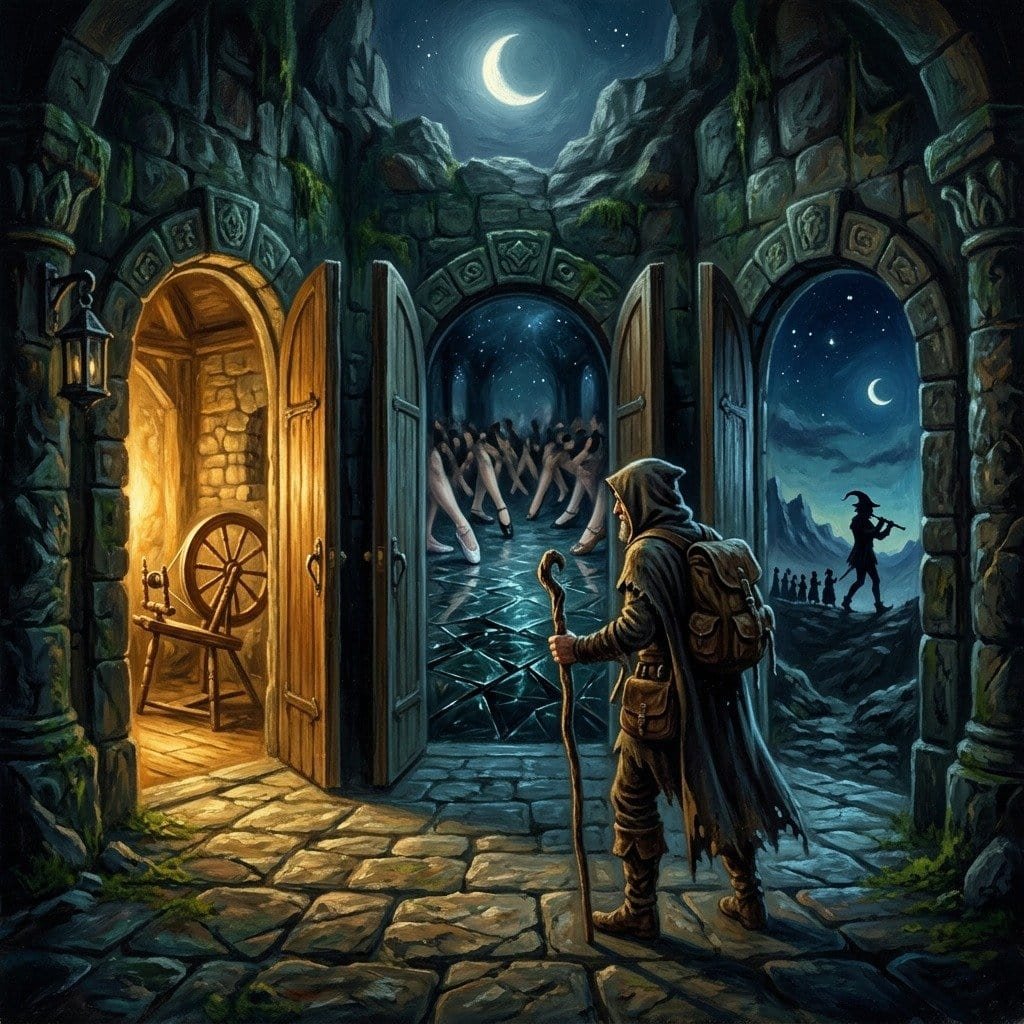

D&D Fairy Tale One-Shot Adventures You Can Run Tonight
A great D&D fairy tale one-shot does something that generic dungeon crawls rarely manage: it gives players a story they already have an emotional relationship with, then twists it just enough to make every familiar beat feel new and dangerous. The witch in the forest isn’t evil because that’s her job — she has a reason. The rescue mission isn’t simple because nothing worth rescuing ever is. This guide covers what makes a D&D fairy tale one-shot work, and which adventures to run first.
What a D&D Fairy Tale One-Shot Does Differently
Standard D&D one-shots tend to work on a straightforward premise: a problem exists, the players solve it, the session ends. Fairy tale one-shots complicate every part of that structure. The problem is rarely what it appears to be on arrival. The solution — if there is one — requires a choice that costs something. The ending is earned rather than given, and it doesn’t always feel like winning.
That moral complexity is the engine that makes a D&D fairy tale one-shot memorable. Players come in expecting to help the miller’s daughter and leave having negotiated a debt they didn’t know existed. They arrive to rescue dancing princesses and discover the princesses don’t want rescuing. The dissonance between expectation and reality — held up against a story template everyone knows — creates genuine dramatic tension that pure invention rarely achieves.
For a deeper look at what makes dark fairy tale D&D work as a genre — tone, themes, and the Brothers Grimm as source material — our guide to dark fairy tale D&D is the best starting point.
The Anvil & Ink Twisted Tale Series: Built for This
The Twisted Tale Series was designed specifically to deliver the dark fairy tale one-shot experience for two to three players. Each adventure takes a Brothers Grimm or folk tale source, strips away the sanitised retellings, and rebuilds it as a morally complex D&D scenario where the antagonist has a case and the right answer is never clean. Here’s what’s currently in the catalogue.
Pay the Piper
The Pied Piper story is already a D&D adventure at its core: a town hires a supernatural contractor, fails to pay the agreed price, and the contractor collects in the worst possible way. Pay the Piper puts the players in the impossible position of arriving after the deal has already been broken — after the children are gone — and facing a Piper who has a contract, a grievance, and every reason to feel justified. The players must decide whether to fight, negotiate, or find a third path that satisfies a debt the town created. No resolution feels entirely clean, which is exactly how it should be.
The Name of Rumpelstiltskin
The standard Rumpelstiltskin story frames the imp as a predatory villain. The Name of Rumpelstiltskin asks the harder question: who is actually the monster here? The players arrive to ‘help’ and quickly discover that Rumpelstiltskin kept every part of his bargain, the miller’s daughter knew what she was agreeing to, and the king who put her in the impossible position has never faced any consequences at all. Choosing a side means accepting moral responsibility for the choice — and the adventure is built so both sides have a legitimate claim.
The Twelve Dancing Princesses
Twelve princesses sneak out every night. Their shoes wear through. No one can explain where they go. The Twelve Dancing Princesses follows the players as they discover the answer — and then forces them to decide whether ‘rescuing’ the princesses is actually what the princesses want, or whether the players are serving a royal court that has its own reasons for wanting the underground world shut down. The adventure is built around questions of agency, captivity, and what freedom actually looks like for people who’ve been defined by their circumstances.
Dark Fairy Tale Adjacent: The Aboleth Adventure
Not a traditional fairy tale source, but The Aboleth Adventure operates on the same moral logic — an ancient entity, a corrupted bargain, and players who arrive too late to prevent the deal and must now decide how to survive its consequences. If your group has worked through the Twisted Tale Series and wants something with the same emotional register but a different setting, this is the next step.
How to Choose Your First D&D Fairy Tale One-Shot
Match the adventure to what your players enjoy doing rather than to the fairy tale source material. Players who love social encounters and moral debate will get the most from Pay the Piper — it’s built around negotiation and the weight of collective failure. Players who want investigation and revelation will engage most with The Name of Rumpelstiltskin, where understanding the full picture of the situation is itself the challenge. Players who prefer character-driven choices that reveal personal values will find The Twelve Dancing Princesses the most rewarding — the central question is genuinely personal and doesn’t resolve through clever tactics.
All three work best with two to three players. The moral complexity of fairy tale scenarios is more powerful in small groups — when only two people have to make the decision, it belongs to them specifically rather than being distributed across a group vote. For the full case for small-group play in the dark fairy tale genre, our dark fairy tale D&D guide covers the dynamic in depth.
Running a D&D Fairy Tale One-Shot: 4 Things That Matter
1. Establish the tone before the first scene. Fairy tale one-shots operate on different emotional logic than standard D&D. Spend sixty seconds at the start setting the register: this is Brothers Grimm, not Disney. Choices have consequences. The monster probably has a reason. The right answer may not exist. This framing invites players into the correct headspace before any mechanics are engaged.
2. Play the antagonist as comprehensible, not evil. The antagonist in a D&D fairy tale one-shot should be doing what they’re doing for a reason the players can understand — even if they disagree with it. A Piper who is genuinely owed a debt, an imp who kept every clause of a contract the other party broke, a witch whose forest the village has been encroaching on for thirty years. Comprehensible motivations create genuine moral tension; generic villainy just creates a target to hit.
3. Let the players find the third path. Every fairy tale one-shot should have at least one resolution that isn’t on the DM’s written list. When players find a creative approach that satisfies the spirit of the conflict without following either the obvious ‘fight the villain’ or ‘negotiate with the villain’ paths, reward it. The best moments in fairy tale one-shots come from players who read the situation more carefully than the DM expected.
4. End on the weight, not the victory. After the final scene of a dark fairy tale one-shot, give the table thirty seconds of silence before asking what everyone thought. The best fairy tale resolutions leave players uncertain about whether they did the right thing — and that uncertainty is the point. Don’t rush past it to experience points and level-ups. Let the story breathe before the game does.
Frequently Asked Questions
Do players need to know the original fairy tales to enjoy these adventures?
No — each adventure is self-contained and provides all the context needed to engage with the story. Familiarity with the source material adds a layer of recognition when the adventure subverts expectations, but the moral tension works regardless of whether players know Rumpelstiltskin from the Brothers Grimm or from the Disney Channel.
How long does a D&D fairy tale one-shot take to run?
The Twisted Tale Series adventures are designed for two to three hours with two to three players. The runtime is consistent because the adventure structure is focused — three to four major scenes rather than sprawling dungeon content — and the moral complexity keeps players engaged without requiring combat to fill time.
Browse the full Twisted Tale Series at anvilnink.com/adventures — dark fairy tale one-shots designed for two to three players, zero prep required.
A D&D fairy tale one-shot gives players a story they thought they knew — and reminds them they never really did.