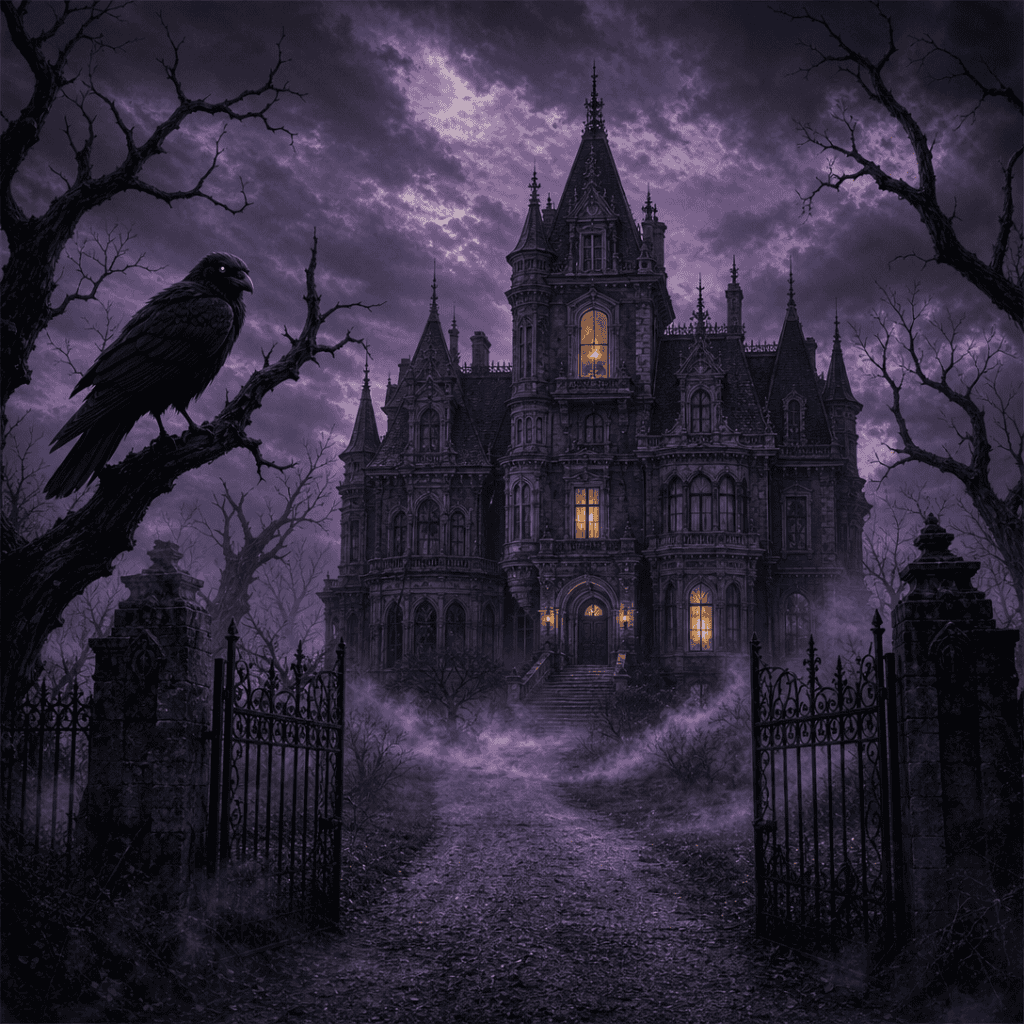

A D&D gothic horror one-shot is the format where the haunted manor is the antagonist. Unlike slasher horror (where a killer chases the party) or cosmic horror (where reality itself is the threat), gothic horror works through atmosphere, paranoia, and the slow accumulation of wrong. The manor is alive in a way the party can’t quite prove. Something is watching from the long gallery. The portraits shift when no one is looking. This guide covers what separates gothic from other horror subgenres, how to design a haunted manor as a self-contained dungeon, the atmosphere techniques that hold the tone, and the published one-shot built around the format.
What Gothic Horror Is (and Isn’t)
Gothic horror gets confused with other horror subgenres at the table. Three distinctions matter:
Gothic isn’t slasher. A slasher session has a clear physical antagonist actively hunting the party. The threat is mobile, intelligent, and direct. Gothic horror’s threat is environmental — the manor itself, the family curse, the haunting. Combat happens, but it’s rarely the climax. The climax is usually a revelation, not a fight.
Gothic isn’t cosmic. Cosmic horror leans on incomprehensibility — the threat is too large, too alien, too old to grasp. Gothic horror is intimate. The threat is a specific dead person, a specific cursed bloodline, a specific room. The party can understand what’s happening; understanding doesn’t save them.
Gothic isn’t body horror. Body horror works through physical violation. Gothic horror works through psychological dread. The body horror table needs to see something disgusting; the gothic horror table needs to feel something wrong.
Gothic’s unique tools: claustrophobic interiors, family secrets, slow-revealed history, atmospheric weather, decay, paranoia, and the sense that something has been here for a very long time and is patient.
The Haunted Manor as Self-Contained Dungeon
The biggest design advantage of gothic horror is that the entire adventure can fit inside one building. No travel time. No outdoor encounters. No need to design a region. Just one cursed manor with eight to twelve rooms, three floors, and a basement that shouldn’t exist on the architectural plans.
This is perfect for one-shots. The party arrives at the manor in the first scene. They never leave. Every encounter, every clue, every fight happens within the walls. The format is tight, focused, and infinite-replay — every haunted manor is a different session even with the same format.
For 2-3 player tables, the constraint is a feature. Six players in a haunted manor split up and lose narrative cohesion. Three players stay together, share their fear with each other, and feel the building close around them.
Five Gothic Atmosphere Techniques
1. The House Reacts
Doors close behind the party. The fire in the parlor relights when the party returns. The portrait that was facing left now faces right. None of these are mechanical — they don’t trigger combat or save throws. They just happen, and the players notice. The house is paying attention.
2. NPCs Who Are Already Wrong
The butler is too composed. The cook smiles at exactly the wrong moments. The lord of the manor knows the party’s names before they introduce themselves. None of these NPCs need to be supernatural; they just need to be slightly off in ways that the players can’t immediately explain. The wrongness builds.
3. Sensory Inversion
The manor smells of roses where no flowers grow. The east wing is colder than the outdoors. A clock somewhere is ticking but cannot be found. Music plays in an empty parlor. Each inversion is small. The accumulation is what makes the place feel haunted.
4. Histories That Won’t Settle
The manor’s previous owners died in suspicious circumstances. The library’s records contradict themselves. The portraits show the same family across generations, but the faces shift between scenes. The party can investigate the history, but the history doesn’t want to be known. Every fact unsettles two others.
5. The Slow Reveal
The party doesn’t see the haunting all at once. It builds across scenes. Hour one: small wrongness. Hour two: visible manifestations. Hour three: the truth. The pacing is the genre. Sessions that show the ghost in scene one have already lost the gothic register.
Three Haunted Manor Floor Plans for One-Shots
1. The Vertical Manor
Three floors plus a basement. Each floor escalates the threat: the ground floor is just unsettling, the second floor shows active manifestations, the third floor is genuinely dangerous. The basement is where the truth lives. The party has to descend, in order, while the manor pushes back.
2. The Horizontal Manor
One sprawling floor with multiple wings. The east wing is the family’s living quarters (mundane and suspicious). The west wing is the historical archives (slow reveal of the curse). The center hall is the social space (where NPCs lie). The party has to triangulate between wings to assemble the truth.
3. The Looped Manor
The manor’s geography doesn’t make sense. Hallways loop back on themselves. Rooms appear that weren’t there before. The party can map the building, but the map keeps changing. This format is harder to run but creates the most unsettling atmosphere — the players never quite know where they are.
Running Paranoia and Dread Without Mechanics
Gothic horror is a tone, not a stat block. A few principles for running it well:
Describe what’s not there. The party walks into the dining room. There’s no servant, even though dinner is laid for eight. The clock on the mantel isn’t ticking. The candles are burning, but none of them are guttering. The absence is what makes the scene feel wrong, not the presence.
Don’t explain everything. Some details should remain unresolved. The portrait that smiles. The footsteps upstairs. The cold spot in the library. Players who get every mystery answered stop fearing the next one.
Use real silence at the table. When the party enters a particularly bad room, stop talking. Let the silence sit for several seconds. Players will fill it with their own dread. This is a DM tool that works only in person but works powerfully when it does.
Reward investigation, but slowly. Players who search rooms find clues — but the clues raise more questions than they answer. Each new piece of information makes the manor more frightening, not less.
The Reveal: Who Is Haunting the Manor
By the climax, the party has to learn (or guess) what’s actually haunting the manor. Three options work:
The dead patriarch. The classic gothic answer. The previous lord of the manor died wronged, was wronged, or did the wronging. His ghost remains. The family knows. The lie is generational.
The bloodline curse. The manor isn’t haunted by a single ghost — it’s bound to a family. Every generation produces one cursed child. The manor is patient. The family pretends. The party has stumbled in during the worst generation.
The manor itself. The building is alive. Was always alive. Eats the families that move in. The current family is just the current victims. Removing the family doesn’t help; the manor will draw new occupants. This option is the darkest.
Pick one. Don’t try to layer all three — gothic horror works through clarity at the climax, not complexity.
Common Pitfalls in D&D Gothic Horror
Showing the ghost too early. The first hour is atmosphere. The second hour is escalation. Don’t pull out the apparition in scene two.
Letting the manor become a generic dungeon. Once the party is fighting room by room, the gothic register collapses. Combat should be rare and decisive, not the structure of the session.
Resolving the haunting with combat. Gothic horror’s climax is usually a revelation, a choice, or an exorcism — not a boss fight. If your climax is “kill the ghost,” you’ve written a different genre.
Ignoring the family. The living people in the manor are the heart of the haunting. They’re the ones lying. They’re the ones who know. They’re the ones the party has to confront — sometimes literally, sometimes by exposing a truth they wanted hidden.
Published D&D Gothic Horror Adventures
Ashcroft Manor is Anvil N Ink’s flagship gothic horror one-shot. The party arrives at a remote estate at the family’s invitation, discovers the household is exactly as wrong as it should be, and unravels the haunting across an evening that will not end. Two hours, 2-3 players, level 2-3, structured around slow-build atmosphere and a climactic revelation rather than combat.
For other horror tones in the catalog: The Spider’s Seminary is closer to body-horror; Little Lambs handles survival horror; The Colossus Autopsy is mature body horror. For the broader horror pillar, see D&D Horror One-Shot Guide.
Frequently Asked Questions
What’s the difference between gothic horror and other D&D horror?
Gothic horror is environmental and psychological. Slasher horror is direct and physical. Cosmic horror is incomprehensible and vast. Body horror is visceral. Gothic works through atmosphere and paranoia — the haunted manor itself is the antagonist, not a creature inside it.
What level should a D&D gothic horror one-shot be?
Levels 2-3 work best. The party is competent enough to investigate without dying to every random hazard, but not so powerful that the manor’s threats feel trivial. Higher-level parties trivialize most environmental haunting effects.
How long should a D&D gothic horror session run?
Two to two-and-a-half hours. Gothic horror needs time to build atmosphere — sessions that try to compress the format under 90 minutes feel rushed and never reach genuine dread. Three-act structure: arrival and unease, escalation and discovery, revelation and resolution.
Should the haunted manor have combat?
Yes, but sparingly. One or two combat encounters, sharp and consequential, with the rest of the session devoted to investigation and atmosphere. Gothic horror climaxes are usually revelations, not boss fights.
Where can I find a published D&D gothic horror one-shot?
Ashcroft Manor is Anvil N Ink’s published gothic horror one-shot for 2-3 players. Two hours, level 2-3, atmosphere-driven, climactic revelation rather than combat.
Run a Gothic Horror Session This Month
Gothic horror is one of D&D’s most underused subgenres. Most horror one-shots default to slasher or cosmic; gothic gives players an experience neither delivers — a slow accumulation of wrong, a manor that watches, a family that knows. Two hours, three players, one cursed estate.
Read the full review of Ashcroft Manor — Anvil N Ink’s published gothic horror D&D one-shot for 2-3 players. Two hours, level 2-3, atmosphere-driven, family-secret climax.
For the broader horror pillar, see D&D Horror One-Shot Guide. For other horror tones, try The Spider’s Seminary and Little Lambs.
The manor remembers. It always remembers. That’s the haunting.