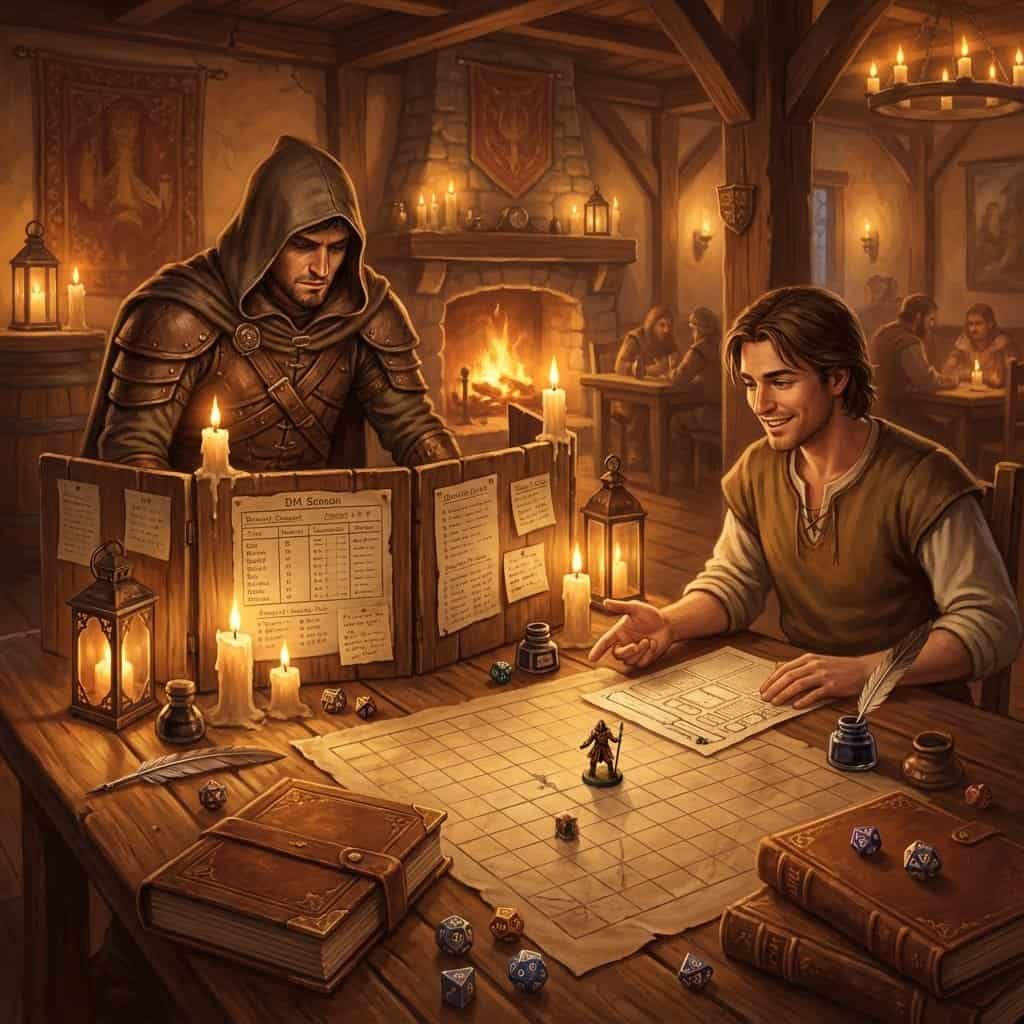

How to Play D&D with 2 Players: The Complete Guide for Beginners
Learning how to play D&D with 2 players opens up incredible gaming opportunities that most people don’t even realize exist. Whether you’re a couple looking for date night adventure, siblings wanting quality time together, or friends with conflicting schedules, two-player Dungeons & Dragons delivers the full tabletop RPG experience without needing to coordinate a large group.
The truth is, some of the most memorable D&D moments happen in intimate two-player sessions. You get deeper character development, more flexible scheduling, faster combat, and the freedom to explore darker or more personal storylines that might feel awkward at a crowded table.
This guide walks you through everything you need to know about running successful two-player D&D games, from basic setup to advanced techniques that make small-group play shine.
Why Two-Player D&D Actually Works Better Than You Think
The conventional wisdom says you need 4-6 players for “real” D&D. That’s simply not true. Two-player games offer unique advantages that larger groups can’t match.
Scheduling becomes effortless. Coordinating two calendars is infinitely easier than wrangling five adults with jobs, families, and other commitments. You’ll actually play more often, which means faster story progression and better continuity between sessions.
Combat moves at lightning speed. Instead of waiting through four other players’ turns, you get back into the action almost immediately. A fight that would take 90 minutes with a full party wraps up in 20-30 minutes.
Roleplay gets deeper and more personal. With only one other person at the table, both the player and DM can explore character motivations, backstory, and emotional moments without worrying about boring spectators or feeling self-conscious.
The story becomes truly collaborative. The DM can weave the adventure directly around the single player character’s goals, fears, and relationships in ways that aren’t possible when balancing multiple character arcs.
The Two Essential Roles: Player and Dungeon Master
D&D with 2 people typically means one person plays the Dungeon Master (DM) while the other plays a single player character. Let’s break down what each role involves.
The Dungeon Master’s Role in Two-Player Games
As the DM, you’re the storyteller, referee, and director of your D&D with 2 people adventure. You describe the world, control all the non-player characters (NPCs), run the monsters, and adjudicate the rules. In a two-player setup, your role becomes even more collaborative.
You’ll need to adjust encounter difficulty since one player character can’t handle the same challenges as a full party. This doesn’t mean dumbing down the game—it means being creative with allies, environmental advantages, and narrative solutions.
The DM also becomes more of a safety net. With no other players to bounce ideas off or cover each other’s weaknesses, you’ll need to subtly guide your player toward viable solutions without railroading their choices.
The Player’s Experience in Duet D&D
As the solo player, you’re the star of the show. Every decision matters, every relationship develops, and the entire narrative revolves around your character’s journey. This level of spotlight can feel intense at first, but most players quickly discover it’s incredibly rewarding.
You’ll need to think more strategically since you can’t rely on a cleric to heal you or a wizard to solve magical puzzles. This limitation forces creative problem-solving and makes victories feel genuinely earned.
The intimate setting also gives you permission to explore character emotions and motivations more deeply than you might at a crowded table. Want to have a dramatic confrontation with your character’s estranged parent? In duet D&D for beginners, you can take all the time you need without seven other people waiting for their turn.
Fixing the Action Economy: How to Balance Combat
The biggest mechanical challenge in two-player D&D is the action economy. In standard D&D, parties have multiple characters taking actions each round, which overwhelms monsters that only get one turn. A solo player faces the opposite problem—they’re outnumbered and outgunned.
The Sidekick Solution (Official Rules)
Tasha’s Cauldron of Everything introduced official sidekick rules specifically designed for small parties. These simplified NPCs come in three varieties: Expert (skill-focused), Spellcaster (magic support), or Warrior (combat focused).
Sidekicks use streamlined stat blocks and level up alongside the player character. They’re powerful enough to contribute meaningfully in combat but simple enough that the DM can run them without slowing down the game.
The key is letting the player control the sidekick during combat while the DM handles their personality and decision-making outside of fights. This gives the player more tactical options without bogging down the DM with extra bookkeeping.
The NPC Companion Approach
Instead of mechanical sidekicks, you can introduce recurring NPC allies who show up for specific missions. A city guard sergeant who helps raid the bandit camp. A scholar who accompanies the player into ancient ruins. A reformed thief who knows the local underworld.
These companions should have clear motivations for helping but also limitations that prevent them from solving all the player’s problems. The guard has orders to return to the city. The scholar isn’t a fighter. The thief won’t risk his neck without payment.
This approach creates natural storytelling opportunities while giving the player backup when they need it most.
Environmental Advantages and Creative Solutions
Another way to balance combat is building encounters around terrain, traps, and tactical advantages rather than raw numbers. A solo player who successfully sneaks into position and triggers a portcullis to trap half the enemy force has effectively balanced the action economy through clever play.
Design encounters where preparation, information gathering, and smart positioning matter as much as dice rolls. This rewards the player’s creativity while making combat feel dangerous and meaningful.
Adjusting Encounter Difficulty for Solo Play
The D&D 5th Edition encounter building guidelines assume a party of 3-5 characters. For two-player games, you need to recalibrate significantly.
The Challenge Rating Math
A “medium” difficulty encounter for a level 3 solo character is roughly one CR 1 creature or two CR 1/4 creatures. Compare this to a full party facing multiple CR 2-3 enemies, and you can see the massive difference.
As a general rule, reduce the total experience points of an encounter by 60-75% compared to what you’d use for a four-person party of the same level. This sounds drastic, but remember—your solo player doesn’t have a tank to absorb damage, a healer to restore hit points, or a wizard dropping area-of-effect spells.
One Big Bad vs. Multiple Weak Enemies
Solo players struggle more against swarms of weak enemies than against single powerful opponents. Multiple attacks per round mean more chances for critical hits and more opportunities for enemies to surround and flank.
Instead of throwing six goblins at your level 2 player, use one hobgoblin captain with a pet wolf. Same total challenge rating, but now combat becomes a strategic duel rather than a numbers game the player will likely lose.
Retreat Should Always Be an Option
In two-player D&D, running away isn’t cowardice—it’s smart tactics. Make sure combat encounters have clear escape routes and telegraph when enemies are too powerful to defeat head-on.
Phrases like “three more bandits emerge from the trees” or “you hear heavy footsteps approaching from the hallway” give players the information they need to make informed decisions about fighting versus fleeing.
Adventure Types That Excel in Two-Player Format
Certain adventure styles naturally suit two-player games better than others. Here’s what works exceptionally well.
Mystery and Investigation Adventures
Detective stories shine in duet D&D. The player can pursue leads at their own pace, interrogate suspects without committee deliberation, and experience genuine tension when the investigation takes dark turns.
A murder mystery in a noble’s manor, a conspiracy in the city watch, or a supernatural investigation into haunted ruins—all of these benefit from the focused attention two-player games provide.
Heist and Infiltration Missions
Planning a heist with one other person feels like Ocean’s Eleven. Planning a heist with six players feels like herding cats. The intimacy of two-player games lets you dive deep into reconnaissance, planning, and execution without endless debates.
Stealth adventures also work better because you’re only tracking one character’s position and stealth rolls instead of trying to coordinate an entire party’s movements through enemy territory.
Personal Quest Narratives
Stories about revenge, redemption, discovery of identity, or confronting one’s past resonate powerfully in two-player format. You can explore themes and emotions that might feel indulgent or melodramatic in a larger group.
The player character seeking their missing sibling, hunting the monster that destroyed their village, or proving themselves worthy of their family’s legacy—these personal stakes drive compelling two-player campaigns.
Horror and Suspense
Horror works best when players feel vulnerable and isolated. Two-player D&D naturally creates this atmosphere. The player can’t rely on safety in numbers, every shadow feels threatening, and the DM can pace revelations for maximum psychological impact.
Gothic horror, cosmic dread, or survival horror scenarios all become more visceral and frightening when it’s just two people at the table with the lights low.
Essential Tips for DMs Running Two-Player Games
Dungeon Mastering for a single player requires some adjustments to your usual techniques.
Pace Revelations Carefully
With one player, you control the entire flow of information. Resist the urge to info-dump or explain too much. Let discoveries unfold naturally through investigation, conversation, and exploration.
If the player seems stuck, use NPCs to offer hints or point them toward promising leads. But trust your player to connect dots and draw conclusions without heavy-handed exposition.
Use NPCs to Create Social Complexity
Even though there’s only one player character, the world should still feel populated and alive. Introduce memorable NPCs with distinct personalities, motivations, and relationships to the player.
The blacksmith who gives the player their first real weapon. The informant who feeds them intelligence but clearly has their own agenda. The nobleman’s daughter who becomes an unexpected ally. These relationships create emotional investment and give the player meaningful choices.
Telegraph Consequences Before They Happen
In a full party, players can discuss risks and make group decisions. A solo player doesn’t have that safety net. Before they make catastrophic mistakes, make sure they understand the stakes.
“The captain looks like someone who takes insults very seriously” is a fair warning before the player says something stupid that starts a bar fight with the city guard.
Celebrate Player Creativity Loudly
When your player comes up with a brilliant solution, makes an unexpected choice, or delivers a great line of dialogue, react enthusiastically. Without other players to validate and build on their ideas, your enthusiasm becomes even more important.
This doesn’t mean every idea succeeds—but it does mean acknowledging clever thinking even when the dice don’t cooperate.
Building Your First Two-Player Character
Character creation for solo play requires thinking about self-sufficiency and versatility.
Classes That Shine in Duet Play
Ranger: Self-healing, tracking abilities, and both ranged and melee options make rangers excellent solo adventurers. The Hunter conclave’s defensive features help survivability.
Paladin: Heavy armor, healing through Lay on Hands, and strong damage output create a well-rounded solo character. Divine Smite lets you burst down dangerous enemies quickly.
Artificer: Magic items, healing infusions, and versatile spellcasting provide solutions to many problems. Plus, you get a mechanical companion for action economy help.
Cleric: Healing, utility spells, and decent combat capability make clerics surprisingly effective solo characters. War or Tempest domain adds martial prowess.
Bard: Skills, magic, and the ability to talk your way out of fights prove invaluable when you can’t rely on brute force. Healing spells provide much-needed sustainability.
Classes to Avoid (Or Modify)
Barbarians and fighters excel in combat but lack utility and magical solutions. They can work in two-player games, but the DM needs to provide more NPC support or magic items to cover gaps.
Full spellcasters like wizards and sorcerers can struggle early on due to limited hit points and spell slots. If you choose these classes, the DM should provide healing potions and defensive magic items.
Background and Personality Considerations
Your background becomes more important in two-player D&D because you can’t rely on other party members’ skills. Choose backgrounds that provide useful tool proficiencies or languages.
Think about why your character works alone or with minimal support. Are they a lone wolf by nature? Did something tragic drive them to isolation? Are they on a secret mission? These narrative hooks help explain the two-player format within the game world.
Quick-Start Method: Your First 2-Hour Session
Want to try two-player D&D tonight? Here’s a streamlined approach to get playing fast.
30-Minute Character Creation
Use one of the pre-generated character options from the D&D Starter Set or Basic Rules. Don’t worry about perfect optimization—just pick something that sounds fun. Give your character a name, one personality trait, and one goal.
Skip elaborate backstory for now. You’ll discover who your character is by playing them.
The Hook (10 Minutes)
Start in a tavern, village, or city street. Describe one immediate problem: a child screaming about goblins near the mill, a merchant whose shipment was stolen, a strange symbol appearing on doors throughout town.
Make it personal and urgent. The player should understand exactly what needs doing and why it matters.
Investigation Phase (30 Minutes)
Let the player gather information by talking to NPCs, examining clues, or scouting locations. Use this time to establish the setting and introduce supporting characters.
Three solid clues pointing toward the adventure’s climax is usually enough. More than that and you risk analysis paralysis.
Challenge or Combat (40 Minutes)
Create one meaningful encounter—either combat, a trap, a puzzle, or a social confrontation. This should test the player’s abilities and create tension.
Keep combat to 3-4 rounds maximum. Use simple enemies with clear tactics. The goal is excitement, not a war of attrition.
Resolution (10 Minutes)
After the challenge, provide a clear resolution and reward. The goblins flee, the merchant pays them, the mysterious symbol’s meaning becomes clear. Give the player a sense of accomplishment and hint at future adventures.
Ask “want to continue this story next time?” If yes, you’ve successfully launched a two-player campaign.
Common Mistakes to Avoid in Two-Player D&D
Even experienced DMs make these errors when switching to duet format.
Mistake #1: Using Standard Encounter Difficulty
The biggest campaign-killer is throwing combat balanced for a full party at a solo player. They’ll die quickly and frequently, which destroys investment in the character and story.
Always reduce encounter difficulty significantly or provide mechanical support through sidekicks and NPC allies.
Mistake #2: Limiting Player Agency
Because you’re worried about the player making fatal mistakes, you might railroad them toward “correct” solutions. This removes the core appeal of D&D—meaningful choice.
Instead, make consequences clear and let them choose their path. Some of the best stories come from plans going sideways.
Mistake #3: Not Preparing for Social Interaction
Combat often gets all the prep time, but two-player games live and die on NPC interactions. If every shopkeeper, guard, and quest-giver feels like a vending machine dispensing information, the world feels hollow.
Prepare three interesting NPCs per session with distinct personalities, voices, and motivations. That small investment makes the world feel alive.
Mistake #4: Forgetting About Pacing
Two-player sessions can rush through content faster than full-party games, or they can bog down in analysis paralysis when the player overthinks decisions.
Watch for signs of decision fatigue. If the player seems stuck, introduce a time pressure or new information that pushes action forward.
Taking Your Two-Player Game to the Next Level
Once you’ve mastered the basics, try these advanced techniques.
Rotating DM Duties
Why should one person always DM? In two-player D&D, you can alternate who runs the game. One session you DM while your partner plays. Next session you swap.
This works especially well with episodic adventures rather than long campaigns. Each person gets to both tell stories and play, preventing DM burnout.
Using Safety Tools for Difficult Content
The intimacy of two-player games lets you explore darker or more emotionally complex themes, but that same intimacy makes it crucial to establish boundaries.
Use the X-Card system, Lines and Veils, or simply have an honest conversation about content you’re both comfortable with. Horror, romance, political themes, violence—discuss it beforehand.
Incorporating Downtime and Base-Building
With faster session pacing, you’ll have more time for downtime activities between adventures. Let the player establish a home base, build relationships with recurring NPCs, and pursue long-term goals.
Maybe they’re renovating an old tower as their headquarters. Perhaps they’re building a spy network in the city. These downtime activities create investment in the world beyond just fighting monsters.
Connecting One-Shots into Campaigns
Instead of committing to a massive campaign, string together self-contained two-hour adventures with recurring characters and escalating stakes. Each session tells a complete story, but threads connect them.
The merchant you saved in session one becomes your informant in session three. The cultist you interrogated in session two reveals information critical to session five. This approach delivers campaign depth with one-shot flexibility.
Resources and Adventures Designed for Two Players
You don’t have to create everything from scratch. Several excellent resources cater specifically to two-player D&D.
Published Adventures for Small Groups
Look for adventures explicitly designed for 2-3 players and 2-3 hour sessions. These typically include pre-balanced encounters, sidekick NPCs, and pacing guidance for small groups.
Adventure modules tagged “duet” or “small party” usually account for action economy issues and include mechanical solutions like NPC allies or environmental advantages.
Adapting Existing Adventures
Most published D&D adventures assume 4-5 players, but you can adapt them with these quick modifications:
- Remove 60-70% of enemies from combat encounters
- Replace swarms of weak monsters with single stronger opponents
- Add NPC allies for key battles
- Increase availability of healing potions and defensive magic items
- Reduce dungeon size by cutting non-essential rooms
Focus on the adventure’s core story and dramatic moments while streamlining everything else.
Online Communities and Resources
The D&D Beyond forums have active two-player and duet gaming communities sharing tips, adventures, and solutions to common problems. Reddit’s r/DMAcademy frequently discusses small-group techniques.
DMs Guild offers hundreds of pay-what-you-want and low-cost adventures specifically designed for duet play, many with excellent reviews from the community.
Why Two-Player D&D Might Be Your Best Gaming Experience
After running and playing dozens of two-player campaigns, I’m convinced this format produces some of the most memorable tabletop RPG experiences possible.
The scheduling flexibility means you actually play regularly instead of canceling every other week. The intimate setting creates deeper character development and riskier emotional moments. Combat moves fast enough that fights feel thrilling rather than tedious. And the collaborative storytelling achieves a level of synchronization that’s difficult with larger groups.
Yes, you’ll need to adjust your expectations and techniques. But the core of D&D—collaborative storytelling, meaningful choices, and dice-driven adventure—works beautifully with just two people.
So grab a friend, family member, or partner. Roll up a character. Create a simple hook. And discover that how to play D&D with 2 players isn’t a compromise—it’s a feature.
Your next great adventure is waiting, and you only need one other person to begin.