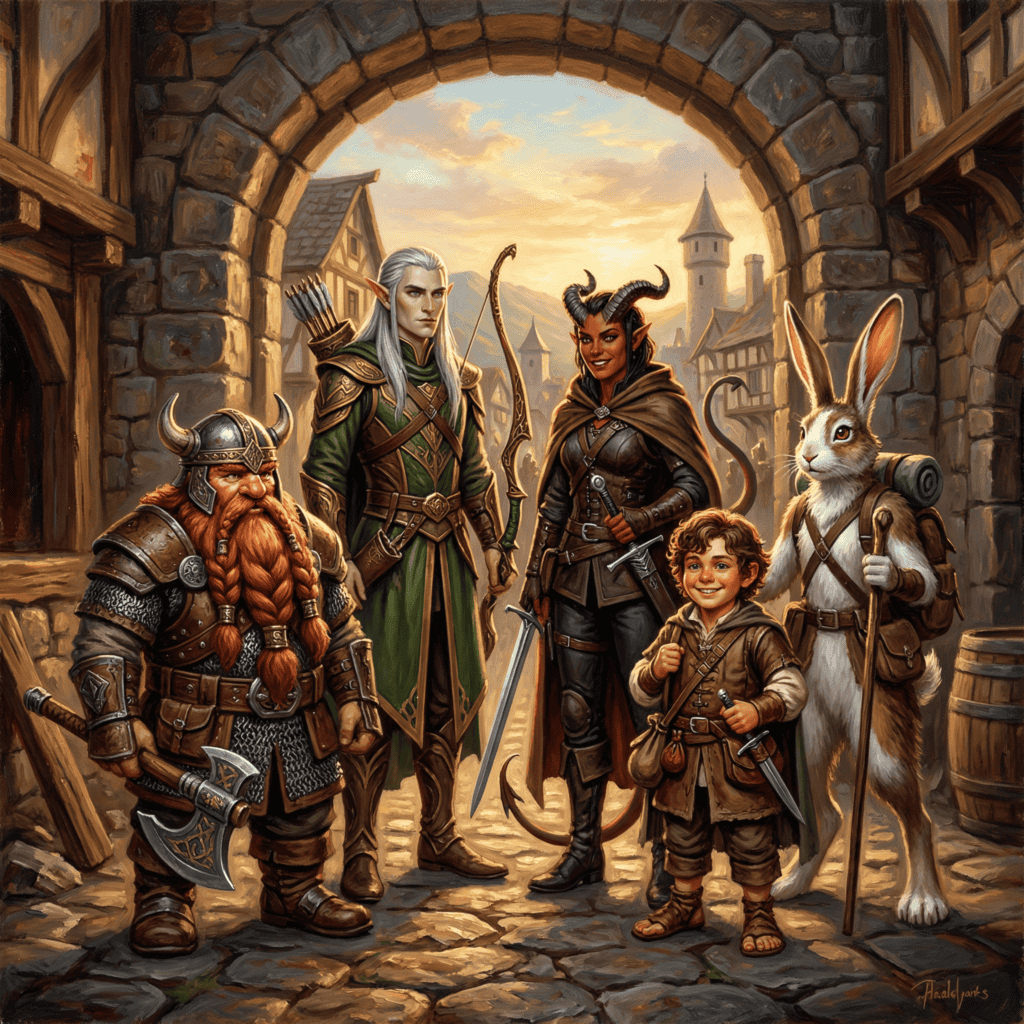

D&D roleplaying tips are everywhere. Most of them tell you the same things: give your character a voice, know their backstory, lean into their flaws. That advice is not wrong. It is just incomplete — especially when the question is not how to roleplay a character in general, but how to roleplay a specific race in a way that feels real rather than like a costume.
This guide covers the practical side of bringing any D&D race to life at the table. Not lore dumps — actual technique. Speech patterns that feel distinct without being exhausting to sustain. Mannerisms that come up in play, not just in backstory. Cultural tensions that create roleplay opportunities without derailing the adventure. And the mistakes most players make with each race, which are usually more instructive than the advice itself.
Why Race Matters More Than Most Players Realise
Your character’s race is not just a stat block modifier. It is the lens through which your character has experienced the world — every interaction, assumption, privilege, and prejudice shaped by what other people see when they look at you. A tiefling who grew up in a city that feared their kind has a different relationship with strangers than a tiefling who grew up in a community that celebrated their heritage. The mechanics are identical. The character is not.
The mistake most players make is treating race as decoration. The pointed ears come out in the character description. The lifespan gets mentioned in the backstory. And then at the table, the character behaves like a human with unusual appearance. That is not wrong, exactly — characters can and do transcend their origins. But if you want depth, you have to figure out how your character’s background actually shaped them.
These D&D roleplaying tips apply across races because the underlying questions are the same: What does this race value? What do they assume about the world? What do they find strange about the way other races behave? How does their lifespan, their physiology, or their cultural history show up in how they speak and move and make decisions?
D&D Roleplaying Tips That Work for Any Race
Choose One Mannerism, Not Five
New roleplayers often try to perform their race — a list of traits they cycle through scene by scene. Dwarves are gruff. Elves are aloof. Halflings are cheerful. The character becomes a checklist rather than a person.
Pick one mannerism and commit to it. One speech habit. One physical tell. One consistent way your character responds under pressure. That single consistent thread does more for characterisation than five traits you forget to deploy half the time. Start with one and make it land every time. As the character develops over the session, you can layer in more.
Let Cultural Background Create Friction, Not Conflict
The most interesting roleplay comes from cultural friction — moments where your character’s background leads them to a different conclusion than the rest of the party, without tipping into active conflict. A dwarf who insists on honouring a verbal agreement even when breaking it would be tactically smarter. An elf who finds the human party’s urgency baffling because a decade feels like an afternoon to them. A tiefling who is immediately suspicious of a warm welcome from a town that has never seen their kind before.
Friction creates roleplay. Conflict shuts it down. The difference is whether the character’s position creates a problem to solve together or a wall that stops the adventure cold.
Make the Backstory Visible
Backstory that stays on the character sheet is wasted. Your character’s history should show up in how they behave at the table — not through speeches about their past, but through reactions. A character who grew up poor does not announce it. They pocket the extra coin without thinking. They notice the servants in the noble’s house before they notice the noble. They are suspicious of generosity.
Ask yourself: what are three things your character would notice, react to, or do automatically because of where they came from? Those are your roleplay anchors. They do not need explaining. They just need to happen.
Speech Patterns Without Accents
Accents are risky. They require performance, they can go wrong in ways that are awkward, and sustaining them for a four-hour session is exhausting. Speech patterns are different — and far more useful for characterisation.
A dwarf might speak in short declarative sentences. An elf might use subjunctive phrasing — “Were I to agree to this, it would require…” — because they think in longer timeframes. A halfling might finish other people’s sentences (incorrectly). A tiefling might be meticulous about clarity because they have learned that ambiguity costs them.
These patterns are sustainable, they do not require performing, and they signal character without demanding explanation.
D&D Roleplaying Tips for Specific Races
How to Roleplay a Dwarf
The dwarf stereotype — gruff, drunk, obsessed with gold — is so embedded in D&D culture that it is almost impossible to avoid thinking about it when you sit down with a dwarf character sheet. The question is whether you use it or work around it.
Dwarves who transcend the stereotype tend to have one thing in common: they have a specific code. Not a general sense of honour, but a specific set of things they will and will not do, with a clear reason for each. A dwarf who will betray any alliance except one sealed with a blood oath is more interesting than a dwarf who is just loyal. A dwarf who refuses payment in silver for a specific reason is more interesting than a dwarf who just likes gold.
The full dwarf roleplay guide covers personality archetypes, speech patterns, cultural background hooks, and the most common mistakes players make with dwarf characters.
How to Roleplay an Elf
The central challenge of playing an elf is the lifespan. If your character has lived for three hundred years, they have seen things fail that humans built entire civilisations around. They have outlived people they loved. That history should colour how they engage with urgency, with attachment, and with other people.
The most useful question for an elf character: what do they still care about, after all that time? The answer tells you more about the character than their class, backstory, or ability scores combined. Elves who care fiercely and specifically — about a particular forest, a particular craft, a particular relationship — are far more engaging than elves who have simply stopped caring about anything.
For detailed technique, the elf roleplay guide covers cultural assumptions, speech, mannerisms, relationship to mortality, and how to make the lifespan feel real without lecturing the table about it.
How to Roleplay a Tiefling
The tiefling trap is the edgy loner — brooding, distrusted, haunted by their fiendish heritage. That character works once. By the tenth tiefling who fits that template at a public table, it has become a cliché.
The more interesting tiefling questions: What did your character decide to do about the way the world treats them? Did they lean into the fear and use it as a tool? Did they work twice as hard to be seen as trustworthy? Did they find a community that accepted them and build their whole identity around protecting it? The heritage is the starting point, not the destination.
Two resources worth reading: the tiefling roleplay guide for the full breakdown, and how to roleplay a tiefling without being edgy or annoying — which addresses the cliché problem directly.
How to Roleplay a Halfling
Halflings have the opposite problem from tieflings. Where tieflings get the edgy loner stereotype, halflings get the comic relief hobbit — cheerful, food-obsessed, and not taken seriously by anyone at the table. A character the other players do not take seriously cannot carry a scene.
The key to a halfling that lands is confidence. Not bravado — genuine, quiet confidence that does not need to prove itself. Every halfling who survived to adulthood in a world built for people twice their height has figured out how to be underestimated and use it. That is not a liability. That is a skillset.
The halfling roleplay guide covers personality archetypes, the luck mechanic and how to roleplay it, and how to build a halfling who is taken seriously without losing what makes the race interesting.
Neurodivergent Characters at the Table
Whether you are a neurodivergent player bringing your own experience to the table, or a DM running an NPC who processes the world differently, D&D offers space for those characters to exist with nuance. The Neurodivergent Adventurer’s Guide covers both playing neurodivergent characters respectfully and running tables that are genuinely inclusive.
Building Your Roleplay Toolkit Before the Session
These D&D roleplaying tips are most useful when you apply them before the session, not at the table while the game is happening. Running the game demands too much cognitive bandwidth to also be workshopping your character voice in real time.
Before your next session, answer these five questions for your character:
- What does my character want most, right now, in this adventure?
- What do they assume about strangers — trust, suspicion, curiosity?
- What is one thing they say or do reflexively when under pressure?
- What is the one thing they will not do, regardless of the stakes?
- How does their racial background shape their relationship with the rest of the party?
Five answers. Write them down. Bring them to the table. They will do more for your roleplay than any amount of in-session improvisation. The full article on D&D roleplay tips for better characters expands on these foundations with specific techniques for voice, mannerism, and staying in character during combat.
Frequently Asked Questions: D&D Roleplaying Tips
Do I need to stay in character the whole session?
No. Most experienced players shift in and out of character naturally. The goal is not sustained performance — it is making the in-character moments land. A single well-timed line that is completely in character is worth more than three hours of imperfect accent work. Focus on the moments, not the consistency.
What if my character has a very different personality from mine?
That is the point. You do not need to agree with your character’s worldview to play it authentically. You just need to understand why they hold that view. A character who is selfish, suspicious, or arrogant can be played compellingly by a player who is none of those things — if the player understands the character’s internal logic.
How do I roleplay my character’s race without leaning into stereotypes?
Go specific rather than general. Generic dwarf equals gruff and proud. Specific dwarf equals gruff about broken tools, generous about food, proud specifically about craft rather than lineage. Specificity is what separates a character from a type. The more specific the detail, the more individual the character feels — even when the detail draws from racial cultural background.
Is it okay to roleplay a race differently from the official lore?
Absolutely. Lore is a starting point, not a constraint. The most interesting characters often exist in tension with their racial expectations — the elf who finds long lifespans depressing, the dwarf with no interest in mountains, the tiefling who is cheerfully at ease in their own skin. Check with your DM, but in most games lore is there to be used, not obeyed.
What is the quickest way to make any character feel more real at the table?
Give them one strong opinion about something mundane. Not a grand philosophical position — a specific, concrete preference. They hate a particular style of architecture. They have a strong view on the right way to make camp. They think a specific food is disgusting and will say so. Mundane opinions make characters feel like they exist between sessions, not just when the dice are rolling.
Looking for a deeper guide to a specific race? The Roleplay Guide Series from Anvil N Ink covers dwarf, elf, tiefling, and halfling characters in detail — personality archetypes, speech patterns, cultural hooks, and ready-to-use tables for building a character with genuine depth. Available individually on Amazon and through Payhip.
Great D&D roleplaying tips do not replace character depth — they reveal it. Start with the questions, and the answers will take care of the rest.