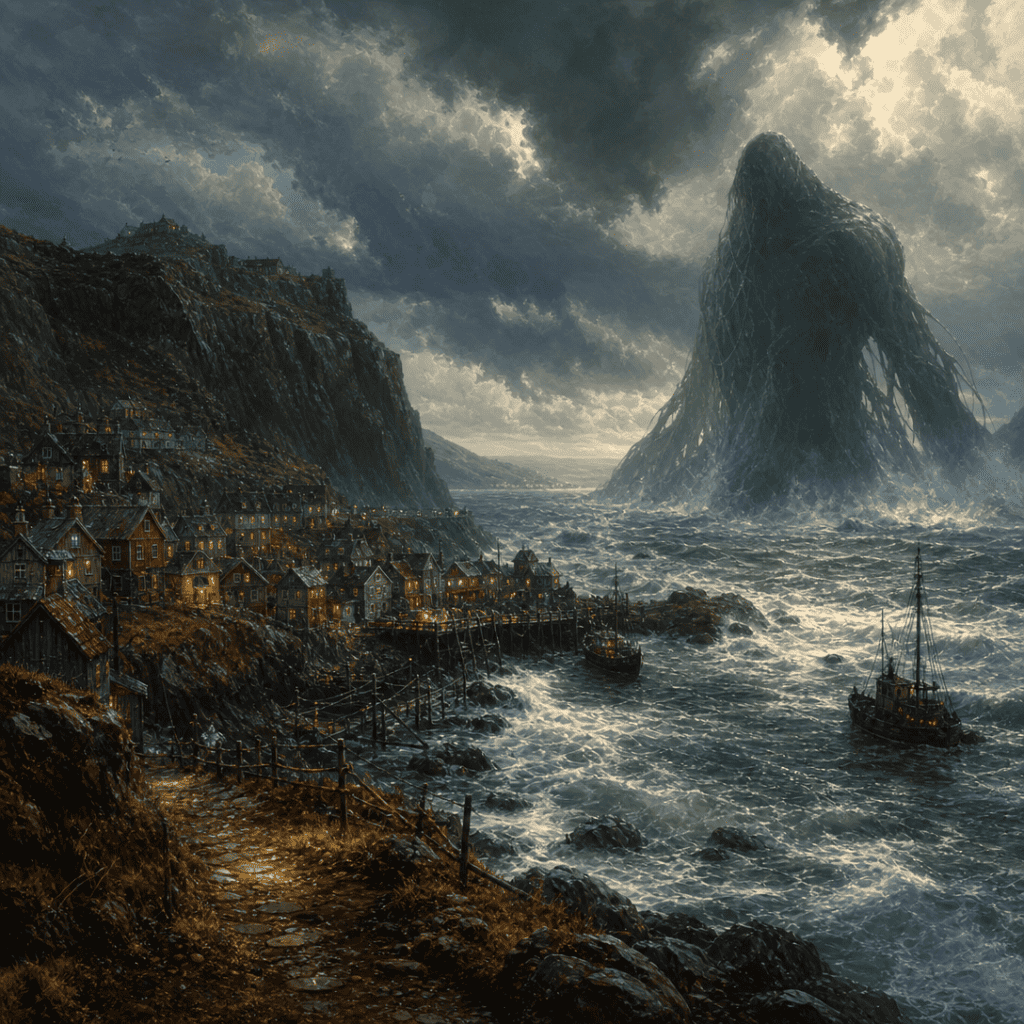

A coastal D&D one-shot trades the dungeon for the shoreline — and gains a whole toolbox the dungeon never had. Tides that rise on a timer. Fog that hides what’s coming. Isolated villages with nowhere to run and something rising out of the water. The coast is one of the most atmospheric settings in the game and one of the most underused, which makes it perfect for a single evening of play that doesn’t feel like every other crawl.
Here’s what makes a coastal D&D one-shot work, and how to run one that uses the sea instead of just decorating with it.
What makes a coastal setting different
The coast brings three things a dungeon can’t. The first is the tide — an environmental clock that rises and falls on its own schedule, flooding paths, stranding boats, and turning a safe beach into a death trap on a timer. The second is isolation: a fishing village at the end of a dead-end road has nowhere to flee to. The third is the unknown beneath the surface, because anything can be out there in the dark water, and the players can’t see it until it wants them to.
Lean on all three and a coastal one-shot generates tension for free. The party isn’t just fighting monsters — they’re racing the water, trapped against it, and unsure what’s under it.
Use the tide as a clock
The single best tool a coastal D&D one-shot offers is the tide, so build your session around it. Give the party a path that only exists at low water, a cave that floods at high, or a ritual that has to finish before the sea comes in. Now every decision carries a cost, because the water is always coming and it doesn’t care about their plans.
A visible timer changes how players behave. They move faster, take risks, and feel the pressure mount as the tideline creeps up the sand. You barely have to describe danger — the rising water does it for you.
Make the village feel trapped
Coastal horror and adventure both thrive on isolation, so cut off the exits early. A washed-out road, a missing ferry, a storm that’s pinned every boat to the dock — whatever the reason, the party should understand quickly that they can’t simply leave. Help isn’t coming, and the nearest town is hours away across bad ground.
That confinement reframes everything. A threat that would be a minor problem in an open setting becomes terrifying when there’s nowhere to retreat. The village stops being a backdrop and becomes a box the party is locked inside with whatever’s hunting them.
Keep the threat under the water
Whatever’s menacing your coast, resist the urge to show it. The dread of a coastal one-shot lives in the surface the players can’t see past. A wake with nothing visibly making it, a fishing net dragged out to sea, a shape that’s gone when anyone looks twice — these do more work than any stat block revealed too early.
When the threat finally surfaces, the payoff lands precisely because you made the party wait. A sea monster the players have been imagining for an hour is scarier than one they fought in the first five minutes.
Scale matters: from drowned dead to kaiju
Coastal one-shots stretch across a huge tonal range. At one end, quiet horror: the patient drowned dead wading ashore from a cold tide. At the other, spectacle: something enormous hauling itself out of the sea toward a town too small to stop it. The setting supports both, and the choice sets the whole mood of your session.
If you want to go big, the giant end of the scale has its own techniques — see our guide to running a kaiju in 5e. The coast is the natural home for a monster that size, because the sea is the only thing large enough to have hidden it.
A coastal one-shot you can run tonight
For a ready-made example of the big-scale approach, The Gullet of Graw drops a town beside a “castle” grinding toward the shore — a hermit crab the size of a cathedral, wearing a shipwreck and two centuries of accreted shell. The townsfolk think it’s a monster. They’re wrong, and they’ve hired the party to kill the one thing keeping them alive.
It uses every coastal tool at once: isolation, looming dread, and a threat that came out of the western sea. It’s a no-prep horror one-shot for two to three players, and a clean demonstration of how much the coast adds to a single evening of play.
Frequently asked questions
What is a coastal D&D one-shot?
It’s a self-contained adventure set on or near the sea — a fishing village, a stretch of shoreline, a tidal cave — that uses coastal features like tides, isolation, and hidden threats as the core of the session.
How do I use tides in an adventure?
Treat the tide as a countdown. Tie objectives to paths or chambers that only exist at low or high water, so the rising sea becomes a visible clock the party has to beat.
What monsters work best on the coast?
Anything that benefits from concealment and water — the drowned dead, things that lurk beneath the surface, or a single enormous creature. The best choice is whatever you can keep hidden until the moment it matters.
How do I make a coastal village feel dangerous?
Cut off escape early. A washed-out road or a storm-bound harbor traps the party, and isolation turns even a modest threat into a serious one because there’s nowhere to run.
Can a coastal one-shot be horror or is it just sea adventures?
Both. The same setting supports quiet drowned-village horror and large-scale monster spectacle. The tide, the fog, and the isolation serve either tone.
Run the coast
Set a tidal clock, trap the village, hide the threat under the water, and let the sea do half your work for you.
Want a coastal one-shot ready to go? Get The Gullet of Graw:
- PDF on Payhip — instant download
- Paperback on Amazon
- Ebook on Amazon