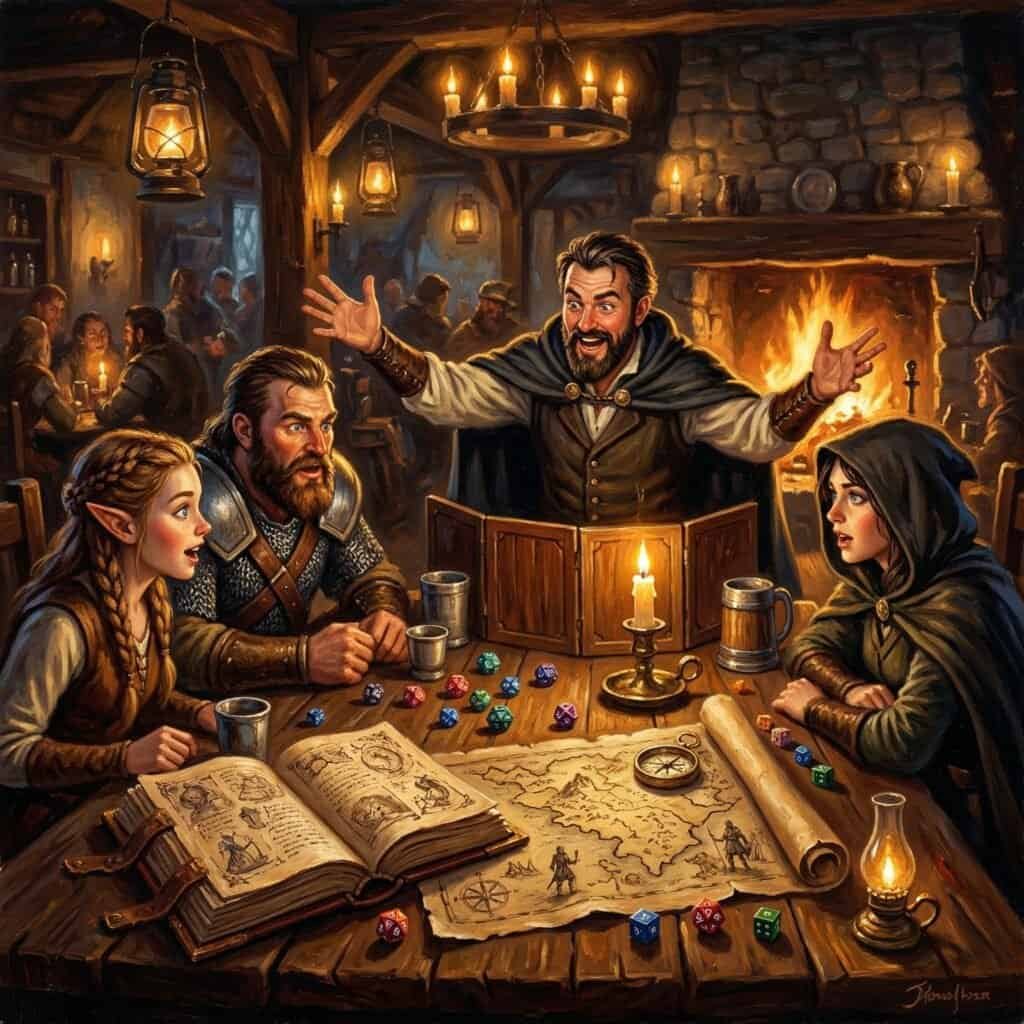

The best D&D one-shots do not just fill an evening. They are the adventures your players still talk about three months later — the heist that went sideways in the best possible way, the mystery that clicked together perfectly, the moral dilemma where half the table made a different choice.
This guide exists because finding good one-shots is harder than it should be. Most published D&D content assumes a party of four or five, a multi-session campaign, and a DM with hours to prep. One-shots are a different format entirely, and they deserve proper treatment. Whether you want to run something tonight or plan ahead for your next session, this guide will point you in the right direction.
We cover the best D&D one-shots by genre, by player count, and by experience level — with specific recommendations for each.
What Makes a One-Shot Worth Running?
A one-shot is a complete D&D adventure that runs in a single session — usually 2 to 4 hours. No cliffhangers, no “to be continued,” no homework for players between sessions. It starts, plays through, and ends. The characters may never be seen again.
That constraint is a design feature, not a limitation. The best one-shots are built around it. Every encounter serves the story. Every NPC matters. The pacing is tight because it has to be.
The most common one-shot failure is an adventure that was never actually designed as one. It is a truncated campaign chapter — too many encounters, no clear arc, an ending that arrives because the session timer ran out rather than because the story concluded. Learning to spot the difference saves a lot of frustrating evenings.
A strong one-shot needs: a hook that starts play immediately, clear stakes the players understand from the first scene, encounters that move the story forward, at least one genuine decision that changes something, and an ending that works regardless of what the players do.
The Best D&D One-Shots by Genre
Genre is your first filter. Players who loved a tense heist will check out during a gothic horror session if horror is not their thing. Know your group before you pick your adventure.
Heist One-Shots
Heist adventures are built around planning, execution, and improvisation when the plan falls apart — and the plan always falls apart. That is the whole point. The genre rewards creative problem-solving and keeps every player engaged because the success of the job depends on everyone contributing.
A good heist one-shot gives players a clear objective, introduces them to the location before the job starts, and then throws two or three complications at them mid-run. The Merchant’s Vault runs this structure cleanly for 2-3 players — a layered urban heist with multiple approach options that adapts to whatever the players decide.
If you want to understand the mechanics before you attempt one, the guide on how to run a heist in D&D walks through structure, timing, and what to do when players go completely off-plan.
Mystery One-Shots
Mystery adventures work best when the players feel clever. The design goal is not to trick them — it is to give them the evidence and let them figure it out. A mystery that withholds all clues until the final act is not a mystery. It is a cutscene with extra dice rolls.
The design principle that makes mysteries work: three clues pointing to every major revelation. If players can find any one of the three, they get the information. This prevents the adventure from stalling out when a key roll fails. For the full framework, the mystery adventure guide covers clue distribution, red herrings, and how to handle players who jump to the right answer too early.
Horror One-Shots
Horror in D&D is mostly atmosphere and dread, not jump scares and gore. The best horror one-shots slow the pacing, use silence and description, and create situations where players feel their characters are genuinely at risk — not just rolling dice against a hit point total.
Two things matter before you run horror. First, check comfort levels with your players — an X-Card conversation before play takes two minutes and prevents the session landing badly for someone. Second, understand that horror works through suggestion and anticipation. Little Lambs and Spider’s Seminary both demonstrate this — the dread builds slowly and lands harder for it. The D&D horror one-shot guide covers tone, safety tools, and how to build genuine tension.
Dark Fairy Tale One-Shots
Fairy tale adventures hit differently from standard D&D because the moral weight lands differently. The villain has a reason to be a villain. The hero’s victory comes with a cost. The story feels familiar — and then breaks in the right places.
The strongest dark fairy tale one-shots use the recognisable structure of the original story as a scaffold and then subvert it deliberately. Players think they know where this is going. They do not. Twelve Dancing Princesses puts players in the position of the traditional villain. Pay the Piper asks what price is too high to pay for what you want.
For the full context on running this genre, the guide to dark fairy tale D&D adventures covers tone, moral complexity, and how to use fairy tale structure without it feeling like a children’s story.
Comedy One-Shots
Comedy is the hardest genre to pull off because funny is subjective. Adventures that land consistently are built around absurd premises played entirely straight. The Golden Rest — a one-shot set in a retirement home for adventurers — works not because it reaches for laughs but because it takes its ridiculous premise with complete sincerity. The comedy comes from the situation, not from the DM mugging for the table.
Seasonal and Holiday One-Shots
Holiday one-shots solve a specific problem: getting your group to the table when regular scheduling makes a campaign impossible. Love’s Labyrinth (Valentine’s Day), The Pink Plague (Easter), The Pot at the End (St Patrick’s Day), and A-Maze-ing Fools (April Fools) are all designed for the holiday format — complete, pre-genned, and playable with no additional prep.
Best D&D One-Shots by Player Count
Player count changes almost everything about encounter design, pacing, and roleplay dynamics. An adventure designed for five players does not simply scale down to two. The math breaks, the spotlight distribution collapses, and the adventure feels wrong without anyone being able to say exactly why.
One-Shots for 2-3 Players
The 2-3 player format is one of the most underserved in published D&D content. Most adventures assume four or five players. When you run those with a smaller group, the encounter math is broken, pacing drags, and the adventure does not feel designed for your table — because it was not.
Adventures built specifically for 2-3 players balance combat encounters around smaller parties, give every character meaningful things to do, and tend to run tighter. The complete guide to D&D for 2-3 players covers class composition, encounter balancing, and what makes the small-group format work.
The Ready Adventure Series is designed from the ground up for this player count. Every title includes pre-generated characters, complete encounter notes, and a runtime of 2-3 hours. Zero prep required.
One-Shots for Full Tables (4-6 Players)
Full-table one-shots need more moving parts. Encounters need to give everyone a moment. The DM needs to actively manage spotlight time so quieter players are not drowned out by the more vocal ones.
The best full-table one-shots use faction dynamics and branching information — sub-groups within the party that have different knowledge or goals, creating natural roleplay opportunities without forcing them. Even if one player dominates a scene, another has their own thread to pull on.
Best D&D One-Shots by Experience Level
For Brand New Players and DMs
A beginner-friendly one-shot has three non-negotiable features: a premise that does not require game knowledge to understand, pre-generated characters with personality notes, and forgiving encounter design that does not punish new players for mechanical mistakes.
For completely new groups, avoid one-shots that hinge on complex mechanics. The challenge should be narrative or problem-solving. No Rest for the Buried and Goblin Defense (The Other Side of the Door) both work for completely new groups because the premise is immediately clear.
For new DMs: the guide on how to run a one-shot in D&D covers session structure, pacing, and what to do when players go off-script.
For Experienced Groups
Experienced players benefit from complexity: moral dilemmas with no clean answer, NPCs whose motivations are genuinely ambiguous, and endings that feel earned rather than inevitable. They have seen enough D&D to spot a railroaded outcome and resist it.
The Extraction Job works well for experienced groups — the mission is straightforward, the person being rescued complicates everything, and the ending depends entirely on what the players decide. Burden of the Unmaker takes a different angle: a ticking clock, a bomb that cannot be safely defused, and a party that has to decide who carries it.
A Short List of Recommended One-Shots
Seven strong picks across the categories above:
- Best heist: The Merchant’s Vault — layered urban heist, multiple approaches, 2-3 players, 3 hours
- Best mystery: The Crimson Ceremony — political thriller, four suspects, genuine ambiguity
- Best horror: Little Lambs — survival horror, genuine stakes, not for sensitive groups
- Best fairy tale: Twelve Dancing Princesses — dark retelling, multiple endings
- Best comedy: The Golden Rest — retirement home for adventurers, absurdist premise played straight
- Best zero-prep: The Stolen Festival Bell — pre-gens included, 2 players, runs in 2 hours
- Best moral dilemma: The Extraction Job — straightforward mission, impossible choice at the end
All of the above are available through Amazon or directly through Payhip. If you want the complete library in one purchase, the Complete Collection bundle includes all current Anvil N Ink titles at a significant discount.
How to Run the Best D&D One-Shot at Your Table
Finding a great adventure is half the work. Running it well is the other half. The most common mistake is treating the adventure as a script. It is not. The adventure tells you what exists in the world. It does not tell you what the players will do with any of it. Your job as DM is to respond honestly to what they try — not to steer them back toward the intended path.
For your first time running a specific one-shot: read it once all the way through, identify the three most important things players need to discover before the midpoint, and then trust yourself. You know the shape of the adventure. The details you can improvise.
For more adventure concepts beyond what is covered here, the full list of D&D one-shot ideas covers another fifteen adventure concepts ready to run tonight.
Frequently Asked Questions: Best D&D One-Shots
How long should a D&D one-shot be?
Most one-shots run 2-4 hours at the table. The design target matters more than the actual runtime. An adventure designed for 2 hours that plays in 3 is fine. An adventure marketed as a one-shot but designed for 6 hours is the problem. Always check the stated runtime before committing.
Can you run a one-shot with no prep at all?
Yes, with the right adventure. Zero-prep one-shots include everything the DM needs: pre-generated characters with full stats and personality notes, complete encounter descriptions, and read-aloud text for key moments. The Ready Adventure Series is built for this — the DM reads the adventure once and runs it that night.
What is the best one-shot for a group that has never played D&D before?
Choose one with pre-generated characters and a simple, clear premise. Avoid sessions where the challenge is primarily mechanical — new players find rules overwhelming when they are the main obstacle. Goblin Defense and No Rest for the Buried both work for completely new groups.
Are published one-shots better than homebrew?
Neither is objectively better. Published one-shots save prep time and tend to be more thoroughly playtested. Homebrew one-shots can be tailored exactly to your group. If time is short, published wins. If you enjoy adventure design as part of the hobby, homebrew is worth the effort.
How many encounters should a one-shot have?
Enough to fill the runtime without padding. A rough guide for a 3-hour session: one or two social or investigation encounters, one or two combat encounters, and a climax encounter. That is four to five encounters total. The climax encounter should be the mechanical and narrative peak — not just another fight.
Ready to run tonight? The Ready Adventure Series delivers complete one-shots designed specifically for 2-3 players — pre-generated characters, full encounter notes, multiple endings, zero prep required. Browse individual titles on Amazon or pick up the Complete Collection bundle on Payhip for the full library at a discount.
The best D&D one-shot is the one your group actually plays — self-contained, purposeful, and worth every minute at the table.