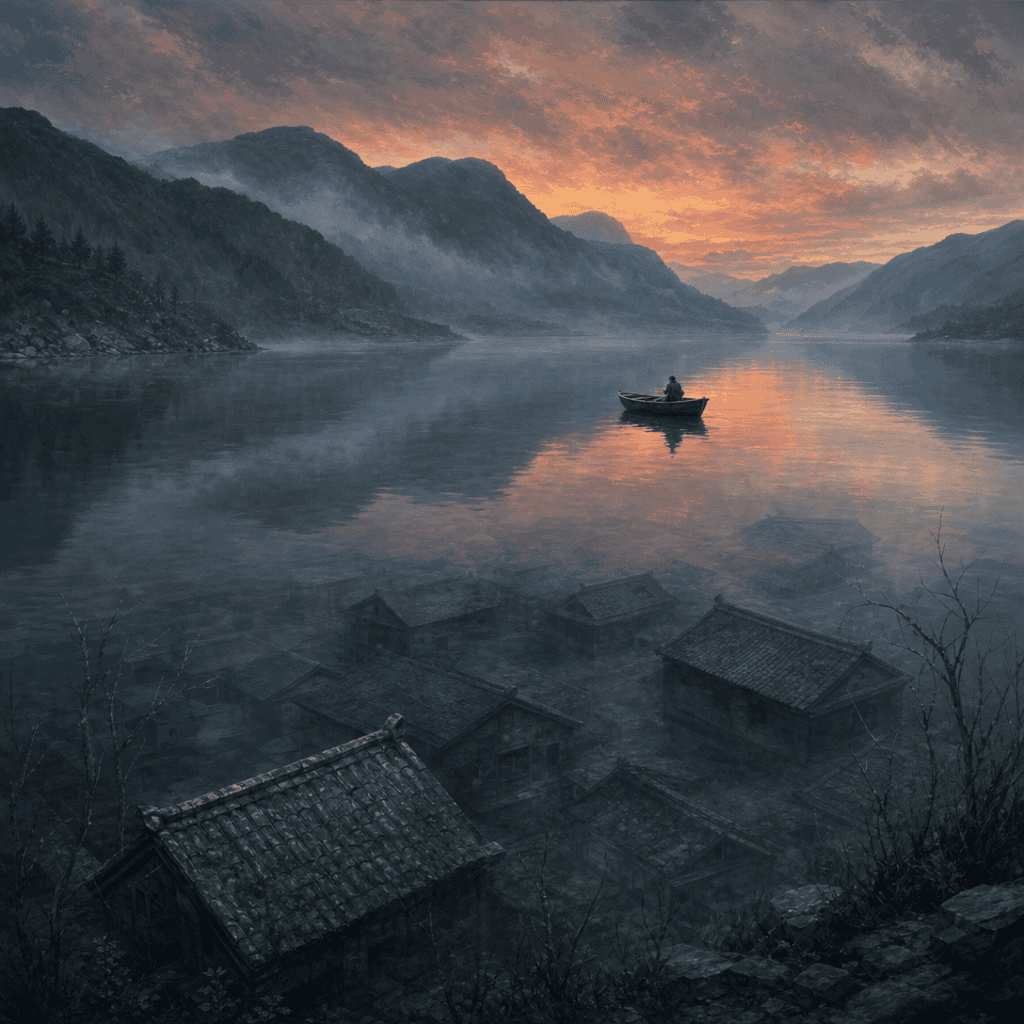

A haunted lake is one of the most quietly terrifying settings you can drop a party into. There’s no monster in the doorway, no obvious dungeon to clear — just still grey water that doesn’t reflect right, a village that used to be there, and the slow certainty that something beneath the surface is aware of you. Water horror works on a different frequency than the dungeon crawl. It’s patient, it’s cold, and the dread comes from what you can’t see rather than what’s charging at you.
Here’s how to run a haunted lake adventure that gets under your players’ skin.
Why water is the perfect horror setting
A lake is opaque, deep, and silent — three qualities that make it ideal for horror. The players can stand at the shore and see nothing of what’s below, which means their imaginations do the work for you. Every ripple, every cold current, every shape half-seen under the surface becomes a question they can’t answer.
Water is also slow and heavy and hard to fight in. It strips away the party’s usual confidence — you can’t simply charge a threat that lives in the deep. That helplessness is the engine of water horror: the sense that you are a visitor somewhere that does not want you, and cannot be cleared like a dungeon.
What’s under the surface
The best haunted lakes hide something specific and terrible beneath the water — and the most effective version is a drowned place. A village flooded long ago, its rooftops and bell tower still standing in the murk, its dead still going about their business. The horror isn’t a creature; it’s a whole world preserved and wrong, waiting at the bottom.
This is grounded in real dread. Across the world, reservoirs were built by flooding inhabited valleys, drowning villages whose ruins still surface in dry years. A haunted lake taps that real unease — the idea that an entire community is down there, just below the waterline, and hasn’t entirely left.
Wards and the things they hold
A haunted lake adventure gains structure from the question of what’s keeping the horror down. Old wards, failing markers, a ritual someone once performed and someone else stopped maintaining — these give the party something to investigate and something to lose. As the wards fail one by one, the thing in the water rises.
This turns a static setting into a ticking one. The party isn’t just exploring a creepy lake; they’re racing a slow collapse, piecing together who bound what and why, and deciding whether to repair the seal or finally answer the thing that has waited beneath it. The failing ward is your clock.
Run it as investigation, not combat-first
Water horror falls apart if you lead with a fight. The dread depends on uncertainty, so run a haunted lake as a mystery first. What happened to the village? Why did the last survey crew abandon their camp? What are the wards for, and who’s been letting them fail? Let the party uncover the truth one cold clue at a time.
Seed the trail with concrete evidence — an abandoned camp, a half-finished journal, a marker carved with a warning — and let the horror assemble itself in the players’ heads. When the threat finally surfaces, it should feel like a confirmation of something they’ve dreaded for an hour, not a monster that jumped out in the first scene.
Stillness is the whole atmosphere
The mood of a haunted lake is silence. No wind, no birds, no movement but the slow lap of water that’s too quiet. Describe the absence of sound as much as the presence of dread. The party should feel watched by something that never shows itself, in a place that has gone unnaturally, expectantly still.
Resist the urge to fill that silence. Water horror lives in restraint — the long, quiet stretches where nothing happens and everyone at the table is braced for it to. The stillness is not empty time; it is the threat, holding its breath.
A haunted lake one-shot you can run tonight
For a complete haunted lake built on all of this, The Mournmere Survey hands the party a quiet mountain reservoir to chart — until they find the abandoned camp of the crew who came before them, the five failing wards that keep something bound, and the truth of the village drowned beneath the still grey water, which has waited forty years to be answered.
It’s a no-prep horror one-shot for two to three players that assembles the drowned village, the failing wards, and the slow investigation for you. If this article made you want to run water horror, it’s the cleanest way to get a haunted lake to the table. For the coastal cousin of this dread — tides, isolation, things rising from the sea — see our guide to coastal D&D one-shots.
Frequently asked questions
What is a haunted lake adventure?
It’s a horror session set on or around a body of still water that hides something terrible beneath the surface — often a drowned village or a bound presence — run as an atmospheric mystery rather than a straight fight.
Why is water so effective for horror?
It’s opaque, deep, and silent, so players can’t see what’s below and their imaginations supply the threat. It also strips away their usual confidence, since you can’t simply charge something that lives in the deep.
What should be hidden under the lake?
Something specific and wrong — most powerfully a drowned village with its dead still present. A whole preserved world beneath the surface is far more unsettling than a single lurking creature.
How do I structure a haunted lake session?
Use failing wards as a clock and run the adventure as an investigation: uncover what happened to the village, who bound the threat, and why the seals are failing, while the danger slowly rises.
How do I keep it scary instead of just a monster fight?
Lead with mystery and atmosphere, not combat. Lean on silence, withhold the threat, and seed concrete clues so the horror assembles in the players’ minds before anything ever surfaces.
Look into the water
Hide a drowned world beneath the surface, let the wards fail on a clock, run it as a mystery, and let the stillness do the rest.
Want a haunted lake one-shot ready to run? Get The Mournmere Survey:
- PDF on Payhip — instant download
- Paperback on Amazon
- Ebook on Amazon