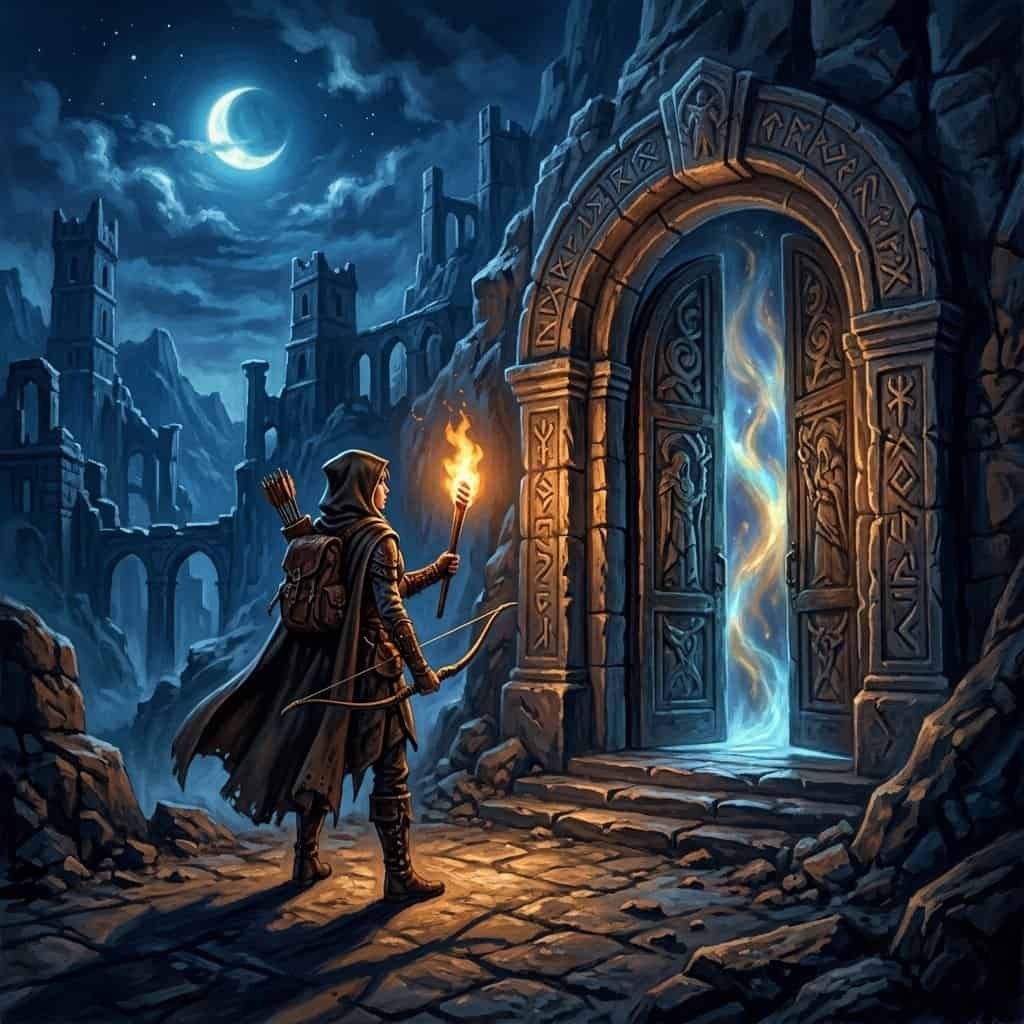

Duet D&D Adventures: Running D&D for One Player and One DM
Duet D&D adventures — one Dungeon Master, one player — are the most intimate form the game takes. Every scene is designed for a single protagonist. Every NPC interaction is personal. Every moral choice lands on one character’s shoulders without the buffer of a group vote. If you’ve never run or played a duet campaign, you’re missing one of the most rewarding experiences in tabletop RPG. This guide covers everything you need to start running duet D&D adventures that your player will still be talking about years from now.
What Makes Duet D&D Adventures Different
Standard D&D is designed for a group. Social encounters have multiple participants. Combat assumes a party of four or five pooling their actions. Exploration distributes the cognitive load of information-gathering across several players. Duet D&D adventures strip all of that away and replace it with something sharper: a single story, a single protagonist, and a DM whose entire attention is focused on making that one character’s experience extraordinary.
The result is a fundamentally different kind of D&D. Duet adventures run faster, hit harder emotionally, and create a level of narrative personalisation that group play simply can’t achieve. The DM knows exactly who the protagonist is, what they want, what they fear, and what choices will actually challenge them. The player gets the full spotlight, every session, without competition.
For an overview of the broader landscape of small-group play — including three-player games and encounter scaling — our complete guide to D&D for 2–3 players provides the full context.
The Core Mechanics Adjustment for Duet Play
Encounter Difficulty
The single most important mechanical adjustment for duet D&D adventures is combat scaling. Standard encounter building assumes four to five characters. A single player has one set of actions per round, one pool of hit points, and no backup when things go wrong. Enemies calibrated for a full party will remove a solo character from the fight in two or three rounds — not because the player made a mistake, but because the numbers weren’t designed for them.
Drop encounter difficulty significantly: Easy encounters are your new Medium, and Medium is genuinely dangerous. Avoid multi-enemy swarms that multiply incoming attacks. A single opponent who requires tactics and resource management creates better drama than a mob that deletes the player character through volume of attacks. Favour enemies with interesting abilities — ones that force the player to adapt — over enemies who simply deal high damage.
The Sidekick Solution
For players who want more tactical depth in combat without losing the duet dynamic, a DM-controlled sidekick provides a second body without adding scheduling complexity. The sidekick rules in Tasha’s Cauldron of Everything provide a simple framework. Build the sidekick to complement the player character’s weaknesses — a healer for a combat-focused character, a damage dealer for a support-oriented one — and run them reactively rather than heroically. The sidekick keeps the player alive and enabled; they don’t solve the encounter independently.
Alternatively, lean into adventure types that reduce combat’s centrality. Investigation, social, and heist-style duet D&D adventures work beautifully without requiring the player to punch their way through every scene. Combat becomes a tool in the story rather than the default mode of progression.
Story Structure for Duet D&D Adventures
Make It Personal
The defining advantage of duet D&D adventures is the degree to which the story can be tailored to a single player’s backstory. In a group campaign, villain motivations have to connect to four or five backstories simultaneously, which usually means the connections are shallow. In duet play, the villain can have a direct and specific relationship with the player character — they wronged them personally, they know something about them no one else does, they represent the exact fear or failure the character is trying to overcome.
Before your first duet session, ask your player three things: what does your character want most, what are they running from, and what would it take to break them? The answers to those three questions are your adventure generator. Every scenario you run should connect to at least one of them.
Pacing Without a Group
Duet D&D adventures run faster than group games. Without five players processing information, debating options, and resolving individual actions, scenes move quickly. A dungeon level that takes a full group three hours might take a duet session ninety minutes. Plan for this — and use it. Shorter scenes with higher individual impact suit duet play better than sprawling set pieces designed to fill time.
End each session on a strong narrative beat: a revelation, a choice made, a consequence delivered. Because the player is absorbing all the emotional weight of the story themselves, they carry each session’s events more personally than group players do. Landing on a moment of genuine weight at the end of a session creates anticipation for the next one.
The One-Shot Approach vs. Campaigns
The easiest way to start running duet D&D adventures is with a one-shot rather than a campaign commitment. A single self-contained adventure lets you calibrate difficulty, test pacing, and discover how your player engages with duet format before investing in a long-term story. If the one-shot works, you have everything you need to build a campaign. If adjustments are needed, you’ve made them in a low-stakes context.
Anvil N Ink’s Ready Adventure Series is designed for exactly this entry point. Every title is a complete, zero-prep one-shot built for two to three players — with encounter balance, story structure, and DM guidance already embedded. The Stolen Festival Bell and The Bandit’s Keep (specifically designed for one to two players) are both strong starting points for first-time duet DMs. For a heist-flavoured option that runs cleanly with a single player, try The Merchant’s Vault — and for the full shortlist, see our roundup of the best D&D one-shots for 2 players.
5 Techniques That Elevate Duet D&D Adventures
1. Give NPCs memory. In duet play, NPCs can track the player character’s specific choices across sessions in a way that’s difficult in group games. The guard the player bribed two sessions ago recognises them. The villain references something the player character said in their first confrontation. This continuity makes the world feel alive in a way that resonates more strongly for a solo player than for a group.
2. Let the player drive scene transitions. In group games, DMs often manage scene order to balance spotlight time. In duet play, the player character can go wherever they want, and the DM’s job is to make everywhere interesting. Follow the player’s lead on scene order and let their choices determine the adventure’s shape. This is genuine agency in a way that group management rarely allows.
3. Use failure as fuel, not punishment. Failed skill checks in duet play should complicate the scene, not end it. A failed Persuasion check means the NPC becomes suspicious and the player has to find another approach — not that the door closes forever. This ‘fail forward’ philosophy is standard good DM practice, but it’s especially important in duet play where there’s no other party member to step in with a different skill approach.
4. Build in decompression moments. Solo players carry the full emotional weight of the story. High-tension scenes hit harder when you’re the only one experiencing them. After a particularly intense scene — a moral choice, a significant combat, a major revelation — build in a quiet moment: a camp scene, a conversation with a recurring NPC, a moment of environmental description that lets the story breathe. These transitions matter more in duet play than in groups.
5. Ask for feedback between sessions. Duet play has the shortest feedback loop in D&D — one DM, one player, one conversation. Use it. After each session, ask what felt good, what felt slow, and what kind of scene the player is hoping for next time. Two minutes of honest feedback shapes the next session more effectively than any amount of advance planning.
Frequently Asked Questions
How long should duet D&D adventures run?
Two hours is the sweet spot for duet one-shots. Without group dynamics to manage, scenes resolve faster, and two focused hours of duet play covers as much story as three to four hours with a full group. For ongoing campaigns, sessions of ninety minutes to two hours keep energy high without the diminishing returns of longer sessions where solo players begin to feel the weight of carrying the entire story alone.
Can duet D&D adventures become a full campaign?
Absolutely. Some of the most deeply developed D&D campaigns are duet games — the intimacy of the format allows character development that group play compresses or sidelines. The key to a successful duet campaign is a clear character arc that grows across sessions, a villain with a direct relationship to the player character, and a world that reacts specifically to that character’s choices rather than serving as a generic backdrop.
Start your duet D&D adventures with the full catalogue at anvilnink.com/adventures — every title designed for two to three players, zero prep required.
Duet D&D adventures are D&D at its most focused — the story stripped down to its essential element: one person, one world, and the choices that define them both.