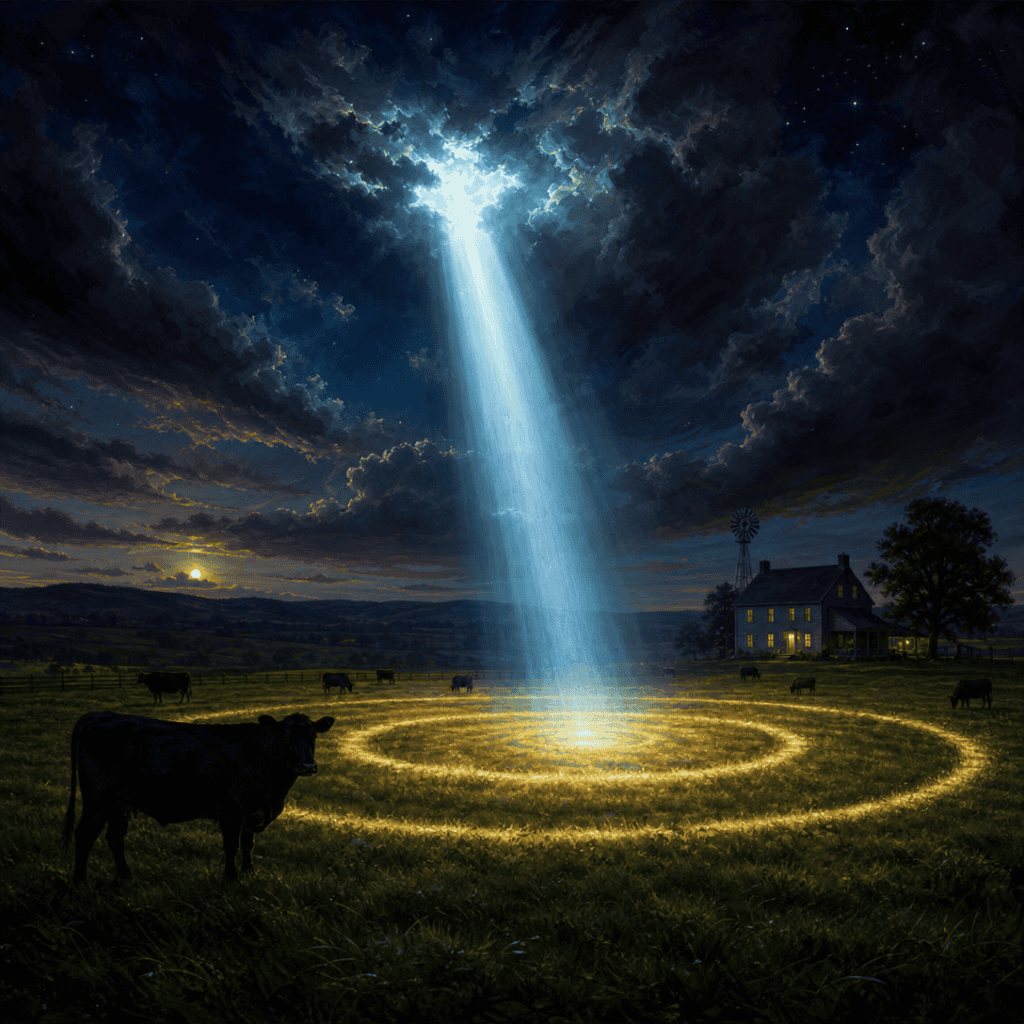

Putting aliens in D&D sounds like a mistake until you actually try it — and then it becomes one of the most unsettling sessions your table will ever play. Lights in the night sky. Cattle vanishing without a trace. Perfect rings burned into the fields. In a world where players expect dragons and liches, the one thing they can’t explain is the thing that genuinely frightens them. A fantasy table has a stat block for everything; the joy of a UFO mystery is that, for once, they don’t.
Here’s how to run aliens and UFOs in D&D so they land as eerie wonder instead of a tonal car crash.
Why aliens work better than you’d expect
Fantasy players are fluent in their genre. Show them a demon and they reach for protection from evil; show them undead and they know to bring radiant damage. That fluency is exactly what makes aliens in D&D so effective — they break the players’ mental library. There’s no folklore, no bestiary entry, no cleric who’s read about this. The unknown is genuinely unknown.
That’s the whole trick. The fear of the alien isn’t its power; it’s its unfamiliarity. A monster the characters can name is a problem to solve. A phenomenon nobody in the world has a word for is a horror to survive.
Keep it a mystery, not a monster manual
The fastest way to ruin aliens in D&D is to reveal them too early. The power is in the unexplained — so withhold. Lead with effects, never causes: the missing livestock, the scorched ground, the witness who came back wrong and won’t say what they saw. Let the party assemble the dread one clue at a time.
Treat it as an investigation. Seed the trail with concrete, escalating evidence and let the players theorize, because their imaginations will build something scarier than any description you could give. The longer you keep the truth offstage, the more the table leans in.
Reskin, don’t reinvent
You don’t need new rules to run a convincing UFO mystery — you need familiar mechanics wearing strange skins. A “disintegration beam” is a known spell effect with a new description. “The visitors” can run on stat blocks you already own, redescribed as something wrong and geometric and silent. The mechanics stay legible; only the presentation turns alien.
This keeps the session smooth to run and lets you focus your energy where it belongs: on atmosphere. The players don’t need novel math to feel unnerved. They need a cold light, a sound that isn’t right, and the sense that whatever this is doesn’t think like anything they’ve met.
Ground it in a small, ordinary place
Cosmic horror hits hardest against a humble backdrop. Set your UFO mystery in a sleepy farming village, not a grand city — a place of barns and quiet folk and animals that have started behaving strangely. The contrast between the mundane setting and the impossible intrusion is where the unease lives.
It also gives the players something human to protect. The frightened farmer, the missing child, the herd gone silent — these small, real stakes make the vast, unknowable threat feel personal. Alien abduction lore has always worked this way: it’s terrifying precisely because it happens to ordinary people in ordinary places.
A UFO one-shot you can run tonight
For a ready-made version, The Heifer Abductions of Hollow Creek drops all of this into a single evening. Cattle are vanishing in the night, perfect rings are seared into the fields, and the handful of folk who’ve seen the lights have come back changed. The party walks into a UFO mystery in a fantasy world with zero prep required.
It’s a horror-comedy one-shot for two to three players that nails the tonal balance — eerie enough to unsettle, grounded enough to stay fun. If this article has you wanting to drop a flying saucer into your campaign, it’s the cleanest way to try it. For the broader craft of mixing genres, see how to blend sci-fi into a fantasy campaign.
Frequently asked questions
Do aliens really fit in a D&D game?
Yes — and they work better than expected, because players have no genre playbook for them. The unfamiliarity is the point: a threat nobody in the world can name is genuinely unsettling at a fantasy table.
How do I introduce a UFO mystery without breaking the tone?
Lead with effects, not the source. Missing livestock, scorched rings, changed witnesses — keep the cause offstage and run it as an investigation so the strangeness builds gradually instead of crashing in.
Do I need new rules for aliens?
No. Reskin existing spells and stat blocks with strange, unfamiliar descriptions. The mechanics stay readable while the presentation turns alien, which keeps the session easy to run.
Where should an alien adventure be set?
In a small, ordinary place — a farming village rather than a capital. The contrast between the mundane setting and the impossible intrusion is what makes the threat feel eerie and personal.
How do I keep aliens scary instead of silly?
Withhold the reveal, ground the stakes in human victims, and lean on atmosphere — cold light, wrong sounds, behavior nobody can explain. The horror comes from the unknown, so protect the unknown.
Bring down the lights
Lead with effects, run it as a mystery, reskin what you already own, and let the unknown do the frightening for you.
Want a UFO mystery ready to run? Get The Heifer Abductions of Hollow Creek:
- PDF on Payhip — instant download
- Paperback on Amazon
- Ebook on Amazon