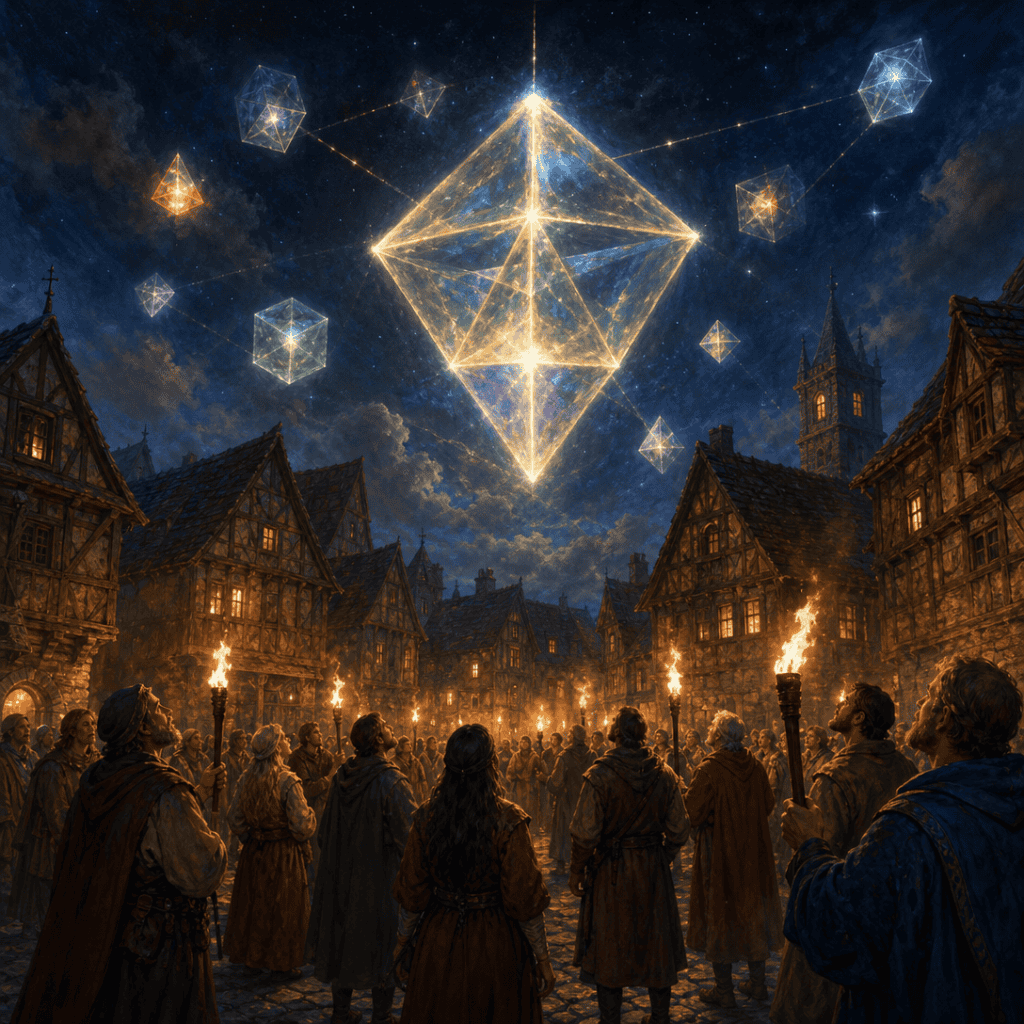

Mixing sci-fi in D&D is one of the oldest moves in the hobby and one of the easiest to botch. Done carelessly, a laser gun in a sword-and-sorcery game feels like a joke that wandered in from another table. Done deliberately, the intrusion of the strange and technological becomes a source of genuine wonder and dread — the buried starship, the fallen star that isn’t a star, the machine nobody living knows how to switch off. The difference isn’t the content. It’s the control.
Here’s how to blend sci-fi into a fantasy campaign so it deepens your world instead of derailing it.
Decide how much sci-fi your world can hold
Before you drop anything technological into the game, pick your dosage. A trace of sci-fi — a single crashed vessel, one ancient artifact — reads as mysterious and ancient. A heavy dose, where blasters sit beside spellbooks as normal equipment, is a different genre entirely. Both work; what breaks a campaign is doing one while the table expects the other.
So choose on purpose and signal it. The players need to know whether the laser sword is a once-in-a-campaign marvel or a thing they can buy in town. Set that expectation and almost any sci-fi element can fit. Leave it ambiguous and even a small intrusion feels like a mistake.
Frame technology as mystery, not equipment
The single best way to introduce sci-fi in D&D is to make it ancient and unexplained rather than modern and available. A device the characters don’t understand is wondrous. The same device, fully documented with a price tag, is just gear — and gear is where the tone usually cracks.
Lean into “any sufficiently advanced technology is indistinguishable from magic.” To your characters, the humming artifact is magic; they have no other framework for it. Keeping technology mysterious preserves the fantasy texture of your world while still letting you smuggle in the wonder of the unknown.
Reskin before you rebuild
You rarely need new rules to run sci-fi in D&D. A “plasma rifle” is a known damage profile with a new description. A malfunctioning construct is a golem with different flavor. An energy shield is an existing defensive effect, reskinned. Borrow the mechanics you already trust and change only the presentation.
This keeps the game running smoothly and your prep light. The players feel the genre shift through description — the smell of ozone, the cold geometric design, the light that doesn’t flicker like flame — while the underlying math stays familiar and fast. Reskinning is the lowest-risk way to bring a new genre to the table.
Use sci-fi as contrast, not wallpaper
Sci-fi in D&D works best as an intrusion, not a baseline. When the whole world is technological, the wonder evaporates. When a single impossible thing breaks into an otherwise grounded fantasy setting, it lands hard — the one cold, humming, geometric thing in a world of timber and torchlight.
Protect that contrast. The buried ship matters because everything around it is medieval. The fallen star is uncanny because nothing else in the world is like it. Used sparingly, a sci-fi element becomes the most memorable thing in a campaign; used everywhere, it becomes the new normal and stops meaning anything. This is the same logic that powers science fantasy as a whole — the friction between the two genres is the point.
A genre-blend one-shot you can run tonight
For a worked example of sci-fi breaking into fantasy, The Heifer Abductions of Hollow Creek does it in a single, contained session. A quiet farming community starts losing cattle to lights in the sky and rings burned into the fields — a clean, low-dose intrusion of the technological into an otherwise grounded fantasy world.
It’s a no-prep horror-comedy one-shot for two to three players and a tidy demonstration of how to introduce a new genre without committing your whole campaign to it. For the specific craft of running the aliens themselves, see our guide to aliens and UFOs in D&D.
Frequently asked questions
Can you mix sci-fi and fantasy in D&D?
Yes, and it’s a long tradition. The key is deciding how much sci-fi your world holds and signaling it clearly, so the technological element reads as intentional rather than as a tonal accident.
How do I add sci-fi without ruining the fantasy feel?
Frame technology as ancient and mysterious rather than modern and purchasable. A device the characters can’t explain preserves the sense of magic, while documented gear with a price tag is where the tone usually breaks.
Do I need new rules to run sci-fi elements?
Usually not. Reskin existing spells, weapons, and monsters with technological descriptions. The mechanics stay familiar and fast while the presentation carries the genre shift.
How much sci-fi is too much?
It depends on the dosage you chose. A single crashed ship is mysterious; blasters in every shop is a different genre. Trouble comes from mismatching the amount to what your table expects, not from any specific element.
Why does sci-fi work best as an intrusion?
Because contrast creates wonder. One impossible thing in a grounded fantasy world is unforgettable; the same thing everywhere becomes ordinary. Used sparingly, sci-fi is a highlight rather than wallpaper.
Blend with intent
Pick your dosage, keep the tech mysterious, reskin what you already own, and protect the contrast that makes it land.
Want a genre-blend one-shot ready to run? Get The Heifer Abductions of Hollow Creek:
- PDF on Payhip — instant download
- Paperback on Amazon
- Ebook on Amazon