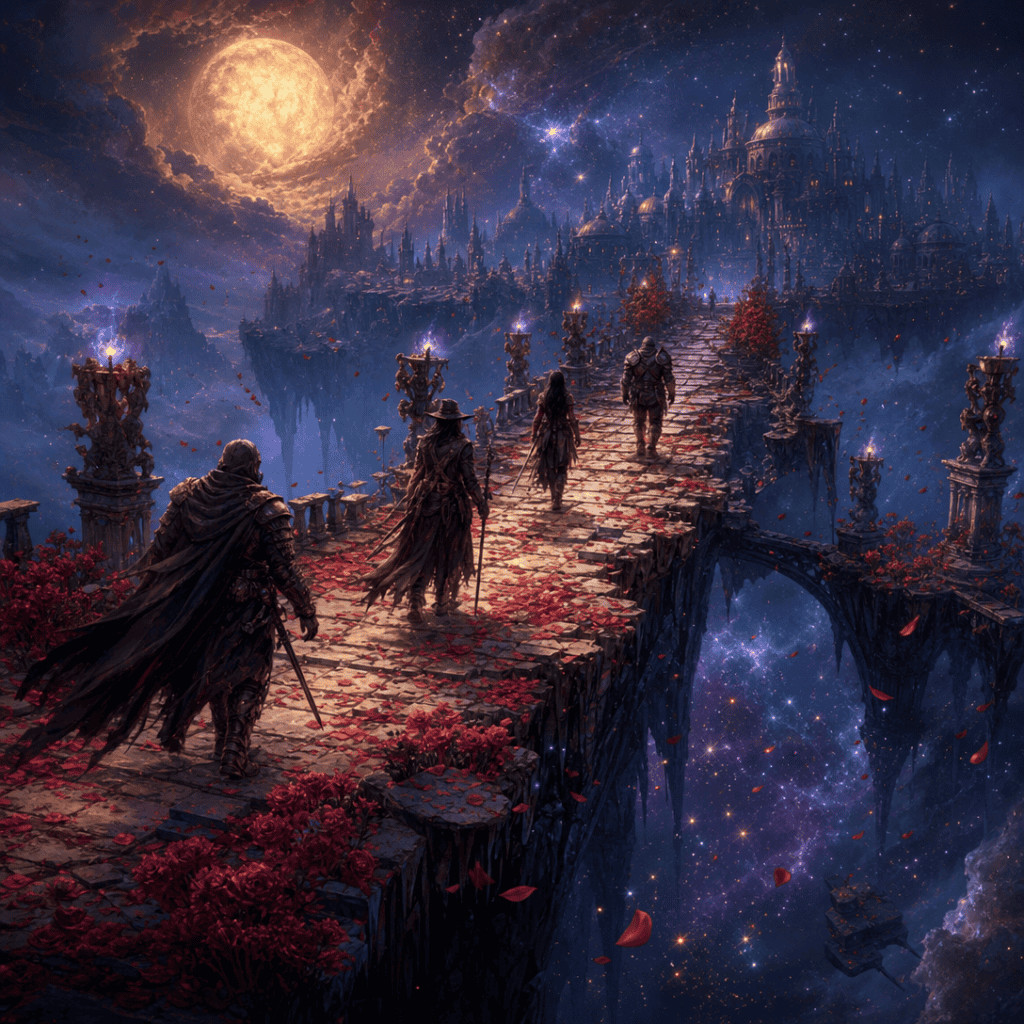

A land of the dead adventure is one of the oldest stories there is — a living soul crossing into the realm of the dead to recover something or someone, and racing to return before the door closes. From Orpheus to every myth since, the descent into the underworld endures because it puts the deepest stakes on the table: grief, memory, and the longing to undo a loss. Run well in D&D, it gives your players a session that feels less like a dungeon crawl and more like a myth they’re living through.
Here’s how to run a journey to the land of the dead that earns that weight.
Why a journey beats a dungeon
The land of the dead works best as a journey, not a location to be cleared. Structure it as a road the party travels deeper along — threshold, river, hill, the final destination — rather than a set of rooms to loot. Each stage is a trial that tests whether the living deserve passage, and the forward motion gives the session the shape of a pilgrimage instead of a grind.
This structure is what makes a land-of-the-dead adventure feel mythic. The party isn’t conquering territory; they’re undertaking a passage, descending step by step toward something they need badly enough to risk death for. Keep them moving deeper and the session carries the momentum and gravity of the old underworld stories it descends from.
The dead want to be answered, not slaughtered
The biggest reframe in a land-of-the-dead adventure is that the dead aren’t enemies to be killed. The spirits, guardians, and souls the party meets want something — to be remembered, to be understood, to be answered — and the party’s task is to give them that, not to cut through them. Combat still happens, but it’s the failure state, not the goal.
This changes how every encounter plays. A guardian that bars the road isn’t a monster to farm for XP; it’s a challenge to be met with the right words, the right respect, or the right mercy. The things that stand in the party’s way want to be satisfied, and a party that listens can turn would-be enemies into allies. The dead are a conversation, not a kill count.
Etiquette: the party are petitioners, not conquerors
In the land of the dead, the living are guests with no authority, and the session should make that felt. The party are petitioners asking for passage and a favor in someone else’s sacred country, and the powers they meet — the hosts and rulers of the dead — decide whether they’ve earned an audience at all. Humility, not force, is the currency here.
Lean into that power dynamic. The dead hold all the cards; the party survives and succeeds by showing respect, proving their need is real, and following the rules of a realm that isn’t theirs. A land-of-the-dead adventure where the party tries to conquer instead of ask will collapse into a dungeon crawl — and lose everything that made it special.
A ticking clock instead of a kill count
The natural pressure in a land-of-the-dead adventure isn’t a body count — it’s time. The living can only stay so long; the road home closes; the dawn burns the bridge away. A visible, shrinking deadline turns the journey into a race and gives the party a stake they can feel in every scene, without a single mandatory fight driving it.
Make the clock something the players watch. When the cost of lingering is measured in time running out rather than hit points lost, every choice — to help a soul or press on, to linger or hurry — carries weight. The ticking return-deadline is the engine that keeps a contemplative, conversation-driven session genuinely tense.
Make the guide and the host unforgettable
Two figures anchor most great land-of-the-dead adventures: a guide who walks the road with the party, and a host or ruler who governs the realm. The guide — often a psychopomp, a creature whose role is to escort souls — offers comfort and clues without solving the party’s problems for them. The host decides their fate. Give both real presence and they’ll carry the whole session.
Invest in these two. A guide with warmth and a little mystery makes the strange road feel survivable; a host with grandeur and grace makes the destination feel earned. Write them dialogue, give them a point of view, and they become the figures your players remember long after the session ends — the faces of the land of the dead itself.
A land-of-the-dead one-shot you can run tonight
For a journey to the land of the dead built on every one of these principles, The Marigold Bridge of Mictlán sends the party across a crumbling bridge of marigold petals into the realm of the dead — past spirit-beasts that test the living, a river of forgotten souls, and a skeletal host in a gown of marigolds — racing a dawn deadline to find a dead alchemist and bring home the one answer that can save their city. A spectral guide walks the road with them; the road can’t kill them, but the clock can.
It’s a no-prep one-shot that assembles the journey, the petitioner dynamic, the ticking clock, and the unforgettable guide and host for you. If this article made you want to run the descent, it’s already written. For the holiday and the tone behind it, see our guide to running a Día de los Muertos one-shot.
Frequently asked questions
What is a land of the dead adventure?
It’s a session where living characters journey into the realm of the dead — to recover someone, ask a question, or right a wrong — and must return before the way home closes. It’s the classic underworld-descent myth in D&D form.
How is it different from a dungeon crawl?
It’s a journey, not a location to clear, and the dead want to be answered rather than slaughtered. Progress comes through respect, mercy, and the right words, with combat as the failure state instead of the objective.
How do I create tension without lots of combat?
Use a ticking clock — a closing road or a dawn deadline — so the pressure comes from time running out rather than a body count. Every choice to linger or press on then carries real, felt weight.
How should the party behave in the land of the dead?
As petitioners and guests, not conquerors. The living have no authority there; they earn passage through humility, respect, and proving their need, following the rules of a realm that isn’t theirs.
What NPCs make a land-of-the-dead session work?
A guide who escorts the party and offers comfort and clues without solving their problems, and a host or ruler of the dead who decides their fate. Give both strong presence and dialogue and they’ll anchor the whole adventure.
Begin the descent
Make it a journey, treat the dead as a conversation, keep the party humble, run the clock instead of a kill count, and give them a guide and a host they’ll never forget.
Want a land-of-the-dead one-shot ready to run? Get The Marigold Bridge of Mictlán:
- PDF on Payhip — instant download
- Paperback on Amazon
- Ebook on Amazon