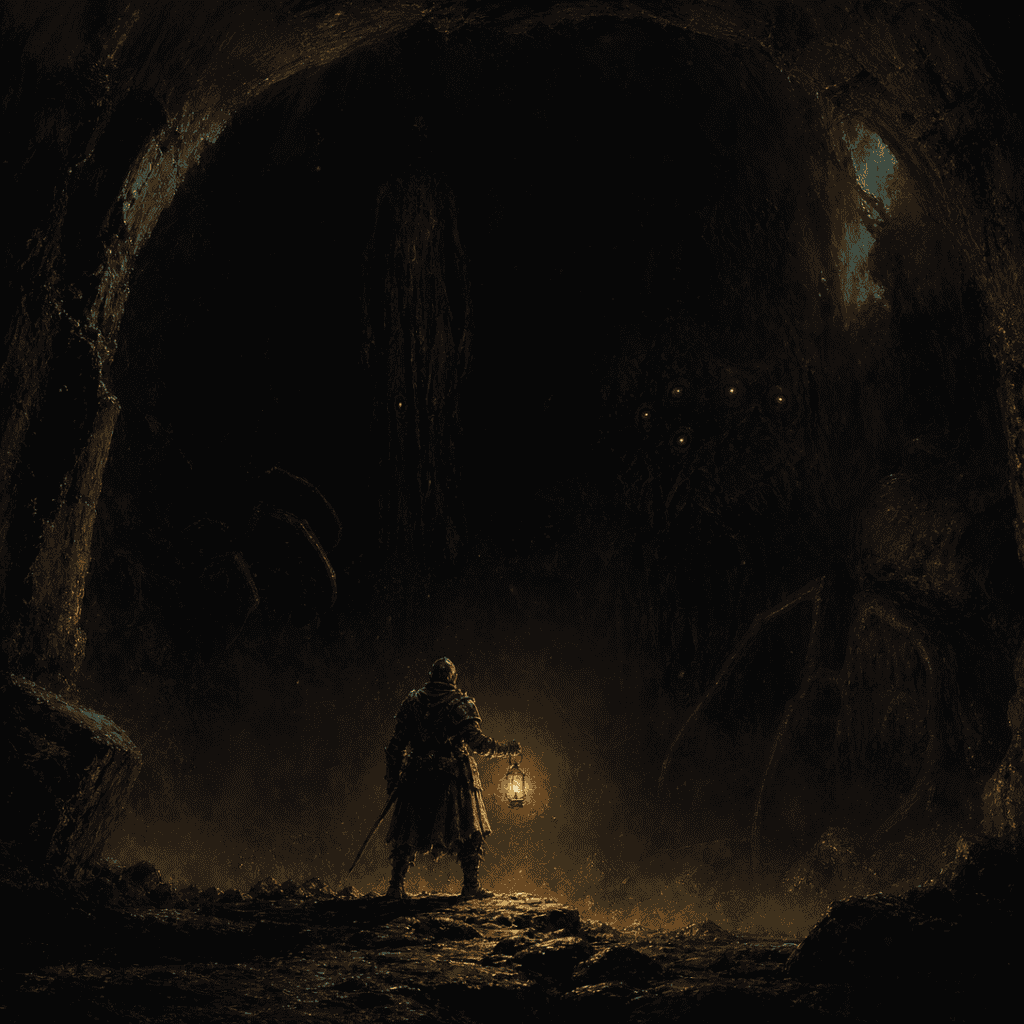

Scary DND Monsters: 15 Creatures That Actually Frighten Players
Most DND monsters aren’t scary. They’re obstacles with hit points. Your players see the stat block, calculate the action economy, and start optimising — and whatever dread you were hoping for dies somewhere around initiative order.
The scary DND monsters on this list are different. Not because they hit harder, but because of what they do — to the character, and to the player holding the character sheet. A CR 2 creature that takes something irreplaceable will haunt a table longer than a CR 15 that merely kills.
This guide covers the fifteen genuinely frightening creatures in D&D 5e, why each one works, and — more usefully — the underlying principles you can apply to make any monster land.
What Makes a DND Monster Scary
Before the list, four principles. Once you see them, you can’t unsee them.
1. It threatens something worse than death. Death in D&D is a resource problem. Players have contingencies for it. What they don’t have contingencies for is losing their memories, their identity, their body, or their free will. The monsters that frighten people threaten the character’s self, not their hit points.
2. It breaks a rule the players trusted. Horror lives in the violation of expectation. The corpse that gets up. The ally who was replaced three days ago. The safe room that isn’t. If the monster does something the rules said couldn’t happen, the table stops feeling safe — and that feeling is the whole product.
3. It’s understandable, but not reasonable. A monster that wants nothing is boring. A monster that wants something — and will do anything, patiently, forever, to get it — is terrifying. The best horror monsters have a logic. It’s just not a logic you can bargain with.
4. It’s seen too late. The scariest thing in any session is the thing the players have been near for an hour without knowing. Dread is a function of duration, not damage.
Body Horror: Monsters That Take Your Self
1. Mind Flayer (Illithid)
The definitive scary DND monster, and the reason is simple: it doesn’t want to kill your character. It wants to eat the part of them that is them.
Ceremorphosis — the process by which a tadpole is inserted into a living host and slowly rewrites them into a new illithid — is the single most upsetting thing in the Monster Manual, because it’s a death sentence that leaves the body walking around. Played correctly, a mind flayer doesn’t fight. It arrives, takes what it wants, and leaves. The horror is in the aftermath.
How to run it: never let the players win an initiative roll against it cleanly. Let them find the tadpole jars first. Let them find the half-turned. Let them understand exactly what happens before anything happens to them.
2. Intellect Devourer
The mind flayer’s little cousin, and arguably nastier for a low-level table. It scoops out the brain and drives the body around. Your fighter is still standing there. Still has your fighter’s face. Is not your fighter.
At CR 2, it’s one of the few genuinely horrifying threats you can throw at level 3 characters without a TPK.
3. Aboleth
An ancient thing at the bottom of the water that remembers everything — including the world before the gods. It enslaves minds, and it does not forget an insult across ten thousand years.
The aboleth is scary because it’s patient. It has already outlasted every civilisation that tried to kill it. It can wait for your grandchildren.
The Wrongness of the Familiar
4. Doppelganger
The horror is structural: once the players know a doppelganger is in play, they cannot trust each other. Every plan is now suspect. Every NPC ally is now a question.
The doppelganger doesn’t need to be strong. It needs to have been there for a while.
5. Mimic
Usually played as a joke — the chest that bites. Played straight, it’s the destruction of the players’ relationship with the environment. If a chest can be a mimic, so can the door. So can the floor.
6. The Scarecrow
Folk horror’s great gift to D&D. A thing that is supposed to stand in a field, motionless, watching. All it has to do to be terrifying is be somewhere it wasn’t a minute ago.
We built an entire adventure around exactly this — The Tall Man, in which a road-guardian scarecrow’s protective binding is inverted and it begins consuming the fields to build itself higher.
Undead That Don’t Behave
7. Ghost
The Horrifying Visage ability ages a character by decades. Not damage. Years off their life. A player who fails that save is looking at a character sheet that has permanently changed, and no cleric is fixing it easily.
That’s the whole trick. Consequences that persist past the session.
8. Bodak
Its gaze can kill outright. No hit points, no death saves, no negotiation. The bodak is a reminder that in horror, the numbers on your sheet are not a guarantee of anything.
9. The Drowned Dead
Not a single stat block so much as a category — and one of the most effective, because water is already unsettling. The drowned don’t chase. They don’t rage. They walk out of the tide, patient and gentle, and they ask to be let in. And they are willing to wait all night.
That’s the engine of Salt & Cinder, and of The Mournmere Survey, where a drowned village sits under a still grey reservoir behind five failing wards.
Fey Cruelty
10. Hags (and Covens)
The scariest thing about a hag is that she will keep her word. She makes bargains, and she honours them exactly — and the exactness is the trap. There’s no loophole because she isn’t cheating. You just didn’t read carefully.
A coven of three is worse: they share power, they share memory, and they have been planning this for longer than the village has existed. See The Three Sisters for a coven that spent decades corrupting a forest’s protective magic into something hungry.
11. Redcap
A small, gleeful, relentlessly violent thing that must keep its hat wet with blood or die. It has no plan and no mercy, and it is having a wonderful time. Fey horror at its purest: cruelty without malice, which is somehow worse than malice.
Swarms and Infestation
12. Giant Spiders (and What They Leave Behind)
Individually manageable. The horror is arithmetic — the moment the players realise the number is still going up.
The Spider’s Seminary runs on exactly this: a previous party of heroes killed the spider-goddess and forgot to burn the eggs. Now they’re hatching, and somebody expendable has to go clean it up.
13. Fungal Horrors (Myconids, Violet Fungus, Spore Servants)
Fungus doesn’t hunt you. It recruits you. The spore servant is the missing rescue team, still walking, now part of the colony’s body.
Ironroot Mine is built on this: a silver mine went quiet, the rescue party never came back, and something has been waiting in the dark a very long time.
Cosmic and Unknowable
14. Beholder
A paranoid, godlike intelligence that dreams new enemies into existence and hates you specifically. What makes it frightening isn’t the eye rays — it’s that it is smarter than the party and has been watching them for longer than they’ve known it exists.
15. Dead and Dying Gods
The largest horror available: a thing so vast that killing it isn’t the question. Surviving proximity to it is.
The Mouth of the Dying God puts the players inside a decaying god’s corpse in the Astral Sea, where a cult lives in a citadel carved into the molars — and the jaw is slowly closing.
How to Make Any DND Monster Scary
The stat block is maybe 20% of it. The rest is running.
Show the aftermath before the monster. The empty camp. The dropped lantern. The rescue party’s boots, arranged neatly, facing the wall. Every minute the players spend imagining is a minute you don’t have to spend describing.
Take the light away. Darkvision is the enemy of horror. Break the torches. Fill the room with smoke. Make the players tell you what they can and can’t see.
Let it leave. A monster that fights to the death is a combat encounter. A monster that hurts someone and then withdraws, deliberately, is a problem — and problems generate dread in a way that encounters don’t.
Make it want something specific. “It’s hungry” is fine. “It wants the child” is horror. Specificity is what turns a threat into a story.
Give it consequences the sheet remembers. Damage heals. Aging, memory loss, a missing eye, a name it now knows — those stay. Players fear what they can’t undo.
Slow down. The single most common mistake is rushing to the reveal. The monster is scariest in the fifteen minutes before anyone sees it.
Scary DND Monsters, Ready to Run
Every creature above is doing real work in one of our zero-prep one-shots — 5e-compatible, built for 2–3 players, and complete in a single 2–3 hour session.
Mindscourge — Face a Mind Flayer Colony Alone
The scariest monster in the game, and you go down there by yourself. Mindscourge is a complete solo tabletop RPG for one player and one d20 — no Game Master, no group, no prep. Your warband is already dead. The colony took their minds before it took their lives, and now they’re waiting in the dark, wearing their own faces. Four levels down, something is finishing waking up.
Ashcroft Manor — The House Is the Monster
Lord Ashcroft didn’t die in his manor. He became it — his soul fused into the walls and foundations by a demonic pact gone wrong. Ashcroft Manor is gothic horror where the building itself is the antagonist, and it does not want you to leave.
Get Ashcroft Manor on Amazon →
Ironroot Mine — Fungal Horror in the Deep Dark
The mine went quiet. The dead did not. Ironroot Mine sends your players down after a rescue team that never came back, into something that recruits rather than kills.
More Horror, Ready to Run
- Salt & Cinder — the drowned walk ashore, singing, and ask to be let in.
- The Spider’s Seminary — the eggs the last heroes forgot to burn.
- The Three Sisters — a coven that keeps its word, exactly.
- The Mouth of the Dying God — a cult living inside a dead god’s jaw.
- Little Lambs — a pit, a pile of bones, and something enormous moving.
- The Tall Man — the scarecrow is a hundred feet tall and still building.
Running horror for the first time? Our guide to running a D&D horror one-shot covers pacing, tone, and safety at the table. Planning for October specifically? See our Halloween DND one-shots, sorted by theme.
Frequently Asked Questions
What is the scariest DND monster?
The mind flayer, for most tables. It doesn’t threaten death — it threatens ceremorphosis, which turns the character into another mind flayer while their body keeps walking. Losing the character is worse than losing the character’s life.
What makes a DND monster scary rather than just difficult?
Difficulty is a maths problem players enjoy solving. Fear comes from threatening something they can’t solve for: identity, memory, free will, or a consequence that persists after the session. A CR 2 intellect devourer frightens a table more than a CR 15 giant.
What are good scary DND monsters for low-level parties?
Intellect devourer (CR 2), shadow (CR 1/2), ghost (CR 4), giant spiders in numbers, and green hags (CR 3). All deliver genuine dread without a guaranteed TPK at tier 1.
How do I make my players actually scared?
Show the aftermath before the monster, remove their light, let the monster leave instead of fighting to the death, and give it consequences that don’t heal. Dread is built in the time before the reveal — not during the fight.
Are there scary DND adventures I can just run?
Yes. Every adventure linked above is zero-prep, 5e-compatible, and built for 2–3 players in a single session. Open the book and run it tonight — no preparation beyond reading it.