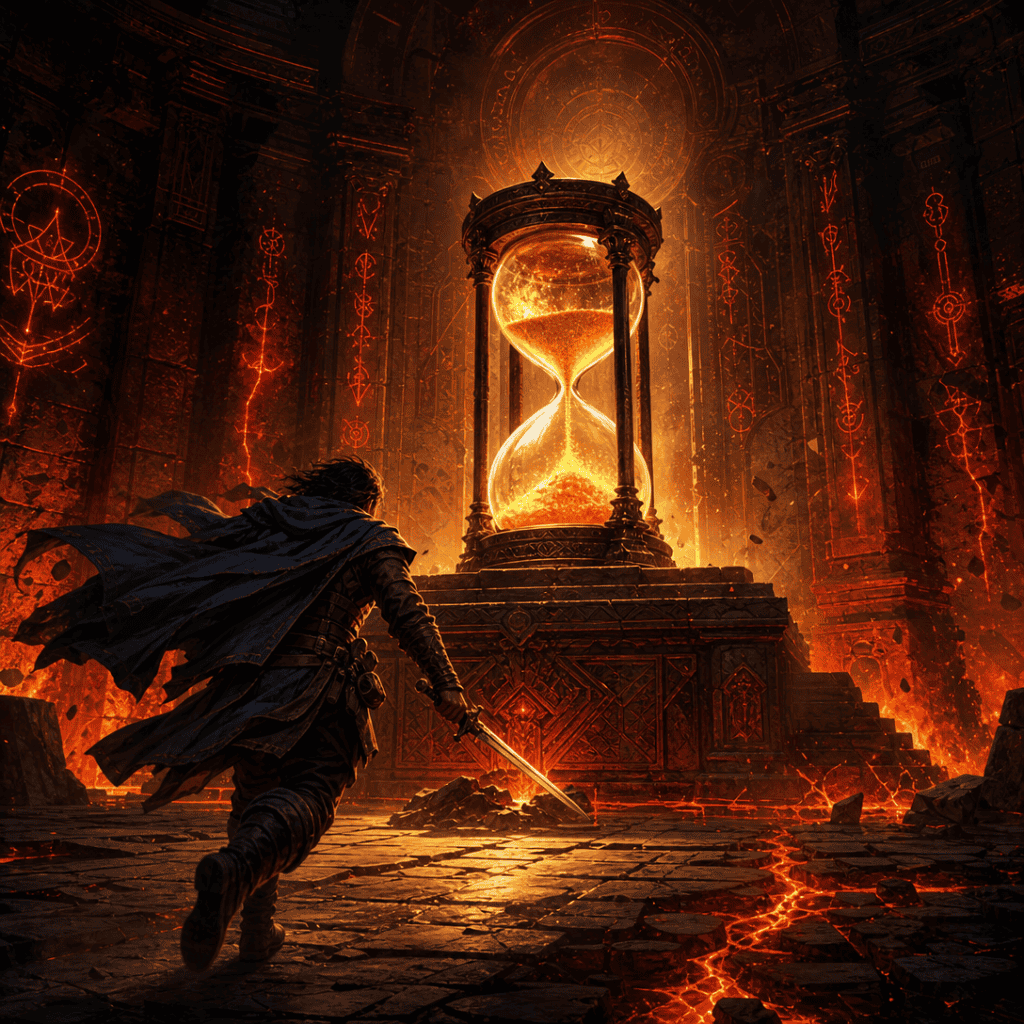

D&D ticking-clock adventures are one of the highest-tension formats a one-shot can use. The party isn’t just stopping a villain — they’re stopping a disaster, and the disaster is happening on a schedule the players can hear ticking down. Done well, the format produces sessions players talk about for months. Done poorly, it’s a contrived race against an arbitrary deadline. This guide covers three types of ticking clocks, how to pace them, and how to avoid the trap of making the timer feel fake.
Why Ticking-Clock Structure Works
Most D&D sessions don’t have time pressure. The party explores the dungeon at their own pace. They long-rest when they want. They talk for an hour about whether to enter the door. This is fine for campaigns, but it’s terrible for one-shots, where the session has to deliver a complete story in two hours.
The ticking clock fixes this. Once a deadline is on the table — the bomb goes off in two hours, the storm hits at sunset, the magical seal breaks at midnight — every player decision is colored by urgency. Players stop deliberating. They commit. The session moves.
The clock also gives the DM a tool for managing pacing without forcing it. If the players are spending too long in one scene, the clock advances. If they’re rushing past important content, the clock pauses on a critical moment. The structure does the work the DM would otherwise have to do explicitly.
Three Types of D&D Ticking Clocks
Not all ticking clocks work the same way. The three main types create different kinds of tension.
1. The Visible Clock
The party can see the deadline. A literal hourglass. A burning fuse. A countdown on a magical artifact. Every scene, the DM describes how much time is left. The tension is constant and explicit.
Example: A magical bomb is ticking down on a temple altar. Every twenty minutes of in-game time, a colored crystal shatters. When all six are gone, the bomb detonates. Players see the crystals shatter in front of them, hear the count down, and feel the pressure.
Best for: Climactic sessions where the players’ competence is on display. Visible clocks reward player ingenuity.
2. The Invisible Clock
The deadline exists, but the party doesn’t know exactly when it lands. They know something is coming — the storm is moving, the ritual is being prepared, the villain is approaching — but the timer is hidden from them. The tension is uncertainty.
Example: A cult is performing a ritual in a hidden chamber. The party knows the ritual will succeed, but not when. Each scene, the DM rolls in secret and decides whether the ritual completes that round. Players feel the threat but can’t optimize against it.
Best for: Investigation-heavy sessions. Invisible clocks reward forward momentum without demanding optimization.
3. The Escalating Clock
The deadline isn’t a single point — it’s a series of increasing consequences. Things get worse over time, and the players have to decide when “worse enough” justifies action. There’s no single moment of failure; instead, every minute that passes degrades the scenario.
Example: A magical plague is spreading through the city. Each hour the party investigates, more people fall ill. The session doesn’t end with the party failing — it ends with the party succeeding more or less, depending on how fast they moved. The clock doesn’t tick to zero; it ticks up.
Best for: Moral-weight sessions. Escalating clocks let players see the cost of every decision they make.
How to Keep the Tension Real
The biggest danger of a ticking clock is that the players stop believing in it. Once they suspect the deadline is a fiction the DM won’t actually enforce, the structure collapses. Three rules to keep the clock honest:
Show the consequences early. The first time the clock advances, something visible happens. A guard’s body is found. A piece of architecture cracks. An NPC the party knew is killed. Players need to see that the timer has teeth, otherwise they’ll treat it as flavor.
Don’t fudge the deadline. If the clock says the bomb goes off at midnight, it goes off at midnight. If the players are still three rooms away, they fail. Adjust the difficulty of the obstacles before the session starts, but don’t move the deadline once play begins.
Let the players use time as a resource. If players choose to spend twenty minutes investigating a clue, those twenty minutes are gone. If they choose to skip the investigation and run, they may save time but lose information. The clock should be something players can manage, not just something they fight.
Pacing the Clock
A two-hour ticking-clock one-shot needs three to five “tick” moments, spaced through the session. Too few and the timer feels like background noise. Too many and the session becomes a panic attack.
Tick 1 (15-20 minutes in): First confirmation of the threat. Something visible degrades. The clock is real.
Tick 2 (40-50 minutes in): Mid-session escalation. A complication makes the deadline harder to meet. Players adjust their plan.
Tick 3 (75-85 minutes in): Pre-climactic crisis. The clock is closer than expected. The players have to commit to a final approach.
Final tick (climax): The deadline arrives. The players either succeed, fail, or partially succeed. The session ends with the consequences.
Some sessions add a fourth or fifth tick for additional pressure points. The structure stays the same: visible, escalating, honest.
Common Pitfalls in D&D Ticking-Clock Adventures
The fake deadline. The DM says the bomb will go off in two hours, then quietly extends the timer when the players fall behind. Players notice. Once.
The unwinnable clock. The deadline is so tight that no plausible player effort can succeed. Players check out. Don’t design clocks that require perfect rolls and zero detours.
The clock the players forget. No tick moments, no consequences, no visible progress — just a vague sense of urgency. Players forget the deadline exists. Make the clock impossible to ignore.
The clock that erases choice. Players who see “you have two hours” assume there’s no time for any choice that doesn’t directly advance the goal. They skip roleplay, skip investigation, skip side scenes. Build the clock generously enough that meaningful side content fits within the deadline.
Published D&D Ticking-Clock Adventures
Burden of the Unmaker is Anvil N Ink’s flagship ticking-clock one-shot. Someone in the party has to carry the bomb to its destination — and the bomb won’t stop ticking until it goes off. The clock is visible, the deadline is honest, and the moral weight of who carries the burden makes every minute feel heavier than the last. Two hours, 2-3 players, level 2-3.
The Sinking Tower of Hours is the other major ticking-clock one-shot in the catalog: a wizard’s tower is sinking into magical sand at a measurable rate, and the party has to descend through five levels before the tower vanishes. Visible clock, escalating tension.
The Extraction Job uses an invisible clock — the swamp is dangerous, time is short, and the party never knows exactly how much they have left.
For broader time-pressure technique, see Time Pressure Mechanics in D&D. For moral dilemma structure, see D&D Moral Dilemma One-Shots.
Frequently Asked Questions
What’s the best length for a D&D ticking-clock one-shot?
Two to two-and-a-half hours, with three to five tick moments spaced through the session. Longer sessions dilute the tension; shorter sessions don’t have room for meaningful escalation.
Should the players know exactly how much time is left?
Depends on the type of clock. Visible clocks tell the players precisely. Invisible clocks hide the deadline. Escalating clocks tell the players that things are getting worse but not when they’ll bottom out. Pick one type and stick with it.
What if the players finish early?
That’s a win. Don’t artificially extend the session. Let them celebrate the early success, play out the consequences of their fast work, and end the session strong. A short, decisive one-shot beats a padded one.
What if the players fail to beat the clock?
Play the failure honestly. The bomb goes off. The seal breaks. The disaster happens. Then play the consequences — the second half of the session becomes recovery, not prevention. Some of the best ticking-clock sessions end this way.
Where can I find a published D&D ticking-clock one-shot?
Burden of the Unmaker is Anvil N Ink’s flagship ticking-clock D&D one-shot. The bomb has to go off; the question is who carries it, and at what cost. Two hours, 2-3 players, level 2-3.
Run a Ticking-Clock Session This Month
The ticking clock is one of the simplest, most effective structural tools in one-shot design. Visible, escalating, honest — three rules and the format takes care of itself. Players will commit to choices they’d otherwise hesitate over because the clock makes hesitation expensive. To find more adventures with a deadline built in, check DnD one-shots by genre, level and group size.
Read the full review of Burden of the Unmaker — Anvil N Ink’s published ticking-clock D&D one-shot for 2-3 players. Two hours, level 2-3, built around a visible deadline that doesn’t lie.
For more on time pressure in D&D adventures, see Time Pressure Mechanics. For moral dilemma structure, see D&D Moral Dilemma One-Shots.
The bomb keeps ticking. The DM doesn’t get to stop it. That’s why it works.