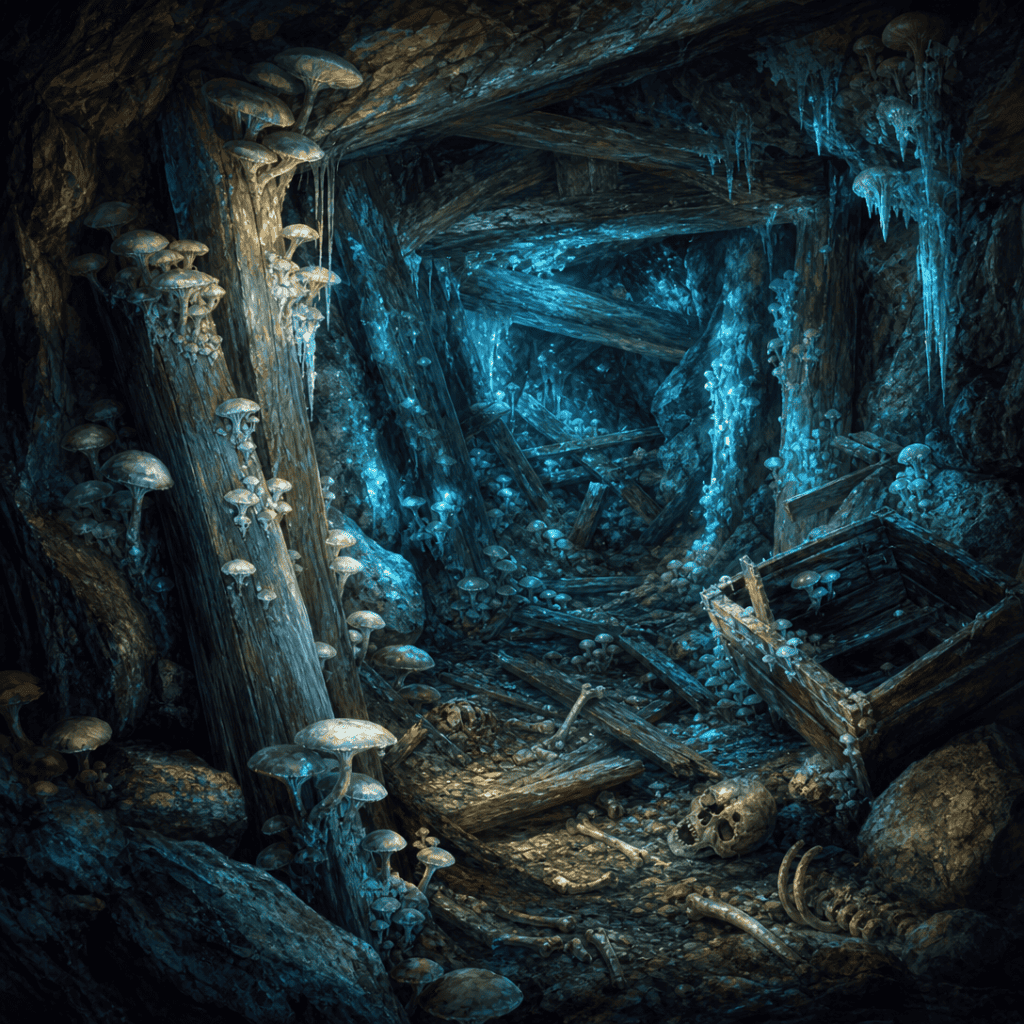

Fungal horror is one of the most unsettling flavors of dread you can bring to a D&D table, because it doesn’t threaten to kill your characters so much as to change them. A blade is a clean danger. A spore drifting into your lungs is not — it’s a slow, intimate violation that turns the party’s own bodies against them. Set that in the lightless deep of an old mine, where the only thing growing is pale and patient and reaching, and you have a horror that gets under the players’ skin in the most literal sense.
Here’s how to build fungal horror that genuinely unsettles your table.
Why fungus is perfect horror material
Real fungus is already nightmare fuel. It spreads invisibly, thrives in the dark, feeds on the dead, and — in the case of organisms like cordyceps — hijacks living hosts and drives them to spread the infection further. You barely have to exaggerate it. Fungal horror works because it’s grounded in something true and deeply wrong about the natural world.
It also breaks the usual hero fantasy. Players are used to facing threats they can fight. A creeping infection that’s already in the air, already maybe in their lungs, isn’t a thing you can stab — and that helplessness is exactly where the horror lives.
Spores: the threat that gets inside you
The heart of fungal horror is contamination. The danger isn’t a monster across the room; it’s the air itself. A cloud of spores the party walked through three rooms ago, a film of growth on the water they drank, a cough that started after the second chamber and won’t quite stop. The threat has already breached the one defense players trust most: their own bodies.
Run this as a slow dread rather than a sudden hit. Let the party wonder whether they’re infected, watch for the first symptom in each other, and ration whatever protection they have. The fear that you might already be lost — that the horror is patiently growing inside you — is far worse than any creature you could put in front of them.
The fungal ecosystem
Fungal horror gains depth when the growth is a system, not a single monster. Build an ecosystem in the dark: the network spreading through the walls, the pale things that tend it, the infected former-people shambling toward some shared purpose, the central mass it all serves. Each layer the party uncovers should reveal a larger, older, more deliberate intelligence beneath the rot.
This turns a creepy dungeon into a living antagonist. The party isn’t clearing rooms; they’re trespassing in the body of something vast and quietly aware, every chamber a different organ of the same slow horror. The deeper they go, the more they understand they were never the predators here.
Body horror without the gore
Fungal horror lets you run genuine body horror without leaning on graphic violence. The dread is transformation, not bloodshed — a colleague whose eyes have gone milky, a hand sprouting something pale, a friend who’s stopped blinking and started listening to a sound nobody else can hear. The horror is in the wrongness of the change, and it lands harder for being quiet.
This keeps the tone unsettling rather than splattery, which suits most tables better and lands more cleanly. You’re aiming for the cold crawl of that isn’t right, not the flinch of gore. Restraint is what makes fungal horror stick.
Set it in the deep dark
Fungus wants darkness, damp, and the dead — which makes a mine, a cave, or a buried ruin its perfect home. An old silver mine that fell silent, its miners gone, something pale now growing where they used to work: that’s a setting that does half the atmospheric work for you. The cramped tunnels and the absolute dark amplify every spore-borne dread.
The confinement matters as much as the fungus. Deep underground, there’s no fresh air to clear the spores, no easy exit, and nowhere the growth hasn’t reached first. The setting and the threat reinforce each other — which is also why fungal horror pairs so naturally with a claustrophobic dungeon.
A fungal horror one-shot you can run tonight
For a complete fungal horror built on all of this, Ironroot Mine sends the party down into a silver mine that fell silent three days ago — after the rescue team sent to find out why never came back. What waits below is far worse than a cave-in, and it has been growing in the dark for a very long time.
It’s a no-prep horror one-shot for two to three players that assembles the spores, the infected, and the deep-dark dread for you. If this article made your skin crawl, it’s the cleanest way to bring fungal horror to your table.
Frequently asked questions
What is fungal horror?
It’s horror built around fungus and infection — spores, spreading growth, and hosts transformed against their will. The threat works on the characters’ own bodies rather than confronting them as a monster to fight.
Why is fungal horror so effective in D&D?
Because it can’t be stabbed. An airborne infection bypasses the party’s usual defenses and creates dread through helplessness and transformation, which is far more unsettling than a straightforward fight.
How do I run spore infection without just killing characters?
Treat it as slow, uncertain dread rather than instant damage. Let players wonder whether they’re infected, watch for early symptoms, and ration protection, so the fear of transformation does the work.
Where should a fungal horror adventure be set?
In the deep dark — a mine, cave, or buried ruin where fungus thrives and exits are scarce. The confinement and darkness amplify the spore-borne threat and pair naturally with claustrophobic design.
Can fungal horror avoid graphic gore?
Yes, and it’s often better for it. The horror is transformation — milky eyes, pale growths, wrong behavior — rather than bloodshed, which keeps the tone eerie and unsettling instead of splattery.
Let it grow in the dark
Make the air the threat, build the fungus into an ecosystem, lean on transformation over gore, and bury it all in the deep dark.
Want a fungal horror one-shot ready to run? Get Ironroot Mine:
- PDF on Payhip — instant download
- Paperback on Amazon
- Ebook on Amazon