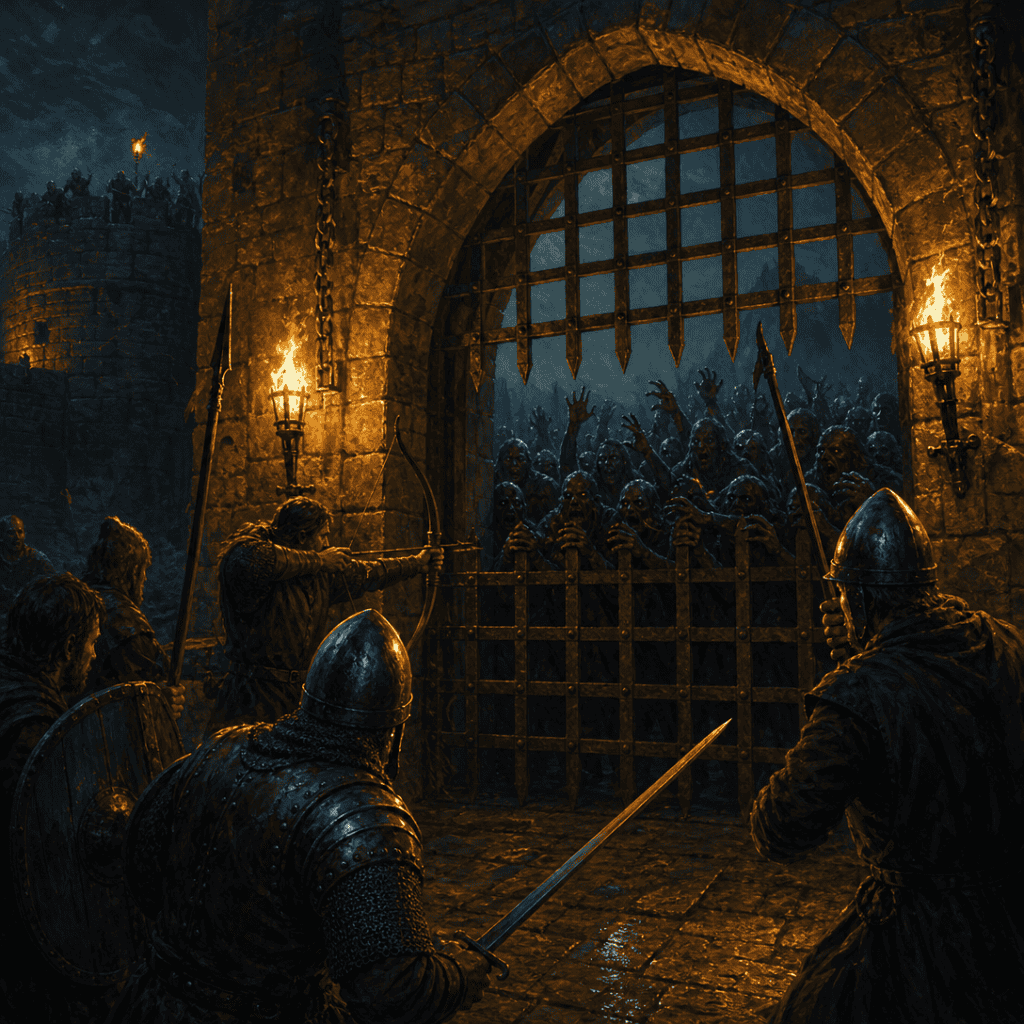

A D&D zombie one-shot is one of the most reliable single-session adventures you can run, because it taps something older than the game itself: the simple dread of being outnumbered by the dead. The format is built-in — a place to hold, a night to survive, an enemy that never stops coming. Run it well and it stops being a fight and becomes survival horror, where the real threat isn’t any single zombie but the slow arithmetic of dwindling arrows, failing light, and a horde that only grows.
Here’s how to run a D&D zombie one-shot that earns its tension instead of just throwing bodies at the party.
What makes a zombie one-shot work
Zombies are the perfect one-shot enemy because they need no explanation and no negotiation. They want one thing, they never stop, and individually they’re weak — which means the danger comes from numbers and exhaustion, not from any clever monster tactics you have to track. That makes them easy to run and relentless to face.
The format writes itself: give the party somewhere to defend and a reason they can’t simply leave, then turn up the pressure until dawn. Everything else is detail. A single clear objective and an enemy that embodies inevitability is all a zombie session really needs.
Survival horror is about resources, not monsters
The mistake is treating a zombie one-shot as a damage problem. It isn’t. The horror lives in scarcity. Track the things that run out — arrows, torches, healing, the soundness of the barricade, the hit points nobody can get back — and the session becomes tense even when no individual zombie is dangerous.
Make the players feel the meter dropping. When the quiver is almost empty and the door is splintering and the cleric is out of spells, a single ordinary zombie becomes terrifying. That’s survival horror: the fear that you’ll run dry before the night does.
Give the dead a rhythm
A wall of zombies that simply attacks every round gets boring fast. Give the horde a rhythm instead — quiet stretches where the party can breathe, scavenge, and dread what’s coming, broken by surges that test the defenses. The contrast is what makes the surges land.
Use the lulls. Let players argue about whether to spend resources now or save them, whether to reinforce the east wall or the north, whether to risk a run to the well. The decisions they make in the quiet are what they’ll feel the consequences of in the next wave.
Protect-the-objective beats hack-and-slash
The strongest zombie one-shots give the party something to defend beyond their own lives — a person, a ritual, a door, a fire that can’t go out. The moment survival depends on protecting a fixed point, every choice gets harder, because the party can’t just retreat from danger; they have to hold ground.
This is what separates a memorable zombie session from a grind. A horde you can run from is an inconvenience. A horde between you and the thing you swore to protect is a story.
Pace the night toward dawn
Give your zombie one-shot a finish line: survive until morning, until the ritual completes, until the gate is rebuilt. A visible endpoint turns endurance into drama, because every wave the party weathers brings the goal closer and raises the cost of failing now.
Escalate toward it. Each wave should be a little worse than the last, the resources a little thinner, until the final push feels genuinely desperate — and dawn, when it comes, feels earned. The zombie as a concept is all about inevitability; your pacing should make the players feel they’re racing it.
A zombie one-shot you can run tonight
For a ready-made version of all of this, Dead of Night is built on the pure survival-horror loop. A cursed child is a beacon for the dead, and a wandering priest needs four unbroken nights of ritual to save him — he can’t fight, can’t run, and can’t stop chanting. The holding, the bleeding, the standing in the dark while everything outside claws to get in: that part is the party’s.
It’s a no-prep one-shot for two to three players that hands you the objective, the clock, and the escalating dark already assembled. If this article made you want to run a siege of the dead, it’s the fastest way to get one to the table. (For the broader mechanics of holding a position, see how to run a siege or last-stand defense.)
Frequently asked questions
What is a D&D zombie one-shot?
It’s a self-contained survival adventure where the party defends a location through escalating waves of undead, usually until a deadline like dawn or the completion of a ritual. The challenge is endurance and resource management, not a single tough fight.
How do you make zombies scary if they’re individually weak?
Through numbers, attrition, and a fixed objective. Track dwindling resources and force the party to hold ground, and a single weak zombie becomes frightening when the arrows are gone and the door is failing.
How long does a zombie one-shot take?
A single session — two to three hours. Structure it as waves building to a deadline so the whole arc resolves in one sitting.
What should the party be defending?
Something they can’t abandon: a person, a ritual, a doorway, a light source. A fixed point to protect turns retreat off the table and makes every decision matter.
How do I keep waves from getting repetitive?
Give the horde a rhythm of lulls and surges, escalate each wave, and use the quiet stretches for resource decisions. The downtime is what makes the next assault land.
Hold the line
Pick a place to defend, start the clock, drain the resources, and push toward a dawn the party has to earn.
Want a zombie survival one-shot ready to run? Get Dead of Night:
- PDF on Payhip — instant download
- Paperback on Amazon
- Ebook on Amazon