
By Anvil N Ink Publishing · Updated October 2026 · 6 min read
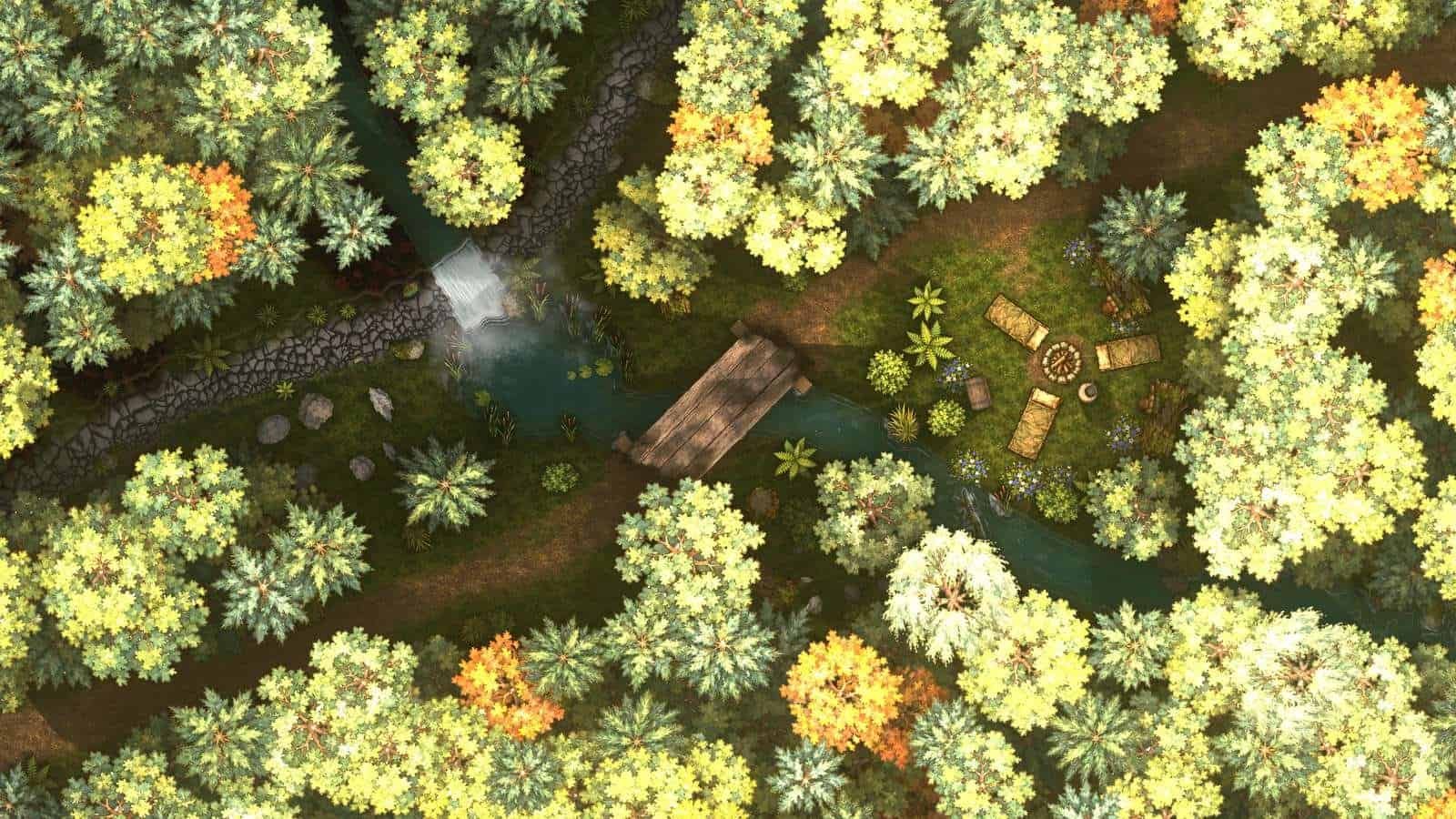
A good forest battle map is not a carpet of trees. It needs a path or clearing where the fight starts, dense undergrowth that slows movement, a stream or pond, a change in height like a ridge or fallen log, and pockets of light through the canopy. Those features give players choices; trees alone just give them something to stand behind.
What to include in a forest battle map
- A path or clearing: where the party is when things go wrong.
- Dense undergrowth: difficult terrain and light cover.
- Big trees: half or three-quarters cover, and something to climb.
- Water: a stream, ford or pond to cross or avoid.
- Elevation: a ridge, a rocky outcrop or a ravine.
- A landmark: a ruined shrine, a hunter’s blind, an old stone circle.
Build it in layers
Start with the ground: grass, dirt and leaf litter, with the path cut through. Add water next. In Ink Hammer you paint water by depth and it flows around rocks with foam at the edges; where a stream meets a cliff, the waterfall plugin forms a fall. Then add rocks and cliffs, then trees and undergrowth, and leave clear lanes so movement stays readable.
Light under the canopy
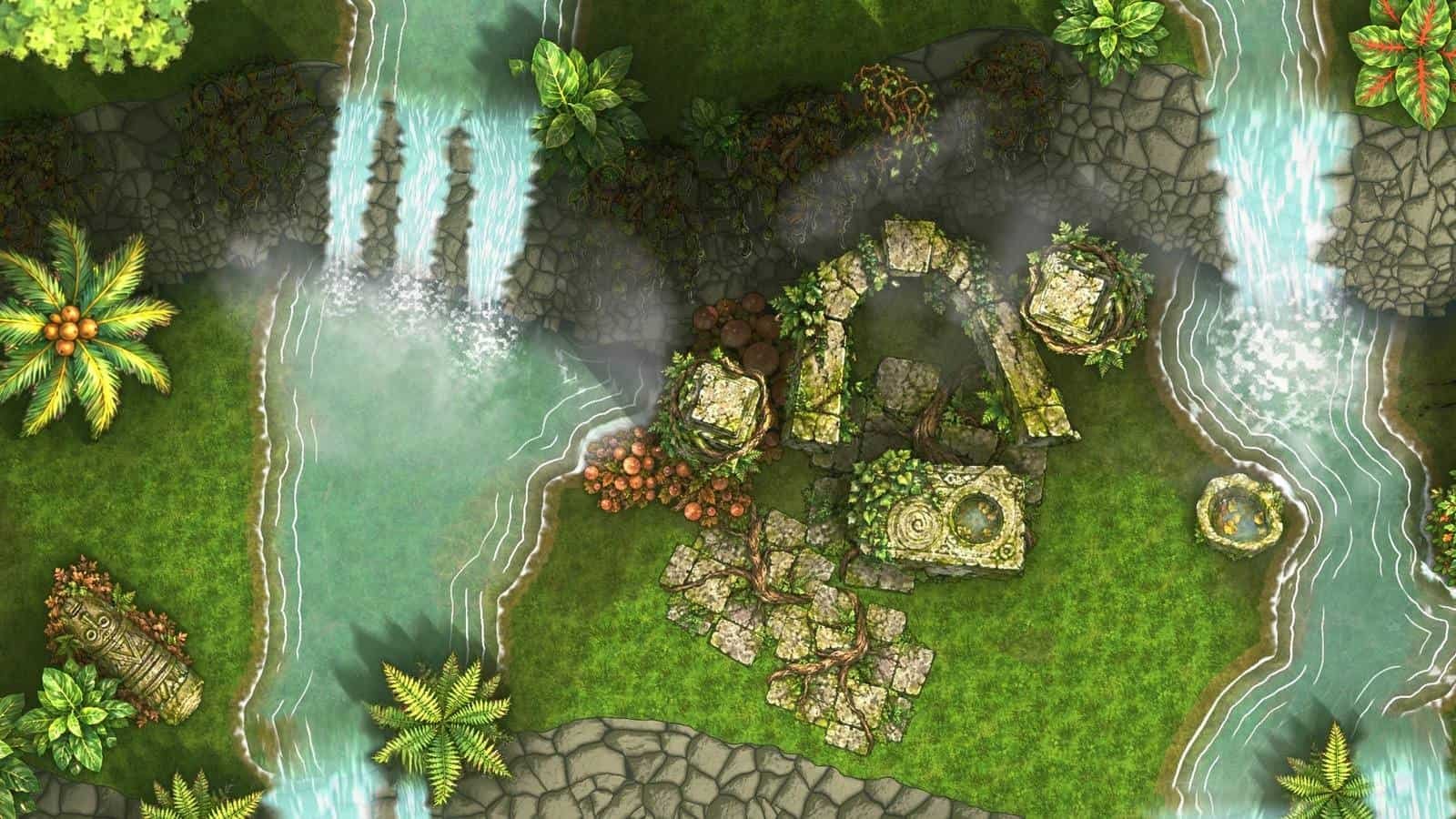
Forest light is patchy: bright in clearings, dim under the trees. Use that. An ambush from the shadows reads naturally, and a night version with a single campfire turns the same map into a horror scene.
Make it VTT-ready
Big trunks, rock outcrops and cliff edges block sight. Instead of drawing those walls by hand, Ink Hammer can trace VTT walls around a selected area. See VTT-ready battle maps.
Five forest encounter ideas
- Bandit toll: a log across the road, archers in the trees.
- The hunt: something is stalking the party and they only see it in the gaps between trunks.
- River crossing: goblins strike while the party is halfway across a ford.
- The grove: druids defend a sacred clearing, and the trees fight with them.
- Night camp: wolves circle a campfire that is slowly burning down.
Frequently Asked Questions
How big should a forest battle map be? 25 by 25 to 30 by 30 squares works for most fights. Ranged ambushes need more room.
How do I stop a forest map looking flat? Add height (cliffs, ridges), water and light variation. Shadows from tall trees and cliffs do a lot of work.
What’s the best map maker for outdoor maps? One that handles water, elevation and lighting well. We compare options in best D&D map makers.
More map guides: how to make D&D battle maps · beach battle map · tavern battle map