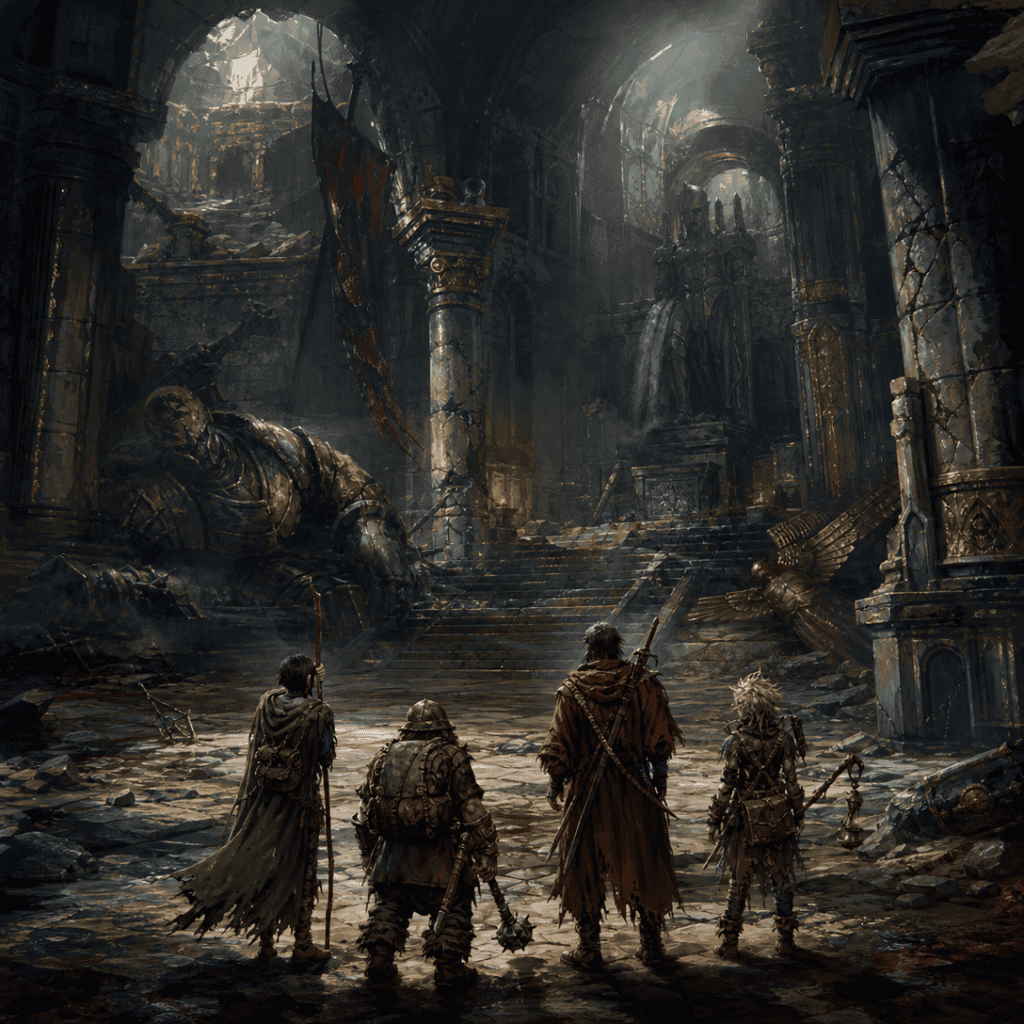

Most D&D parties are the chosen ones — the strongest, the destined, the heroes the prophecy is about. An underdog party flips that on its head: the player characters are the B-team, the backups, the expendable second string sent in after the real heroes have failed or vanished. It’s one of the most refreshing premises you can run, because it trades the power fantasy for something funnier, scrappier, and often more genuinely heroic. Nobody expects these characters to win. That’s exactly why it lands when they do.
Here’s how to run an underdog party that turns being out-matched into the best part of the session.
Why an underdog party is a breath of fresh air
After enough sessions of being the most capable people in the room, players can get a little numb to victory. An underdog party restores the stakes by making success uncertain again. When the characters are out of their depth, every win is earned and every close call actually feels close, because the table genuinely isn’t sure they’ll pull it off.
It also unlocks a different kind of fun. Underdogs get to be funny, desperate, and resourceful in ways that confident heroes don’t. The premise gives players permission to fail, improvise, and scrape through by the skin of their teeth — and that scrappiness is far more entertaining than steamrolling another encounter. Audiences have always loved the underdog, and tables are no different.
Lower the power, raise the stakes
The core move of an underdog party is inverting the usual power balance: the characters are weaker than the situation demands. This doesn’t mean making them useless — it means making the challenge clearly bigger than they are, so that cleverness and nerve matter more than raw capability. The gap between what they can do and what they need to do is the engine of the whole session.
Crucially, lowering the party’s power should raise the tension, not lower the stakes. The threat is still real, the consequences still matter — the party just has to meet them with grit instead of might. When players can’t win by being strong, they start winning by being smart, and that shift is where underdog sessions come alive.
Cleaning up after the legends
The cleanest framing for an underdog party is the B-team premise: somewhere out there are the real heroes — famous, powerful, beloved — and the party is who you call when those heroes are unavailable, or worse, when they’ve already gone in and not come back. Now the second string has to finish a job that broke the first string.
This premise does a lot of work for free. It explains why under-qualified characters are facing an over-sized threat, it sets up natural comedy in the gap between the legends and the backups, and it hands the party a powerful arc: the chance to prove that the people nobody believed in are the ones who actually get it done. Cleaning up after the legends is a story players love to be in.
Let competence come from character, not stats
An underdog party can’t out-stat its problems, so its competence has to come from somewhere else: personality, ingenuity, and the specific weird skills these particular misfits happen to have. Lean into what makes each character useful in unexpected ways — the coward who knows every escape route, the failure who’s seen this monster before, the nobody with one strange talent that suddenly matters.
This is what makes underdogs satisfying to play. They win not because their numbers are bigger but because they used what they had cleverly, and that feels earned in a way a clean stat-block victory never does. Reward the player who solves the problem sideways, and the underdog premise pays off every time.
Reward grit, improvisation, and teamwork
Because an underdog party can’t rely on power, it has to rely on each other — and that makes teamwork central in a way it isn’t for an all-star group. Reward the party for combining their meager strengths, covering each other’s weaknesses, and improvising plans no competent group would ever need. The scrappy, held-together-with-string victory is the whole point.
Lean on grit as the currency of the session. Underdogs are defined by the fact that they keep going when smarter, stronger people would quit, and the best moments come when a clearly out-matched party refuses to fold and pulls something off anyway. Celebrate that, and your players will remember the night they had no business winning and won regardless.
An underdog one-shot you can run tonight
For an underdog party premise built and ready to run, The Silver Lining casts the party as exactly that: a B-team of expendable backups sent to find the famous, beloved Silver Swords, who vanished in the depths of the Obsidian Spire and woke something they shouldn’t have. The second string has to finish what the legends started — and survive what the legends didn’t.
It’s a no-prep one-shot for two to three players that hands you the under-qualified party, the over-sized threat, and the scrappy heroism for free. If this article made you want to run the B-team, it’s already written. For the tonal craft behind it — the laughs that make the dread land — see our guide to comedy-horror one-shots.
Frequently asked questions
What is an underdog party in D&D?
It’s a party of characters who are under-powered for the challenge they face — the backups, the B-team, the people sent in when the real heroes have failed. Their out-matched position is the heart of the premise.
How do I make an underdog party fun instead of frustrating?
Keep them under-powered but not useless, and let their competence come from character, ingenuity, and teamwork rather than stats. Reward clever, scrappy solutions so being out-matched feels like an opportunity, not a punishment.
Why run an under-powered party at all?
Because it restores genuine uncertainty and stakes. When victory isn’t guaranteed, every win is earned, and the scrappy, improvised heroism of an underdog is more entertaining than steamrolling encounters.
What’s the easiest premise for an underdog party?
The B-team: the real heroes are famous and powerful, and the party is who you call when those heroes are unavailable or have already failed. It explains the power gap and hands the party a great prove-themselves arc.
How do I balance encounters for an underdog party?
Make challenges clearly bigger than the party’s raw power, but solvable through cleverness, mercy, stealth, or teamwork. The goal is a gap they can close with wits, not one that simply crushes them.
Send in the B-team
Under-power the party, keep the stakes real, let their competence come from character, and reward the scrappy win nobody saw coming.
Want an underdog one-shot ready to run? Get The Silver Lining:
- PDF on Payhip — instant download
- Paperback on Amazon
- Ebook on Amazon