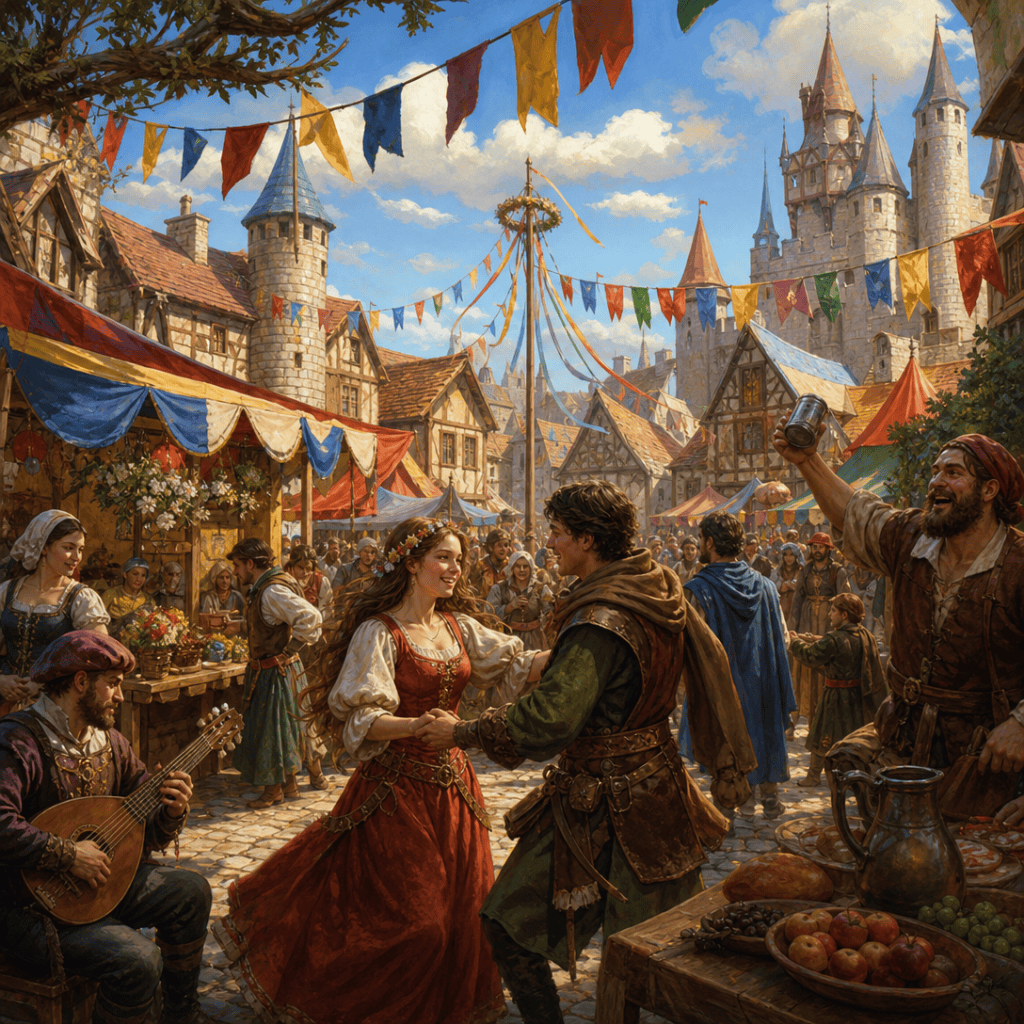

A town festival adventure is one of the most flexible session types you can run, and one of the most overlooked. A fair, a feast, a contest, a holy day — a celebration gives you a built-in crowd of NPCs, a natural structure of events, and a warm, low-stakes backdrop that makes any problem you plant underneath it land twice as hard. Players remember the festival where everything went wrong far longer than the dungeon where everything went to plan.
Here’s how to run a town festival adventure that’s more than set dressing.
Why a festival makes a great adventure backdrop
A festival hands you, for free, the three things every social adventure needs: a reason for everyone to be in one place, a packed cast of NPCs with somewhere to be, and a shape for the day. You don’t have to contrive a gathering — the celebration is the gathering, and the party can wander into any corner of it and find something happening.
It’s also a tonal gift. The lights, the food, the music, the good cheer — a festival is inviting in a way a dungeon never is, which makes it the perfect place to lower the party’s guard before something goes wrong. Comfort is the setup; the festival adventure is the payoff.
The festival is your NPC engine
The heart of a town festival adventure is people. A celebration packs the streets with vendors, competitors, officials, rivals, drunks, lovers, and cheats — a whole cast handed to you at once. Lean into it. Give a handful of them names, wants, and quirks, and let the party bump into them as they move through the day.
This is where the session comes alive. The baker feuding with the brewer, the official desperate for the day to go smoothly, the stranger who clearly doesn’t belong — these small, vivid people turn a backdrop into a living town. The festival is an NPC engine; all you have to do is populate it.
Give the day a shape
Structure a festival adventure around its events. The opening procession, the contests, the feast, the evening ceremony — each is a natural scene with its own mood and its own opportunities. Hanging the session on the day’s schedule gives it momentum without forcing the party down a rail.
The events also double as set-pieces. A pie-eating contest, a race, a duel of bards, a fireworks finale — each is a ready-made moment the party can win, sabotage, investigate, or be caught up in. Let the schedule carry the pacing while the players decide which events to throw themselves into.
Plant a problem under the celebration
A festival without a complication is just a description. The strongest town festival adventures bury a problem beneath the cheer — a theft during the feast, a rivalry about to turn violent, a saboteur, a creature drawn to the crowd, a ritual hidden inside the ceremony. The contrast between the joy above and the trouble below is the whole point.
Keep the problem proportional. A festival is a low-stakes setting by nature, so the trouble underneath should usually be human-scale — a mystery to solve, a fight to stop, a day to save — rather than world-ending. The charm is watching the party protect something small and warm.
Let factions and rivalries drive it
Towns at festival time are full of factions: guilds competing for the prize, families with old grudges, the people who run the event versus the people who resent it. Hand the party a celebration already split by rivalry and the adventure runs itself, because every NPC wants something and several of them want opposite things.
Drop the party into the middle and let them take sides, broker peace, or accidentally make everything worse. A festival is a pressure cooker of community tension wearing a party hat, and that tension is the best engine a low-stakes session can have.
A festival one-shot you can run tonight
For a celebration with rivalry baked into its bones, War of the Whisker Throne drops the party into a town at the height of its strangest event: every decade, Wend’s Rest crowns a beast — cat or hound — to rule the region, and the town has split into two fanatical factions over which it should be. This year the vote is deadlocked, and the strangers who just arrived are the only ones who can break the tie.
It’s a no-prep one-shot for two to three players and a working model of a festival adventure — a packed cast, a day with a shape, and a community-splitting problem at its center. For the comedy craft behind running an absurd event with a straight face, see our guide to funny D&D one-shots.
Frequently asked questions
What is a town festival adventure in D&D?
It’s a session set during a local celebration — a fair, feast, contest, or holy day — that uses the crowd of NPCs and the day’s events as the structure for the adventure, usually with a problem hidden beneath the festivities.
Why run an adventure during a festival?
A festival gives you a built-in gathering, a ready cast of NPCs, and a natural sequence of events to pace the session. Its warm, low-stakes tone also makes any trouble you plant underneath land harder.
What kind of problem works best at a festival?
Something human-scale that fits the low-stakes mood — a theft, a sabotage, a rivalry turning violent, a mystery in the crowd. Keep it proportional so the charm of protecting a small, warm event stays intact.
How do I structure the day?
Hang the session on the festival’s events: procession, contests, feast, evening ceremony. Each is a natural scene and set-piece, giving the day momentum while letting the party choose what to dive into.
How do I make the town feel alive?
Populate the festival with named NPCs who want things and clash with each other — feuding vendors, anxious officials, scheming rivals. Their competing wants turn a backdrop into a living community.
Throw the party
Fill the streets with people who want things, give the day a shape, and bury one proportional problem under all that cheer.
Want a festival one-shot ready to run? Get War of the Whisker Throne:
- PDF on Payhip — instant download
- Paperback on Amazon
- Ebook on Amazon