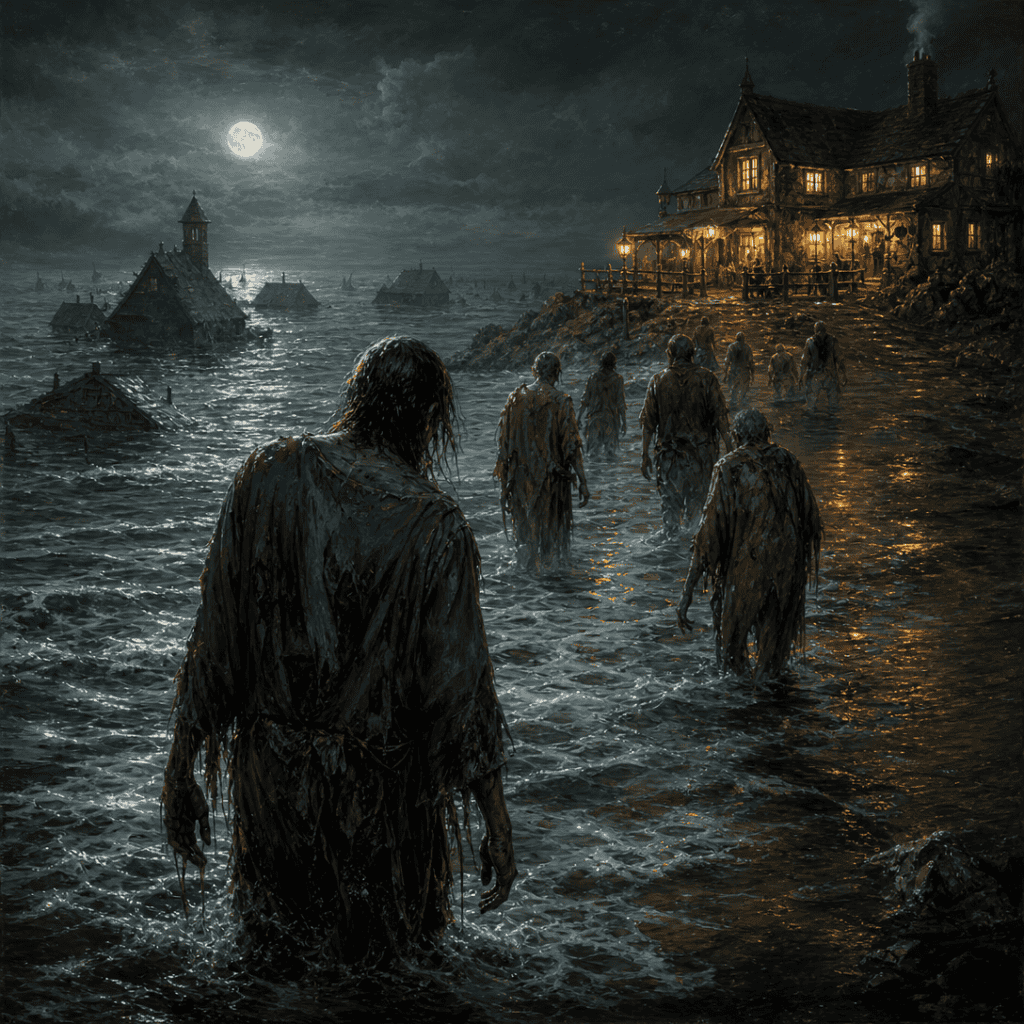

Nautical horror is the dread of the sea turned against you — the cold patience of deep water, the dead who don’t stay drowned, the tide that comes in carrying something it shouldn’t. It’s a different beast from the dungeon crawl and even from other water horror. The sea isn’t a place you explore; it’s a presence that surrounds you, and the worst nautical horror is the sea giving something back. The drowned do not rest. They come ashore, and they remember the way home.
Here’s how to run nautical horror in D&D that drowns your table in dread.
Why the sea is the oldest horror setting
People have feared the sea longer than they’ve feared anything in a dungeon. It’s vast, dark, cold, and indifferent, and it keeps what it takes. That deep cultural dread is doing your work for you before the session even starts — players bring an instinctive unease about black water and what’s under it straight to the table.
Nautical horror taps that instinct directly. You don’t have to invent a reason the sea is frightening; you only have to remind the players that it is. A fog that won’t lift, a shore at the end of a dead-end road, a tide that comes in wrong — the setting itself is the threat, and it never has to roll initiative to be felt.
The dead come back from the water
The most potent image in nautical horror is the return of the drowned. A village lost to the sea, its people gone under years ago — and now, on the wrong tide, they walk back out of the water and up the beach toward the lights of the living. The horror isn’t that they’re monsters. It’s that they used to live here, and some part of them still thinks they do.
This reframes the dead as something worse than enemies. They’re former neighbors, lost family, the drowned crew of a ship that never came home. A ghost ship drifting in out of the fog with a familiar name on its hull does more to a table than any roomful of skeletons, because it carries grief as well as menace.
They don’t chase — they ask
The scariest version of the returning dead doesn’t rage or pursue. It’s patient. The drowned wade ashore slowly, gather at the door, and simply ask to be let in — gentle, certain, willing to wait. They want the living to come down to where it’s quiet and cold, and they have all the time in the world to convince them.
This patience is what makes nautical horror land. A monster that charges is a fight; a dead loved one standing calmly outside the window, asking you to open it, is a nightmare. Run the dead as relentless but unhurried, and the dread comes from the slow, inevitable closing of distance rather than a sudden assault.
Ghost ships, ash tides, and weather that’s wrong
Nautical horror lives in its omens. The tide that comes in as ash instead of water. The fog that rolls in too fast and carries voices. The ship that appears at anchor where no ship was, crewed by no one the living can see. These wrong details tell the players the natural order has broken before any threat shows itself.
Lean on the strangeness of the sea. A becalmed harbor where the water has gone glassy and silent, a low tide that exposes something that should have stayed buried, a sky the color of a drowned thing — atmosphere is most of the work here. Build the wrongness first, and the dead are merely its confirmation.
Run it as a siege of grief, not a brawl
Structurally, the strongest nautical horror is a siege — the living holed up somewhere warm while the patient dead gather outside. But it’s a siege of sorrow as much as survival, because the things at the door have faces the party may recognize. The question isn’t only “can we hold,” but “do we have the heart to.”
That emotional weight is what separates nautical horror from a standard hold-the-line fight. Let the dead be pitiable as well as frightening. The best moments come when a player hesitates — when the thing asking to be let in is someone a villager loved, and refusing it costs something. For the broader mechanics of defending a position through the night, see how to run a siege defense.
A nautical horror one-shot you can run tonight
For nautical horror built on every one of these beats, Salt & Cinder shelters the party in the last warm inn on a dead-end coast when the ash tide rises and the drowned village of Thornhaven walks ashore, singing. The dead don’t chase and don’t rage — they ask, patiently, to be let in where it’s quiet and cold, and they are willing to wait.
It’s a no-prep coastal horror one-shot for two to three players that assembles the wrong tide, the patient dead, and the siege of grief for you. If this article gave you a chill, it’s the cleanest way to bring nautical horror to your table. For the daylight cousin of this setting, see our guide to coastal D&D one-shots.
Frequently asked questions
What is nautical horror in D&D?
It’s horror that uses the sea as the source of dread — drowned dead returning from the water, ghost ships, wrong tides and fog. The ocean itself is the menace, and the worst of it is the sea giving something back.
How is nautical horror different from other water horror?
Lake or river horror often hides something beneath a still surface to be investigated. Nautical horror is about the open sea and the dead coming ashore to the living — a presence that surrounds and approaches rather than a mystery to uncover.
Why are the patient dead scarier than aggressive ones?
Because patience is inevitable. Dead that wade ashore slowly and simply ask to be let in create dread through the slow closing of distance and the grief of recognizing them, rather than the adrenaline of a sudden fight.
How do I build the atmosphere?
Start with omens — a wrong tide, fast fog, a ship that shouldn’t be there, weather the color of drowning. Establish that the natural order has broken before any threat appears, and let the dead confirm the dread you’ve already built.
What structure works best for a nautical horror session?
A siege of grief: the living sheltering somewhere warm while the patient dead gather outside, some of them recognizable. The tension is both whether the party can hold and whether they can bear to refuse what’s asking to come in.
Let the tide come in
Make the sea the threat, bring the dead back patient and grieving, build the wrongness first, and run it as a siege of sorrow.
Want a nautical horror one-shot ready to run? Get Salt & Cinder:
- PDF on Payhip — instant download
- Paperback on Amazon
- Ebook on Amazon