
By Anvil N Ink Publishing · Updated October 2026 · 7 min read
A good dungeon map gives players choices: loops instead of dead-end corridors, more than one way into key rooms, a few chokepoints worth fighting over, and secrets that reward curiosity. Use a dungeon map maker to block out rooms and corridors first, then add doors, traps, light and dressing, and export walls so your VTT handles line of sight.
Design the flow before the rooms
Sketch the dungeon as a flowchart first: boxes for rooms, lines for connections. Then check three things:
- Loops. At least one circuit lets players flank, retreat or sneak around.
- Multiple entrances. The big room shouldn’t have only one door.
- Vertical links. Stairs, shafts and pits connect levels in surprising ways.
This idea is often called “Jaquaying the dungeon” after designer Jennell Jaquays, and it is the difference between a hallway and a place. We cover it more in how to run a megadungeon.
Block out rooms and corridors
Draw rooms at real scale (five feet per square) and keep corridors at least ten feet wide where fights might happen, so more than one character can act. Vary room sizes: a few tight cells, a medium guard room, one big chamber for the set piece.
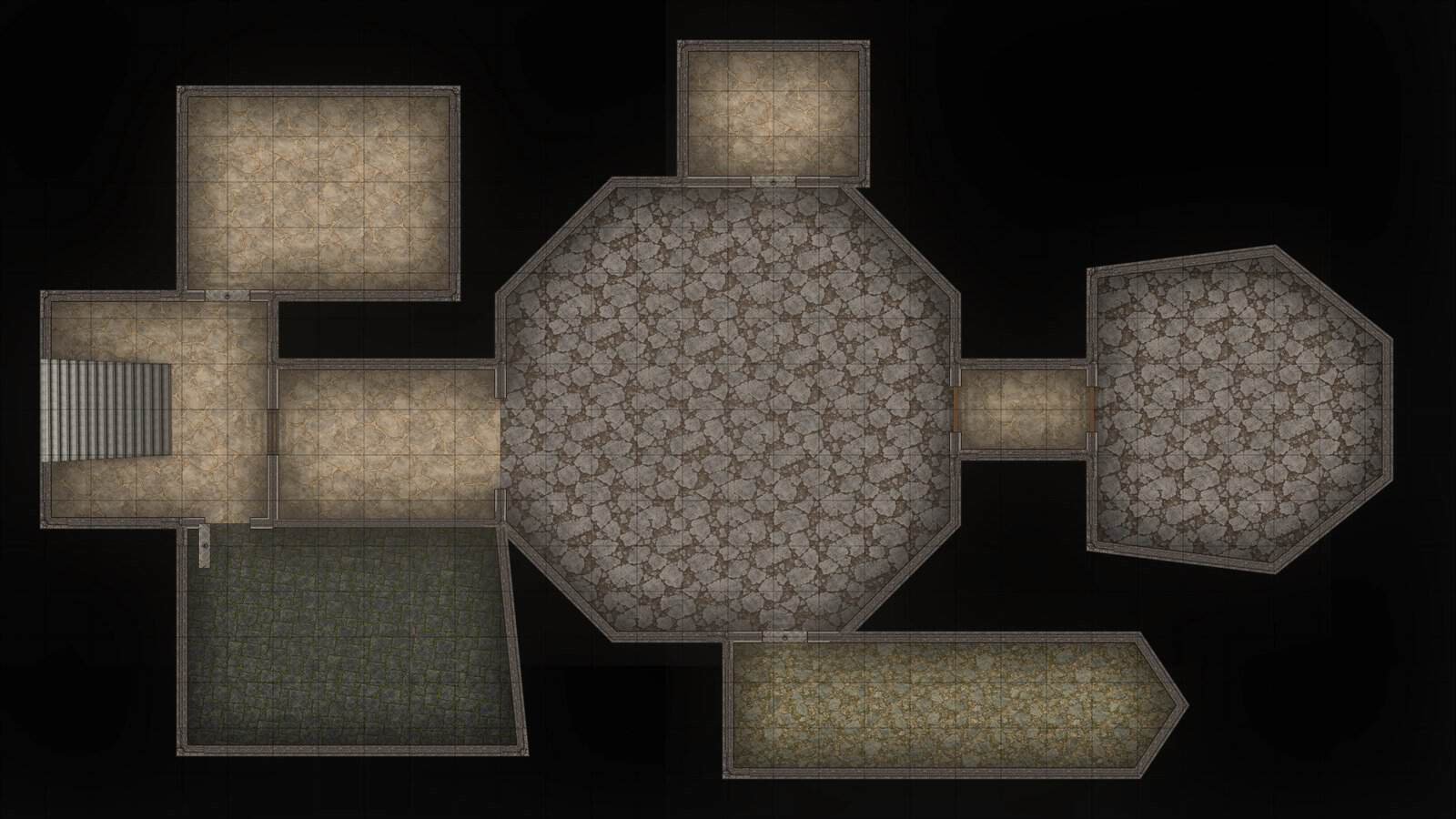
In Ink Hammer you draw a room and its walls and floor build themselves, and you can split or merge rooms as the layout changes.
Doors, secret doors and portcullises
Doors control the pace of a dungeon. Locked doors slow players down, secret doors reward searching, and a portcullis can split the party at the worst moment. Make sure each one is a real door in your map maker, not just art, so your VTT can open and close it.
Traps and hazards
Put traps where the map tells a story: a pressure plate in a corridor that’s suspiciously clean, a collapsed floor over a pit, a flooded chamber. Mark them on a DM-only label layer so the player version stays clean. Ink Hammer’s labels let you pin notes with arrows, then hide them all with one switch.
Light and darkness
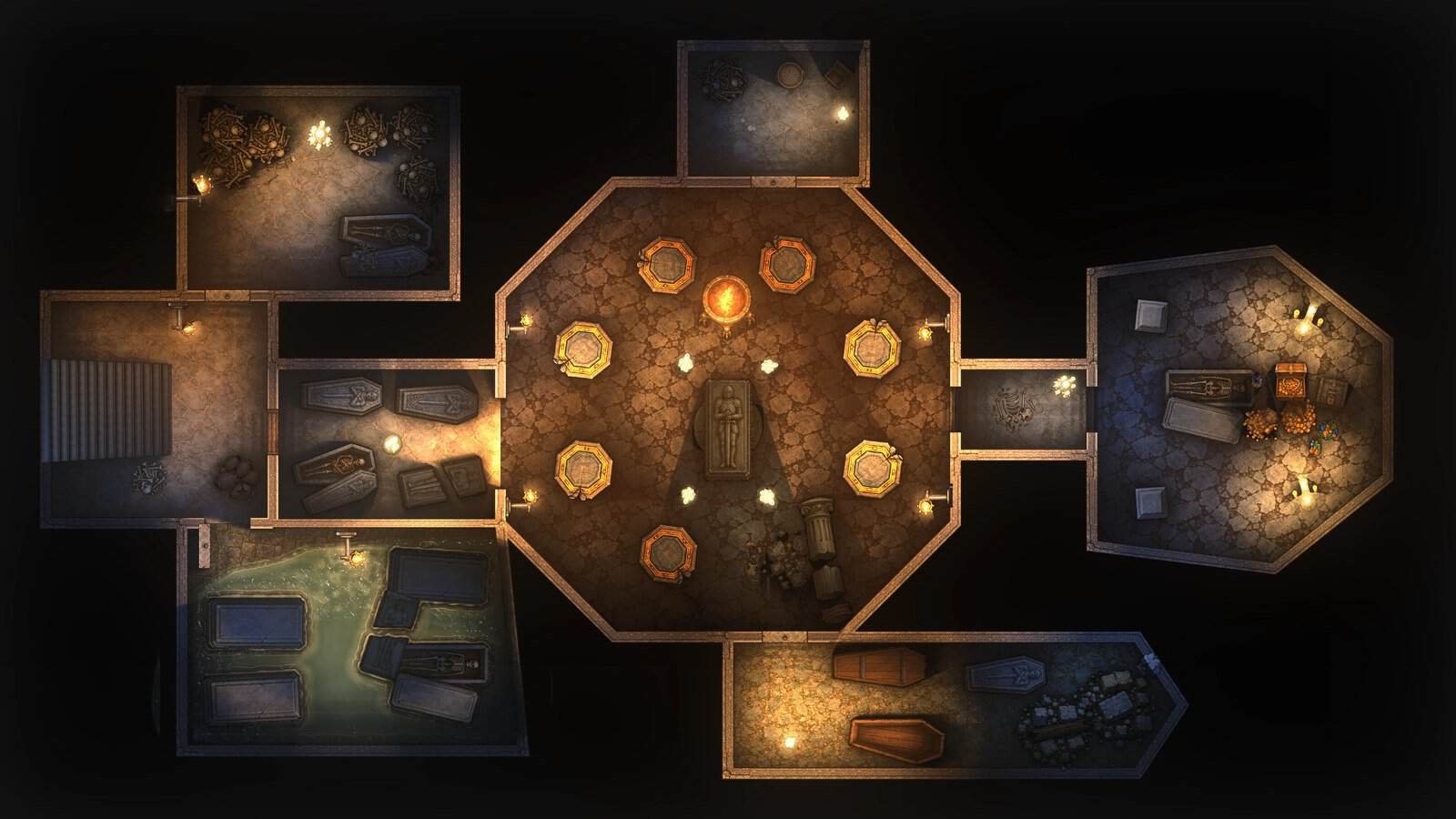
Most dungeons are dark, which is a gift: torches and braziers mark where the inhabitants live and work, and darkness hides ambushes. Place a few strong light sources and let shadows do the rest. Lights and walls export together in a Universal VTT file, so darkvision and torchlight work in your tabletop.
Dress it with purpose
Every prop should be cover, an obstacle or a clue: rubble to hide behind, a toppled shelf blocking a route, bones hinting at what lives here. Cluster props instead of scattering them evenly.
Dungeon map checklist
- At least one loop and two routes to the key room
- Corridors wide enough to fight in where fights happen
- Varied room sizes and one big set-piece room
- Doors and secret doors placed as real doors
- Traps marked on a hidden DM layer
- Light sources that show where the inhabitants live
- Walls exported for your VTT
Frequently Asked Questions
What is the best dungeon map maker? For quick old-school layouts, Dungeon Scrawl is excellent and free. For detailed, lit dungeons with VTT walls, a desktop tool like Dungeondraft or Ink Hammer gives more control. See best D&D map makers.
How many rooms should a dungeon have? A one-shot dungeon works with five to fifteen rooms. A campaign megadungeon can run to hundreds.
Should dungeon maps be gridded? Yes for play. Export a gridless version too if your VTT draws its own grid; see battle map grid size.
For the full process, read how to make D&D battle maps.